


Reconstituted Stone Lions
Reconstituted stone lions stand as heavy garden guardians, offering formal presence and architectural weight to gates and entranceways.
Reconstituted Stone Lions
Reconstituted stone lions form a distinct category of garden statuary, appearing as seated pairs, standing guards, and post finials. Buyers searching for reconstituted stone lions find sturdy architectural ornaments designed to weather outdoors over decades.
The pieces on this page span the Victorian era, the nineteenth century, and twentieth-century decades like the nineteen twenties and fifties. Most examples take traditional, neoclassical, and classical revival forms, often modelled after grand models such as French Medici lions.
Makers and manufacturers produce these figures using composite stone, cast stone, and sandstone. They function primarily as gate finials, pier caps, and focal points for English country house gardens.
How they were made
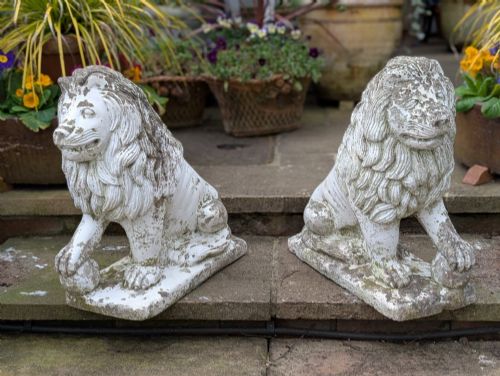
Certain twentieth-century examples retain original old paint applied to the composite stone surface to alter tone and texture. Over time, exposure to the elements creates natural weathering across the cast stone material.
Several stone lions retain original old paint, proving that even stoic garden guardians occasionally needed a touch of colour.
What varies in quality
The choice of aggregate and binder dictates the long-term durability and the realism of the surface grain. Dense composite materials age with an even, attractive patina, whereas lesser mixtures can erode unevenly under frost and rain.
The Reconstituted Stone Lions Glossary
- Reconstituted stone
- A composite material manufactured from crushed stone mixed with a binder to simulate natural quarried stone. It is widely utilised for durable garden ornaments and architectural details.
- Gate finials
- Ornamental sculptures mounted on top of gate piers or gate posts to mark an entrance. Reconstituted stone lions serve this architectural purpose frequently.
- Neoclassical
- A style inspired by classical antiquity that emphasises proportion, symmetry, and formal dignity. Many garden statues on this page draw directly from this aesthetic.
- Composite stone
- A manufactured material combining stone dust and binding agents to create robust architectural components. It handles outdoor weathering reliably.
- Medici lions
- The pair of marble lions, one ancient and one modern, displayed in Florence and copied extensively in garden statuary. Nineteenth-century French versions are particularly sought after by collectors.
Reconstituted Stone Lions: Frequently Asked Questions
Where should I place stone lions?
These heavy statues suit prominent outdoor positions such as gate piers, garden entrances, and terrace steps. Their sturdy construction allows them to anchor formal landscapes effectively.
Positioning them in pairs creates a balanced, symmetrical effect that frames pathways or driveways. Ensure the ground or plinth beneath them is level and capable of supporting substantial weight.
How do I care for reconstituted stone?
Reconstituted stone requires minimal maintenance because the material withstands rain, frost, and sun exposure naturally. Allow weathering and moss growth to develop organically if you prefer an aged appearance.
Avoid harsh chemical cleaners or pressure washers, which can strip the surface layer and soften fine details. Gentle brushing with water removes debris safely without damaging the stone matrix.
How do I date a stone lion?
Dating relies on stylistic clues, mounting types, and the specific texture of the composite material. Victorian and nineteenth-century examples often display sharper neoclassical detailing and heavier aggregate.
Twentieth-century pieces from the nineteen twenties or fifties may show different casting seams or retained original paint layers. Compare the weathering patterns against the documented periods of the listings to gauge age.
What is the difference between seated and standing lions?
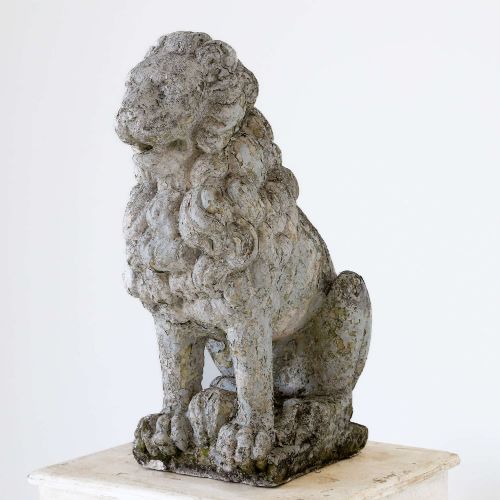
Seated lions project a calm, watchful authority and typically sit atop square plinths or gate posts. They function well as stable pier caps and formal entrance markers.
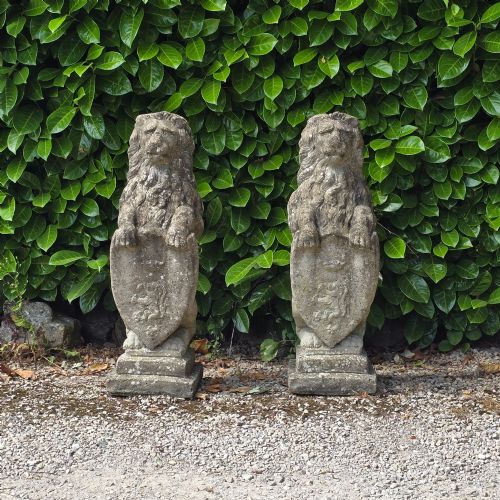
Standing lions convey greater movement and tension, often occupying ground-level positions along garden paths or lawns. Both forms use traditional classical revival designs adapted for outdoor display.