



Stone Lion Statues
These stone lion statues command entrances and guard gardens, bringing classical presence and sculptural weight to any setting.
Stone Lion Statues
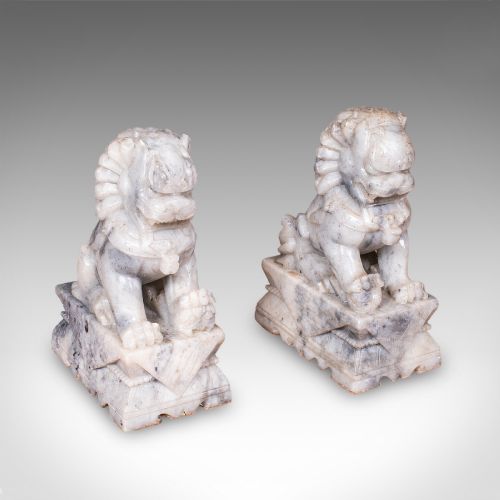
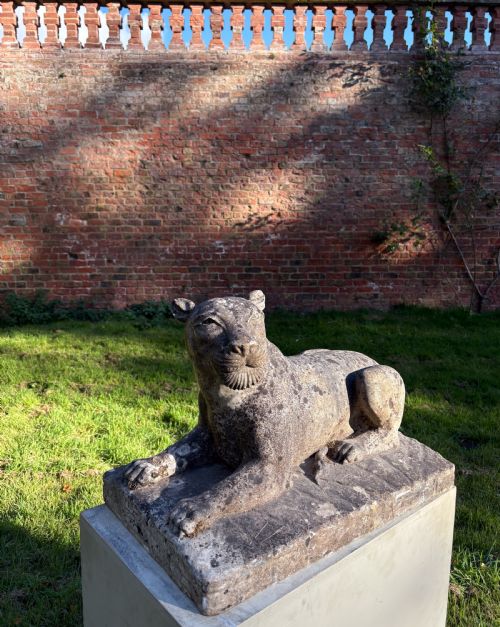
Stone lion statues encompass garden statuary, architectural post finials, and interior decorative carvings spanning from the seventeenth century through to the mid-twentieth century. Buyers seeking stone lion statues most frequently encounter pairs of nineteenth-century garden figures, grand tour mantel pieces, or oriental temple guards.
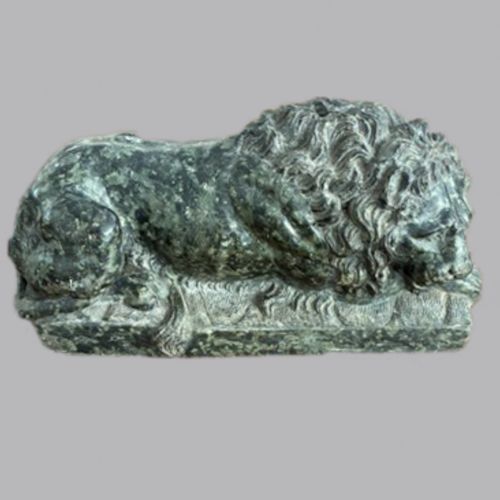
The selection ranges from massive Italian marble beasts and weathered terracotta gate guardians down to modest soapstone bookends and alabaster lioness sculptures. Stylistic influences stretch across neoclassical, Victorian English country house, and classical revival traditions.
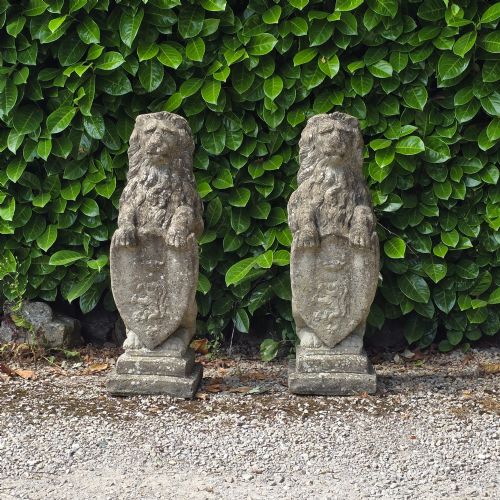
Forms vary from standing and recumbent postures to seated guardians mounted upon original stone plinths. Origins trace through English, French, Italian, and Chinese workshops.
Materials and Construction
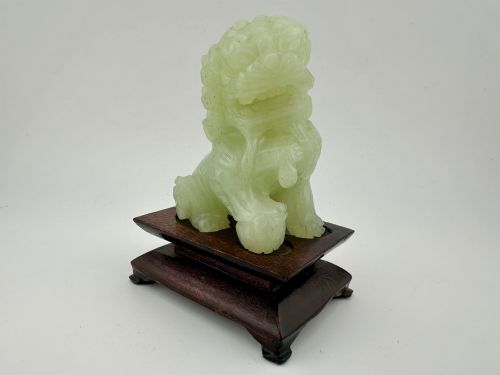
Carved natural stones including marble, serpentine, alabaster, soapstone, and jade marble provide the medium for finer interior sculptures and Grand Tour items. Artisans shaped these materials using traditional chiselling and polishing techniques.
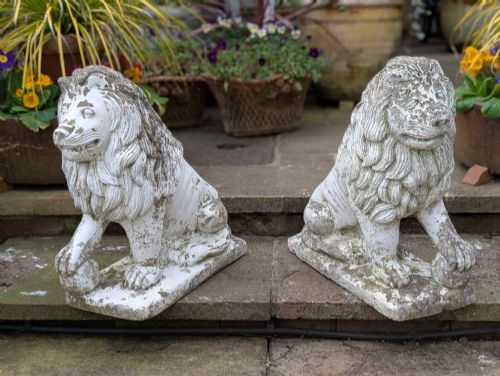
Garden statuary relies on durable earthen media such as terracotta, salt-glazed pottery, and robust reconstituted or composite stone. Many surviving examples retain traces of original old paint applied to weather the surfaces.
Larger outdoor pairs often incorporate separate bases or plinths to elevate the sculpture above damp ground level. Salt-glazed pottery and terracotta pieces utilise kiln firing methods to achieve their impressive scale and buff colouration.
Stone Lion Statues Retail Price Guide 2026
Typical asking prices for stone lion statues among the pieces listed under this phrase on Sellingantiques today, from the lower quarter to the upper quarter. They describe what is for sale here now, not the wider market.
Listings span multiple centuries, ranging from seventeenth-century carved marble through Victorian terracotta to mid-twentieth-century composite stone.
Judging Quality
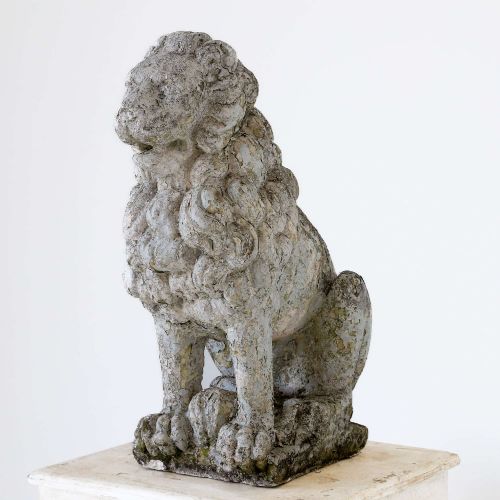
Quality reveals itself in the anatomical definition and muscular expression carved into the stone or modelled in the clay. Superior pieces capture lifelike tension in the limbs and detail in the mane, whereas lesser items rely on soft, formulaic moulding.
The choice of material dictates the crispness of surviving detail, with hard marbles retaining sharp chisel work over centuries while softer composite stones weather more uniformly. Original surface patination, such as moss growth on garden stone or genuine historic paint layers, adds depth to the material.
Proportion and scale separate monumental architectural pairs from domestic ornaments. Balanced symmetry in matching pairs indicates careful workshop pairing from the outset.
The Stone Lion Statues Glossary
- Grand Tour
- A nineteenth-century tradition of travel through Europe by young nobility who acquired classical sculptures and smaller marble works as souvenirs. These pieces often emulate famous Italian monuments.
- Reconstituted Stone
- A composite material made from crushed stone or aggregate mixed with a binder to form durable garden ornaments. It replicates the appearance of natural carved stone at a different scale of production.
- Finial
- An architectural ornament placed at the apex of a gate, wall, or post. Lion finials serve both a decorative and a structural capping purpose.
- Dog of Fo
- A traditional Chinese guardian lion symbolising protection and prosperity. These figures frequently appear in pairs guarding temple entrances or domestic thresholds.
- Recumbent
- Lying down with the head raised. This posture is common in garden lion statues designed to rest along terraces or flanking steps.
Stone Lion Statues: Frequently Asked Questions
Where should I place stone lion statues?
Large pairs suit outdoor positions such as flanking garden paths, gate piers, or terrace steps where weathered stone benefits from natural light. Smaller interior carvings and bookends require stable mantelpieces or bookshelves away from direct moisture.
Matching the scale of the sculpture to its surrounding architecture ensures the piece commands the space properly without overwhelming smaller courtyards or rooms.
How do I care for outdoor stone lions?
Natural stone and reconstituted composite figures withstand seasonal weather changes well, though severe frost can affect porous terracotta or damp composite materials. Gentle washing with water removes organic buildup without harming historic surface patination or original paint.
Elevating garden statues onto stone plinths prevents rising ground moisture from entering the base of the sculpture during winter months.
What is a Lion of St Mark?
The Lion of St Mark is a symbolic representation associated with the Venetian Republic, typically depicted holding a book or resting a paw upon a globe. Grand Tour artisans frequently carved these subjects in serpentine and decorative marbles.
These pieces carry distinct historical iconography that sets them apart from standard English garden statuary or oriental temple guardians.
How do I distinguish Chinese temple lions?
Chinese temple guards, often termed Foo Dogs, feature stylized curly manes, broad snouts, and sometimes decorative balls or cubs beneath their paws. They appear in carved stone, soapstone, jade marble, and pottery rather than neoclassical marble.
These oriental sculptures reflect entirely different regional carving traditions compared to nineteenth-century European garden figures.
Are these statues genuine antiques?
The selection includes authentic nineteenth-century pieces alongside items dating from the early twentieth century and seventeenth-century survivals. Materials such as weathered terracotta, aged marble, and original old paint help indicate the age and history of each item.
Examining the tool marks, weathering patterns, and material composition clarifies the period of manufacture.