
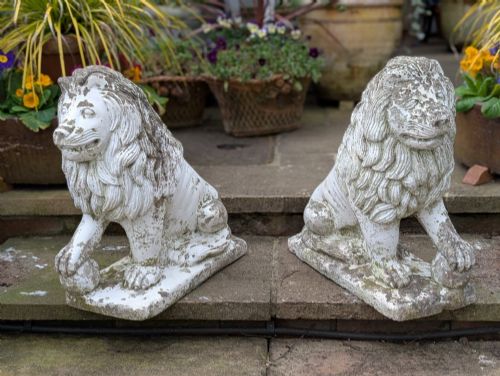


Outdoor Stone Lion Pair
An outdoor stone lion pair stands guard at gates and garden entrances, offering centuries of classical presence and architectural theatre.
Outdoor Stone Lion Pair
An outdoor stone lion pair comprises two guardian figures designed for exterior placement on gate piers, walls, or garden terraces. These sculptural pairs draw upon classical and neoclassical traditions to frame property boundaries and focal landscape axes.
The pieces on this page span the nineteenth and twentieth centuries, taking the form of seated guardians, standing beasts, and gate finials. Examples range from vernacular twentieth-century cast figures to substantial nineteenth-century Italian carved marble and buff terracotta versions.
Victorian and Grand Regency designs dominate the formal end of the scale, while mid-century adaptations provide more domestic garden alternatives. Buyers encounter both recumbent and vigilant postures intended to command a driveway or entrance.
How they were made
Makers shaped these figures through direct carving in marble and sandstone, or by casting mixtures such as reconstituted stone and salt-glazed stoneware into moulds. Terracotta examples involved shaping prepared clay before firing at high temperatures to achieve durable exterior bodies.
Nineteenth-century workshops utilised traditional masonry tools for carved marble and sandstone, while later twentieth-century pieces relied upon poured aggregate or composite mixes. Surface treatments occasionally include historical paint layers or natural weathering acquired over decades outdoors.
Several stone beasts appear ready to pounce on unsuspecting postal workers, having successfully guarded Victorian driveways for over a century.
What varies in quality
The Outdoor Stone Lion Pair Glossary
- Reconstituted stone
- A manufactured material composed of crushed aggregate and cement binders moulded to imitate natural quarried stone. It provides a durable alternative for exterior garden ornaments.
- Salt-glazed stoneware
- Pottery fired at high temperatures where salt is introduced into the kiln to produce a vitreous, glossy coating. This impervious finish protects the ceramic body from frost damage.
- Gate finial
- An architectural ornament mounted upon the top of a gate pier or wall terminal. These elements provide a formal termination to boundary masonry.
- Terracotta
- Fired unglazed clay ranging in colour from buff to deep red. It allows for intricate sculptural modelling before kiln firing.
Outdoor Stone Lion Pair: Frequently Asked Questions
Where should I place them?
These guardian figures suit prominent exterior locations such as driveway entrances, gate piers, terrace steps, or focal garden vistas. Positioning them on dedicated stone plinths enhances their architectural impact.
Ensure the ground beneath them is level and capable of supporting substantial weight, particularly with marble or terracotta examples.
How do I clean exterior stone?
Gentle washing with water and a soft brush removes accumulated dirt and organic growth without damaging the surface patina. Avoid harsh chemical cleaners or pressure washers that can erode historical stone or terracotta.
Allow weathering to remain where it contributes to the historic character of nineteenth-century pieces.
Are terracotta lions frost resistant?
High-fired nineteenth-century terracotta and salt-glazed stoneware withstand typical winter conditions when properly drained. Porous clays can absorb moisture that expands during freezing temperatures.
Keep the bases elevated slightly from standing water to prevent moisture absorption during prolonged damp periods.
How do I distinguish nineteenth-century pieces?
Nineteenth-century examples display hand-finished detailing, heavier material composition, and characteristic tool marks from traditional masonry. They frequently reflect neoclassical, Victorian, or Italian architectural influences.
Twentieth-century cast versions often show standard mould seams and simpler surface textures consistent with production methods of the 1930s to 1950s.