



Large Cast Stone Statues
Large cast stone statues bring classical presence to open grounds, offering monumental forms modelled after antiquity for garden and conservatory settings.
Large Cast Stone Statues
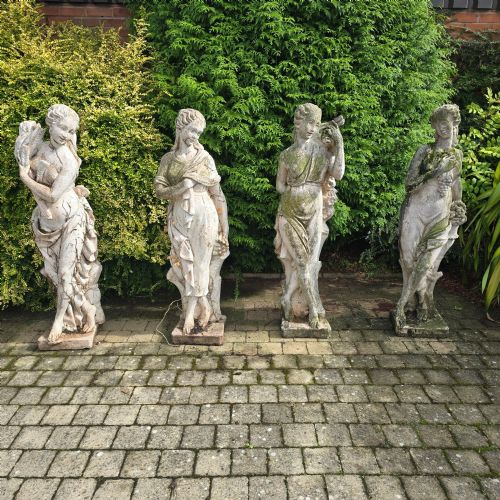
Large cast stone statues form a distinct category of garden ornament designed to anchor outdoor spaces with considerable visual weight. Buyers searching for large cast stone statues encounter monumental garden figures, allegorical representations like the Four Seasons, and heraldic beasts intended for permanent outdoor placement.
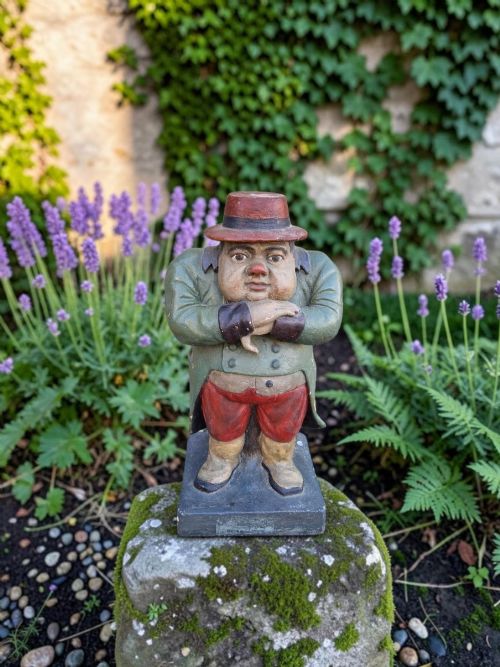
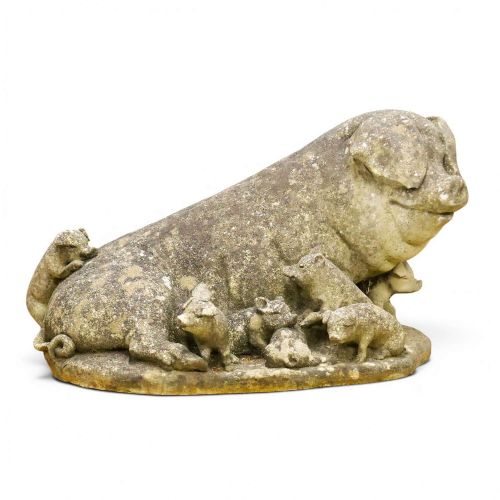
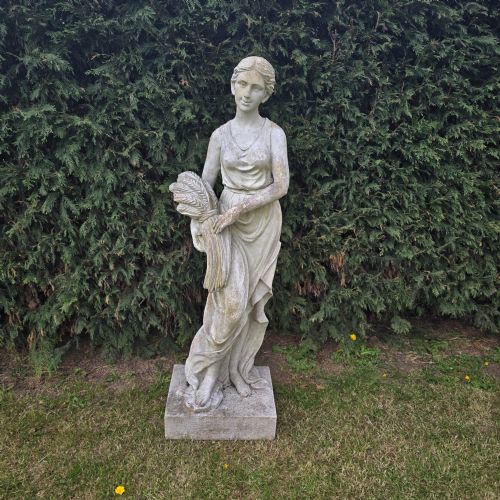
The pieces on this page span the early to mid-twentieth century, drawing heavily on classical revival and neoclassical styles. Forms range from life-sized female figures and draped ladies on plinths to substantial animal groupings such as a sow with piglets, pairs of lions, and eagles.
Originating predominantly from English country traditions of the 1920s, 1930s, and 1950s, these statues rely on classical motifs adapted for domestic gardens and conservatories. Pedestals and plinths frequently accompany the main figures, elevating the sculpture to create proper focal points in landscape design.
How they were made
Makers produced large cast stone statues by packing aggregate mixtures into moulds, utilising materials recorded variously as reconstituted stone, cast stone, composition stone, concrete, and composite stone. This moulding technique allowed workshops to replicate intricate neoclassical details at a scale that carved stone made prohibitively expensive.
The resulting surfaces weathered naturally over decades outdoors, developing characteristic patinas across the classical revival and grand regency forms. This weathering process bonded the cementitious materials firmly with atmospheric grime and biological growth, settling the bright initial pour into a unified tonal surface.
Large Cast Stone Statues Retail Price Guide 2026
Typical asking prices for large cast stone statues among the pieces listed under this phrase on Sellingantiques today, from the lower quarter to the upper quarter. They describe what is for sale here now, not the wider market.
Listings feature pieces spanning the 1920s to the 1950s, employing materials such as reconstituted stone, concrete, and composite stone.
What varies in quality
The choice of aggregate and the density of the composite mixture govern long-term durability and the subtlety of surface texture. Finer aggregates permit smoother finishes that weather with greater tonal variation, whereas coarser mixes yield a more utilitarian industrial appearance.
The Large Cast Stone Statues Glossary
- Cast stone
- A refined building product manufactured from Portland cement, carefully selected aggregates, and chemical admixtures to simulate natural cut stone. It provides a durable medium for replicating elaborate sculptural forms.
- Reconstituted stone
- Another term for cast stone, describing aggregate bound together with cement and cast in moulds. It appears frequently in twentieth-century garden ornaments.
- Neoclassical
- A style inspired by the classical art and architecture of ancient Greece and Rome. It dominates the aesthetic of twentieth-century garden statuary.
- Plinth
- A heavy base or square block upon which a statue or pedestal stands. It raises the sculpture above ground level for better visibility.
- Composition stone
- A proprietary term used by makers for durable cast mixtures resembling natural stone. It yields sturdy figures suitable for permanent outdoor exposure.
Large Cast Stone Statues: Frequently Asked Questions
Can these statues stay outside all winter?
Most twentieth-century composition stone pieces tolerate winter weather well due to the dense nature of the cement aggregate. Proper siting on dry footings prevents moisture from rising through the base during freezing conditions.
Heavier figures benefit from protection against prolonged hard frosts if they sit directly in damp soil. Lifting them slightly on slate or stone pads ensures adequate drainage throughout the colder months.
How do I clean a weathered stone statue?
Gentle washing with clean water and a soft bristle brush removes loose surface dirt without harming the historic patina. Avoid harsh chemical cleaners or high-pressure washers that strip away the weathered skin.
Allowing natural moss and lichen to remain often enhances the appearance of mid-century garden figures. Scrubbing should be restricted solely to areas where organic growth obscures important sculptural details.
Are these figures solid or hollow?
Large cast stone statues are typically cast with hollow interiors to reduce overall weight while maintaining structural thickness. Manufacturers used internal wooden framing or metal reinforcement during the pouring process on the largest pieces.
This construction method makes transport and placement manageable despite the monumental visual presence. Careful handling remains essential to protect thin-walled sections from impact damage.
How do I secure a heavy garden statue?
Substantial pieces often rely on their own considerable weight to remain stable on level ground or paved terraces. Placing them on a dedicated stone plinth distributes the load evenly across the foundation.
Tall figures or animal sculptures in exposed windy locations may require discreet mortar bedding or stainless steel dowels. Consulting a professional landscaper ensures the installation safely supports the specific weight of the concrete or stone.