

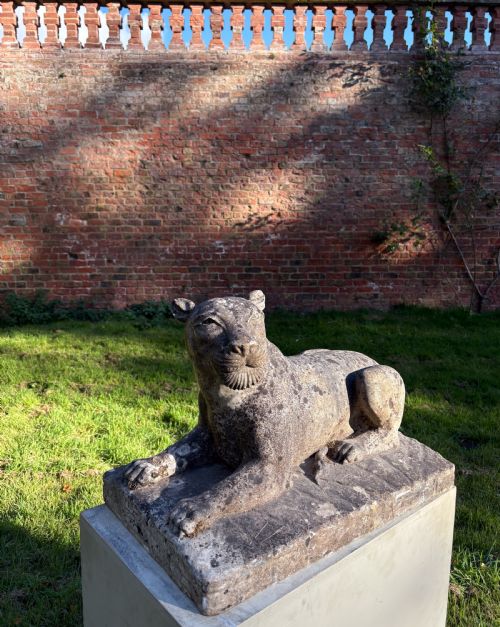
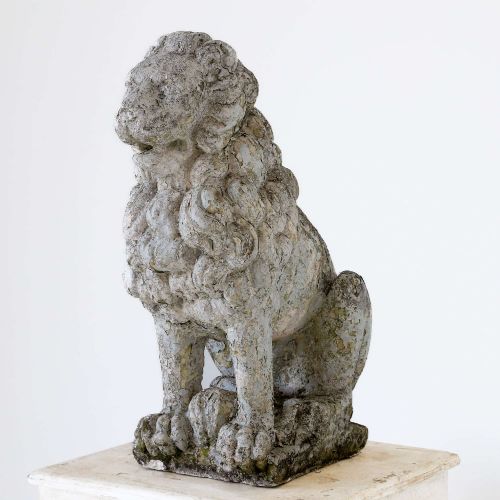
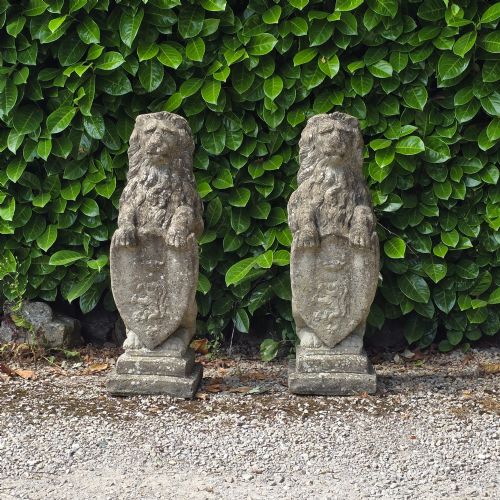


Grey Stone Garden Lions
Grey stone garden lions are enduring sentinels that anchor an estate entrance or lawn with classical permanence.
Grey Stone Garden Lions
Grey stone garden lions are heavy architectural sculptures designed to sit at gates, on plinths, or along paths as traditional guardians. They appear as matched pairs or single figures, standing or seated with formal dignity.
The versions most common on this page span the nineteenth and twentieth centuries, taking forms from English garden traditions to classical revival and Chinese carved stone styles. They range from robust post finials to large garden statuary.
Originating from periods such as the eighteen-fifties, nineteen-twenty, and nineteen-thirty, these pieces reflect both British country house aesthetics and continental masonry. Collectors also encounter singular early examples carved from marble.
Materials and construction methods
Twentieth century workshops utilised poured composites, cast stone, and reconstituted stone poured into heavy moulds to capture consistent classical proportions. Salt glazed stoneware provided an alternative vitrified ceramic body fired for outdoor resilience.
Surface treatments included original old paint applied over composite stone to protect the material and alter its visual weight in a garden setting. Weathering naturally softens these mineral surfaces over decades outdoors.
Grey Stone Garden Lions Retail Price Guide 2026
Typical asking prices for grey stone garden lions among the pieces listed under this phrase on Sellingantiques today, from the lower quarter to the upper quarter. They describe what is for sale here now, not the wider market.
Listings incorporate pieces spanning from the seventeenth century through to nineteen-fifty, utilising materials from natural marble to salt glazed pottery.
Distinctions in craftsmanship and form
Superior examples demonstrate anatomical precision and proportional balance in the head, musculature, and paws, whereas lesser pieces rely on simplified cast forms with soft definition. The depth and crispness of the stone carving dictate the visual impact from a distance.
The integrity of the material dictates longevity, with dense natural stone and hard-fired salt glazed pottery outperforming softer composite mixes that are prone to surface erosion. Original patination and genuine weathering add depth that artificial ageing fails to replicate.
Hurlford Kilmarnock
The Grey Stone Garden Lions Glossary
- Reconstituted Stone
- A durable material made from crushed stone aggregate mixed with a binder, moulded into architectural ornaments. It provides a heavy, stone-like appearance suitable for outdoor statuary.
- Post Finial
- An ornamental sculpture mounted on top of a gatepost, pier, or wall end. These pieces serve as both decorative markers and architectural caps.
- Salt Glazed Stoneware
- A ceramic body matured at high temperatures where common salt is thrown into the kiln vapours. This creates a dense, glassy texture impervious to moisture.
- Classical Revival
- An architectural and artistic style drawing inspiration from the art of ancient Greece and Rome. It emphasises symmetry, proportion, and traditional iconography.
- Guardian Lion
- A symbolic beast placed in pairs at entrances to ward off malevolent forces. These figures have a long history across Asian and European architectural design.
Grey Stone Garden Lions: Frequently Asked Questions
Where should I position stone lions?
These sculptures suit prominent outdoor locations such as gate piers, entrance steps, or flanking garden pathways where their commanding presence defines a boundary.
They function best when placed on raised plinths or bases to protect the material from ground moisture and to elevate them to a commanding eye level.
How do I care for antique garden stone?
Regular maintenance involves gentle brushing to remove moss and organic debris without damaging the underlying surface or historic paint layers.
Avoid harsh pressure washing or chemical sealants that trap moisture inside porous stone and accelerate freeze-thaw damage during winter months.
How can I tell the age of a stone lion?
Dating relies on examining tool marks, material composition, and the natural weathering patterns accumulated across the surface over decades.
Nineteenth century and earlier pieces often display hand-chiselled details, whereas twentieth century examples more commonly show the uniform textures of cast composite stone.
Can these garden lions stay outside in winter?
Most heavy stone, salt glazed stoneware, and composite pieces withstand frost if they are placed on stable footings clear of standing water.
Lifting figures slightly off damp ground using slate shims prevents moisture from rising through the base during freezing conditions.