

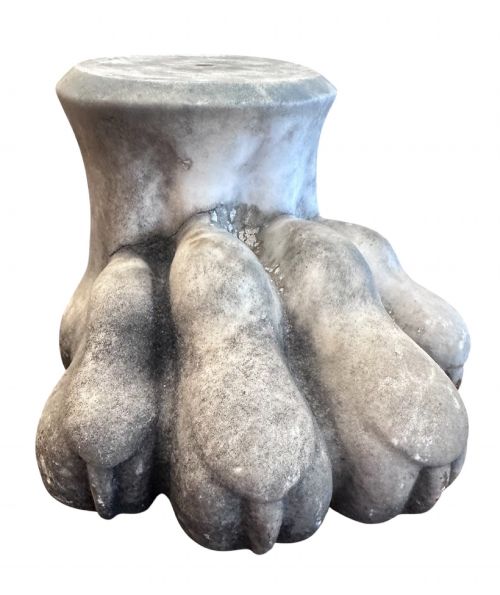


19th Century Marble Lions
19th century marble lions bring neoclassical power into a room, carved as recumbent figures, fountain heads or architectural fragments.
19th Century Marble Lions
When searching for 19th century marble lions, buyers encounter carved sculptures, fountain heads, and architectural supports linked to the Grand Tour and classical revival styles. These pieces range from small cabinet figures to garden statuary carved in Italy and Britain.
The selections on this page heavily feature Italian provenance, including Carrara and serpentine marbles, alongside French animalier works and Grand Tour souvenirs. Recumbent forms and seated pairs dominate the surviving examples from this period.
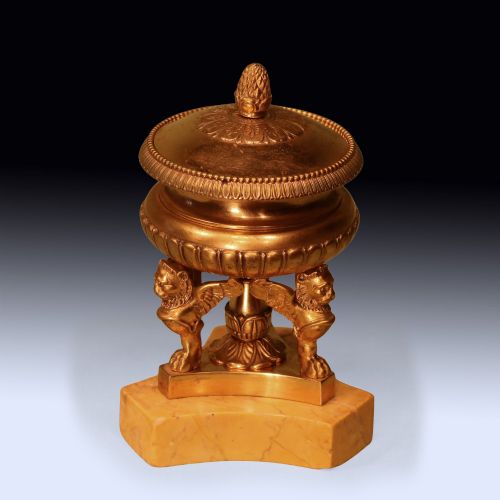
Many items integrate marble with bronze, ormolu, or brass mounts, appearing as bases for inkwells, clock garnitures, and candelabra. The scale moves from tabletop ornaments to large garden pairs.
How they were made
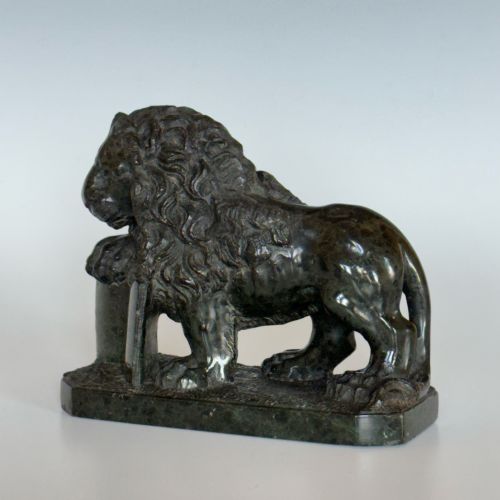
Sculptors shaped these figures using hand chisels, rasps, and abrasive sands on blocks of Carrara, Sienna, or green Hualien marble. Many figures were mounted on separate plinths of contrasting stone.
Foundries paired cast bronze, gilt bronze, and ormolu elements with marble bases, securing the metals with threaded pins and nuts. Incised details on manes and paws required fine gravers and punches.
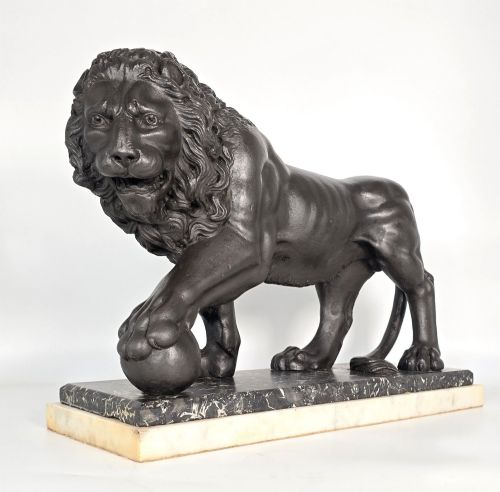
Some lions hold paws over balls, echoing ancient statues that owners hoped would ward off mischievous spirits.
What varies in quality
The sharpness of the chisel work across the mane, facial expression, and muscle structure dictates the visual power of a sculpture. Softer, rounded details often indicate workshop production rather than master carver execution.
The choice of marble block significantly affects the piece, with dense, unblemished stone and intentional colour variation holding greater sculptural presence. Surface weathering and repair work on limbs or plinths also shift the character of the object.
Paul-Édouard Delabrièrre·Le Courtier
The 19th Century Marble Lions Glossary
- Grand Tour
- A traditional trip through Europe undertaken by upper-class young men in the 18th and 19th centuries to collect art and antiquities. Souvenirs from this travel included small marble and bronze sculptures.
- Medici Lion
- A pair of marble sculptures of lions, one original Roman and one pendant by Flaminio Vacca, displayed in Florence. Copies of these iconic beasts were widely carved during the 19th century.
- Ormolu
- Gilded bronze produced by applying a mercury and gold amalgam to cast bronze and firing it. This technique creates a bright gold surface found on many 19th-century mounts and bases.
- Animalier
- A 19th-century artistic movement focusing on realistic depictions of animals. Sculptors in this style paid close attention to anatomical accuracy and natural movement.
19th Century Marble Lions: Frequently Asked Questions
Where were 19th century marble lions carved?
Most of these sculptures originated in Italian workshops, particularly around Carrara and Rome, catering to travellers on the Grand Tour.
Local stone yards produced both small cabinet pieces and large garden statuary for European estates.
How do I clean marble lion sculptures?
Dust the surface regularly with a soft, dry brush to prevent dirt accumulation in the carved details of the mane and paws.
Avoid harsh chemical cleaners or excess water, which can damage unsealed stone and corrode any attached metal mounts.
What is a recumbent lion?
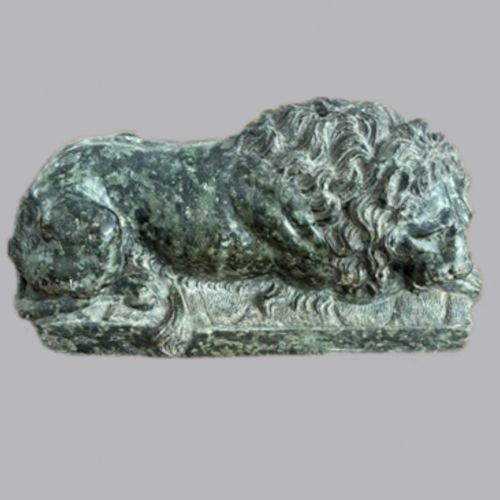
A recumbent lion is sculpted in a lying position, resting on its belly with front paws extended.
This form was frequently used for fireplace guards, desk weights, and paired mantel ornaments.
Are bronze and marble pieces original to each other?
Nineteenth-century manufacturers often combined cast bronze figures with turned marble bases as part of desk sets and clocks.
Original assemblies share consistent patination and mounting hardware appropriate to the period.