




Classical Outdoor Planters
Classical outdoor planters bring architectural dignity to grounds and terraces, offering formal vessel shapes designed to display plants with enduring style.
Classical Outdoor Planters
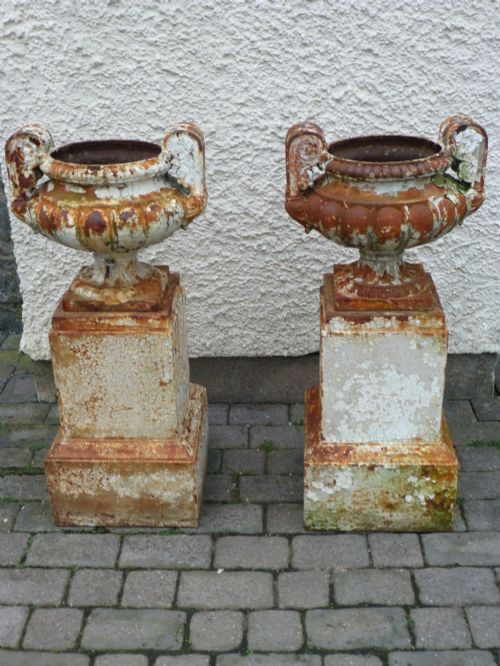
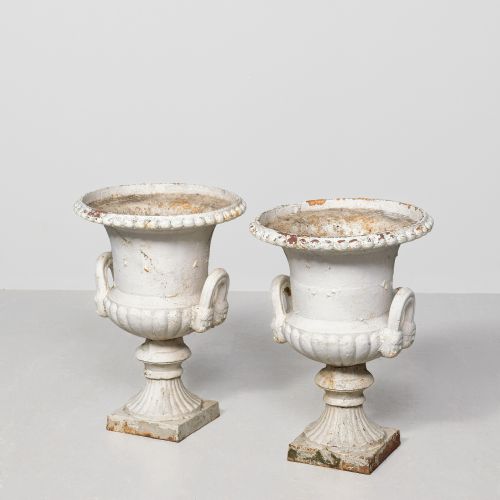
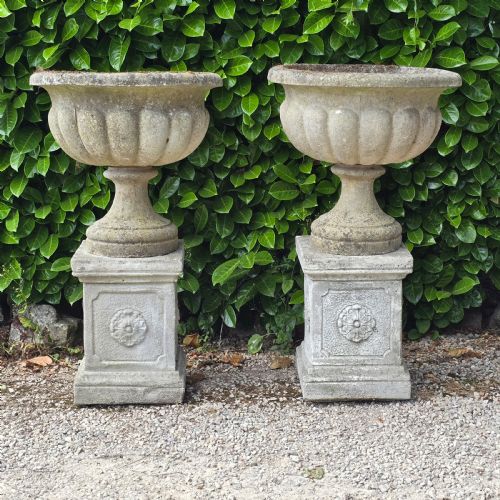
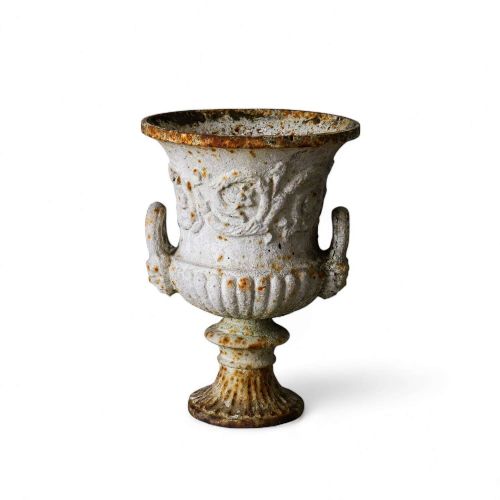
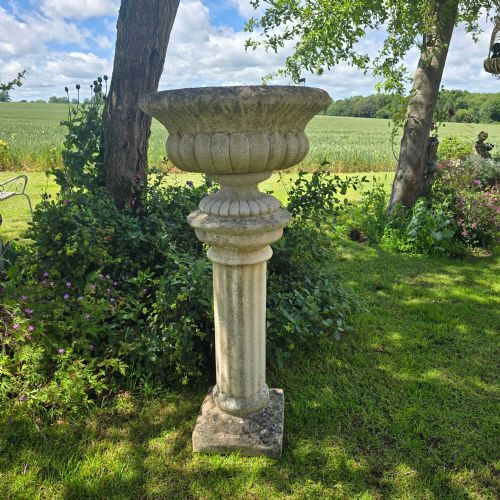
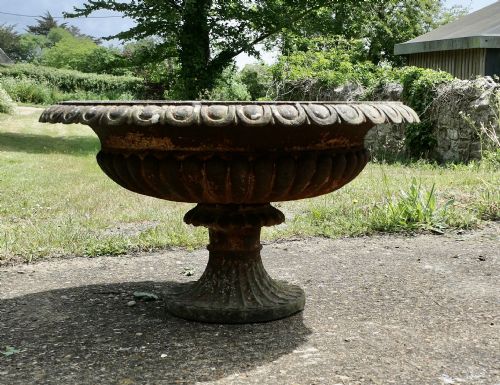
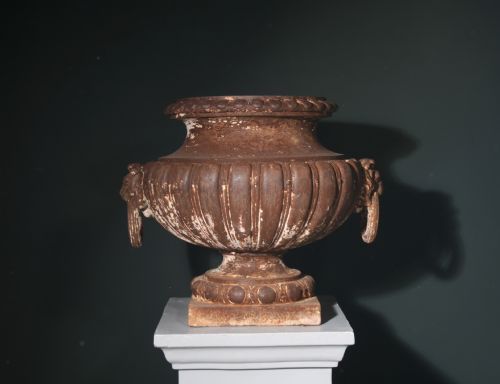
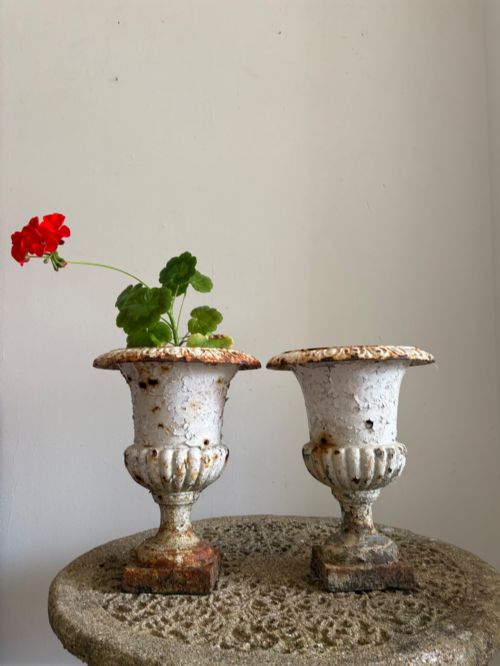
Classical outdoor planters encompass heavy garden vessels and garden urns shaped in historic revival forms, predominantly appearing across nineteenth-century and early twentieth-century examples on this page. These pieces derive their vocabulary from classical antiquity, often taking the flared profile of a Campana urn or the shallow basin of a tazza.
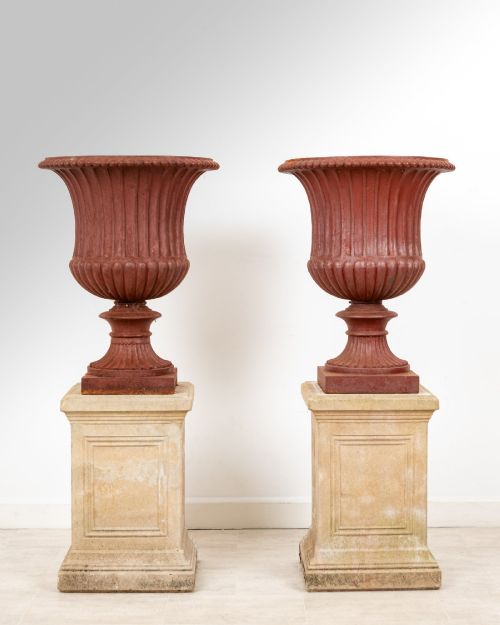
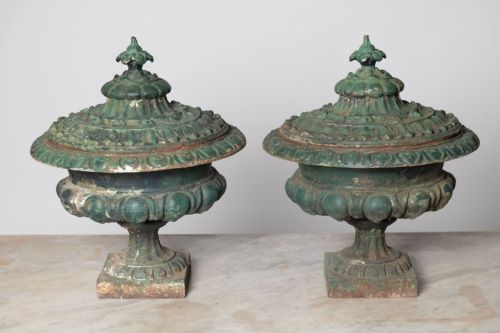
Makers and foundries produced these classical outdoor planters to anchor formal garden designs, placing them on matching stone pedestals or masonry plinths. The selection spans paired compositions and single monumental vessels intended to withstand the elements while providing focal points for terraces and lawns.
How they were made
Foundries cast durable metals like cast iron and lead in sectional moulds, capturing sharp relief details such as acanthus leaves and gadrooning. Iron vessels frequently retain traces of early paint or develop stable surface patination from outdoor weathering.
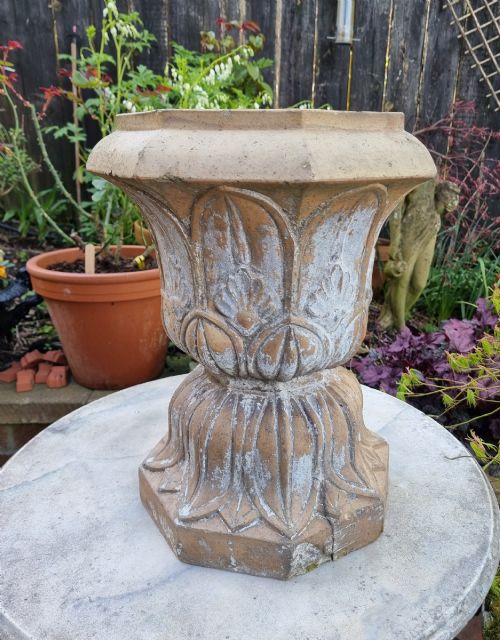
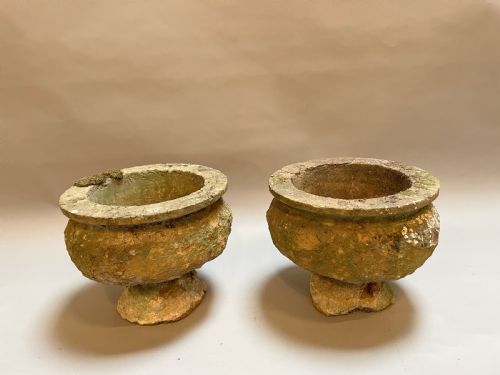
Ceramic and stone versions utilise terracotta, soft stone, limestone, and reconstituted stone, shaped by hand or pressed into forms. These earthen and mineral materials absorb moisture differently, creating distinct patinas over decades of exposure.
Listings feature nineteenth-century and early twentieth-century pieces spanning cast iron, terracotta, limestone, and lead.
What varies in quality
Quality rests in the crispness of the cast or carved ornament, where superior examples exhibit deep undercut foliage and sharply defined classical motifs rather than softened, blurred edges. The weight of the metal and the integrity of the original proportions dictate the visual authority of the vessel.
The presence of matching original plinths, pedestals, or lids elevates a piece, as does documented foundry origin from renowned works. Surviving early surface treatments, such as original distressed paint layers, add historical depth missing from stripped or indiscriminately refinished surfaces.
Falkirk Carron foundry·Coalbrookdale·Andrew Handyside·Val D Osne Foundry
The Classical Outdoor Planters Glossary
- Campana urn
- A bell-shaped garden vessel with an everted rim, looping handles, and a flared body set on a socle base. This form dominates nineteenth-century metal and terracotta gardenware.
- Gadrooning
- A decorative carved or cast band of convex curves or fluting radiating outward along the body or rim of a vessel. It provides textural contrast on classical forms.
- Plinth
- A heavy rectangular or square block base supporting an urn or planter to elevate it above ground level. Many nineteenth-century iron urns were specifically designed to pair with these supports.
- Tazza
- A shallow cup- or bowl-shaped vessel on a high stem and foot, used in garden settings for low-growing plantings. These pieces offer a wider profile than traditional deep urns.
- Terracotta
- Fired unglazed clay ranging in colour from buff to deep orange-red, commonly used for garden planters. Porous and durable, it weathers with distinctive organic mosses over time.
Classical Outdoor Planters: Frequently Asked Questions
How do I protect cast iron planters in winter?
Cast iron withstands cold temperatures well, but standing water inside freezing vessels can cause structural stress. Elevating planters slightly on pot feet prevents moisture from trapping underneath against masonry.
Ensuring drainage holes remain clear allows excess rainwater to escape before ice expansion occurs. Applying appropriate protective coatings helps maintain surviving historic paint surfaces.
Can terracotta garden urns stay outside all year?
Terracotta is naturally porous and absorbs moisture from soil and rain, making certain pieces vulnerable to frost cracking during severe winter freezes. Selecting denser buff terracotta or moving vessels under sheltered garden structures during freezing months extends their longevity.
Lining the interior with protective material or emptying soil from smaller pots reduces internal pressure. Placing pottery upon bricks or tiles prevents ground damp from rising into the base.
How do I identify a nineteenth century cast iron urn?
Nineteenth-century iron vessels display heavy casting weight, often with visible seam lines from multipart sand moulds smoothed by hand. The metal develops a deep, stable oxide layer rather than flaky modern rust.
Foundry marks or registration numbers occasionally appear cast into the base or interior rim. The neoclassical motifs reflect Victorian revivals of Greek and Roman antiquities.