





Outdoor Stone Urns
Outdoor stone urns anchor garden paths and terraces with sculptural mass, bringing classical presence to lawns and courtyards.
Outdoor Stone Urns
Outdoor stone urns are architectural garden vessels designed to hold plants or stand alone as classical focal points on terraces, lawns and pathways. When you search for outdoor stone urns, you encounter substantial vessels created to endure external elements while adding formal structure to a landscape.
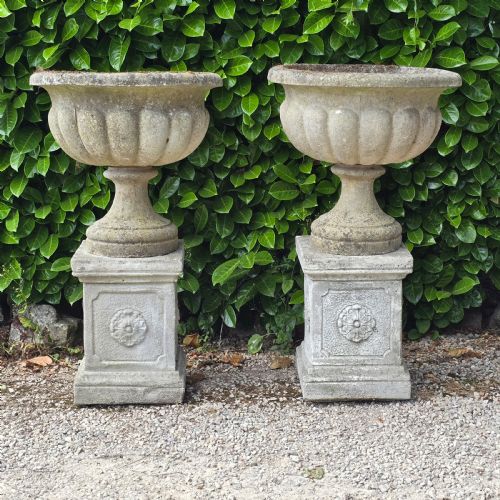
The selections span from the 18th century through the mid 20th century, encompassing diverse regional expressions. Pieces take the form of campana shapes, pedestals, plinths and carved vessels that integrate naturally into garden architecture.
Most examples you meet here originate from the 19th century and the early decades of the 20th century. These include paired items as well as singular monumental vessels fashioned for estate gardens.
How outdoor stone urns were made
Makers utilised cast stone, reconstituted stone, composite stone and natural limestone to form these robust vessels. Many pieces employ traditional casting methods into moulds or involve direct hand carving from blocks of marble and soft stone.
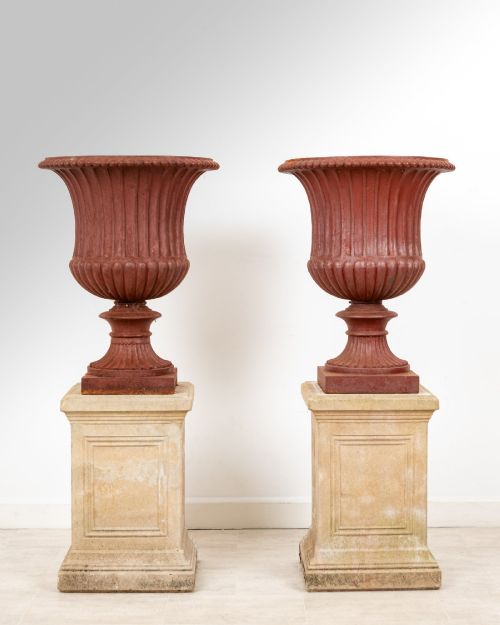
Metal elements such as cast iron appear frequently in the construction of associated bases and campana bodies, combining with mineral materials for structural strength. Terracotta and salt glazed ceramics also provide alternative tactile surfaces shaped by kiln firing.
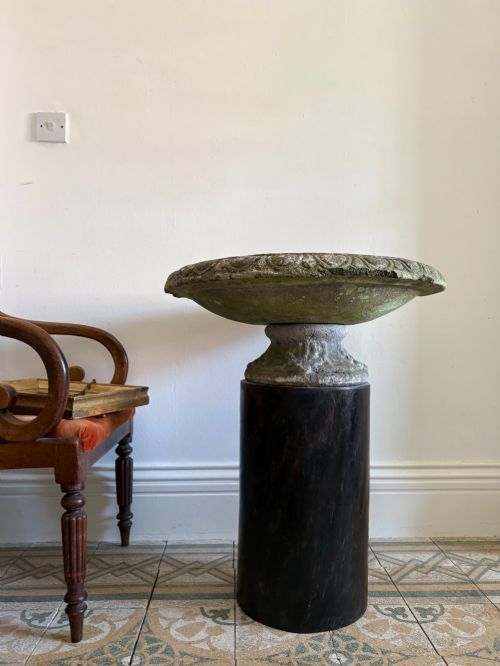
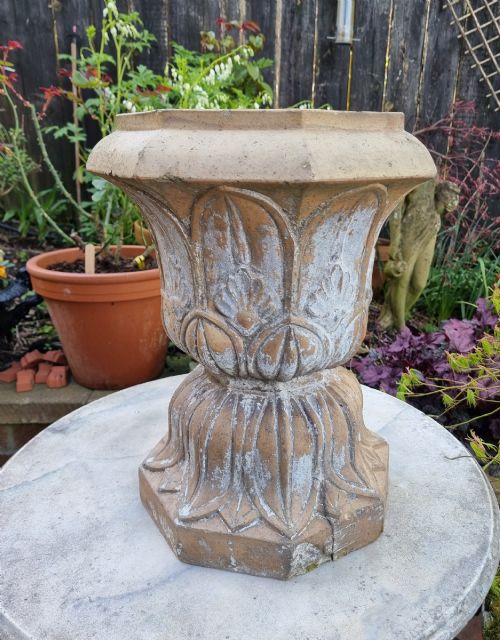
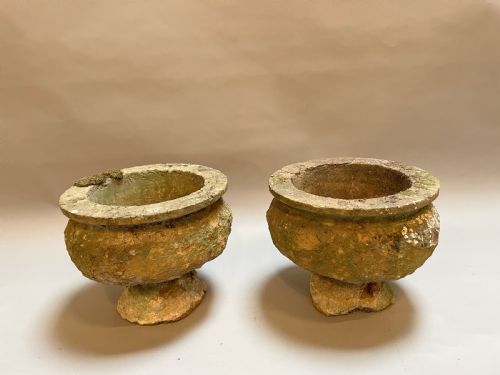
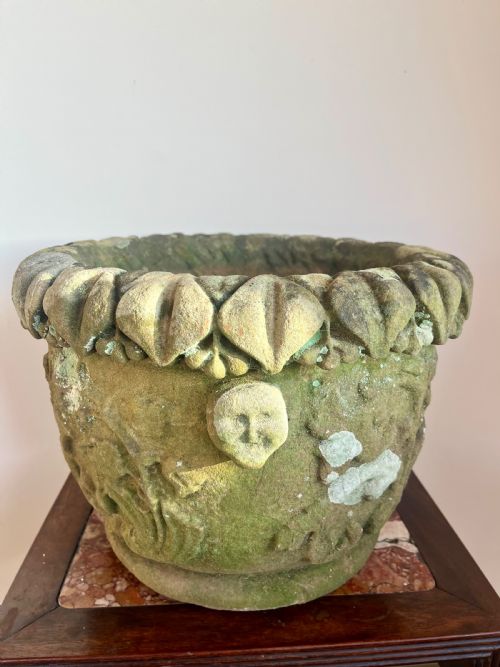
Surface patination develops through decades of exposure to weather, creating organic weathering effects on stone, iron and terracotta. Artisans occasionally integrated carved details like acanthus leaves and handles directly into the body of the urn.
One extraordinary planter on record incorporates reclaimed stone salvaged directly from the Houses of Parliament following bomb damage during the Blitz.
What varies in quality
Material density and the integrity of the casting or carving determine long term durability outdoors. Uniform texture and stable mineral composition distinguish finer examples from more porous or brittle alternatives.
The degree of harmonious weathering and the presence of original matching pedestals or plinths elevate the standing of a pair. Integrated design between the vessel and its base reflects greater original ambition.
Andrew Handyside
The Outdoor Stone Urns Glossary
- Campana urn
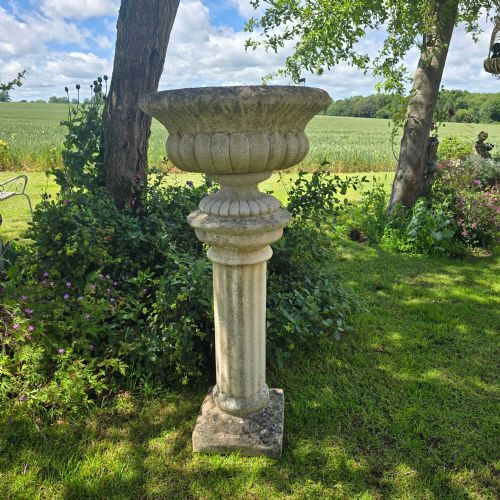
- A bell shaped garden vessel with a flared rim and tapering body. This form draws directly on classical antiquity and remains popular in formal garden design.
- Reconstituted stone
- A manufactured material composed of crushed stone aggregate and a binding agent, moulded into architectural forms. It offers the appearance of natural stone with consistent structural properties.
- Plinth
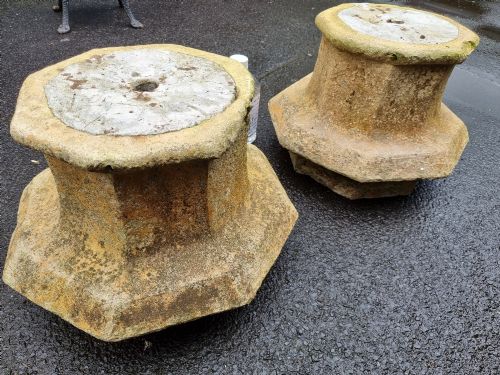
- A heavy block or pedestal that elevates an urn above ground level. These architectural bases provide stability and visual prominence to garden ornaments.
- Salt glazed
- A ceramic finish achieved by throwing common salt into the kiln during high temperature firing. This process produces a durable, vitreous coating with a distinctive pebbled texture.
- Terracotta
- Fired unglazed clay exhibiting warm reddish brown earth tones. It provides a porous medium suited for traditional garden pots and vessels.
Outdoor Stone Urns: Frequently Asked Questions
How do I choose the right size urn?
Consider the scale of your garden path, terrace or lawn before selecting a vessel. Larger spaces accommodate monumental campana shapes and paired pedestals without appearing crowded.
Compact gardens benefit from single vessels that serve as focal points without dominating the surrounding planting beds.
Can outdoor stone urns stay outside in winter?
Most stone, cast stone and iron vessels tolerate winter weather well, especially when well weathered. Ensuring proper drainage prevents trapped water from expanding and damaging the material during freezing temperatures.
Elevating urns slightly on plinths helps keep moisture from accumulating at the base.
How do I tell cast stone from natural stone?
Cast stone and reconstituted stone often show uniform texture and minute aggregate particles distributed evenly across the surface. Natural stone displays distinct geological graining, veining and tool marks left by the carver.
Examining the interior and unseen surfaces often reveals moulding seams on cast pieces.
What styles are common in these garden urns?
Neoclassical and Victorian styles dominate the selection, reflecting classical revival influences in landscape architecture. Pieces frequently feature traditional campana silhouettes, acanthus leaf decoration and classical plinths.
Gothic revival and rustic Mediterranean variants also appear among the regional and period examples.