



Cast Stone Planters
These cast stone planters bring architectural weight to gardens and terraces through enduring classical forms.
Cast Stone Planters
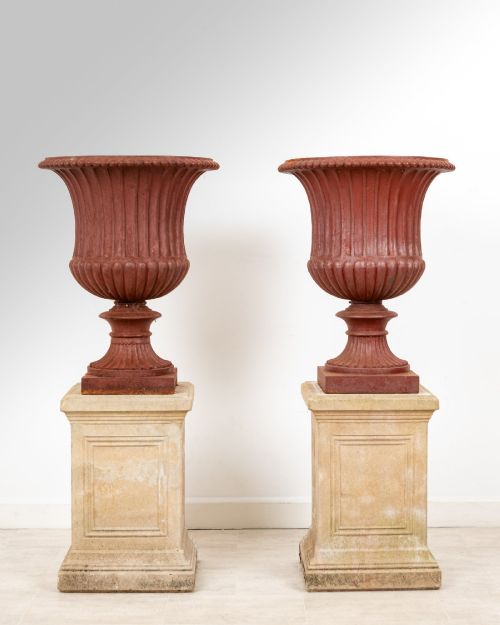
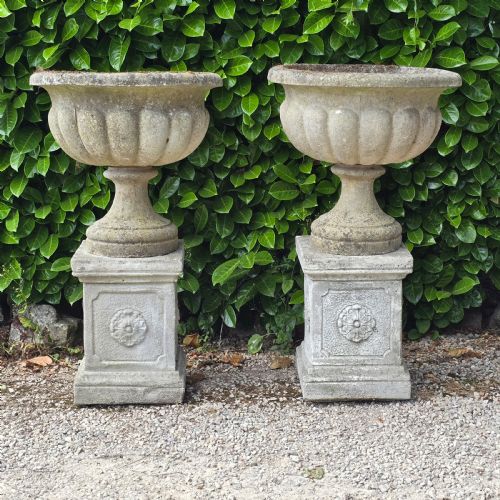
When you search for cast stone planters, you find garden vessels designed to hold plants while anchoring outdoor spaces with sculptural presence. The pieces listed here span the nineteenth century through the mid twentieth century, drawing on neoclassical, classical revival, and gothic revival styles.
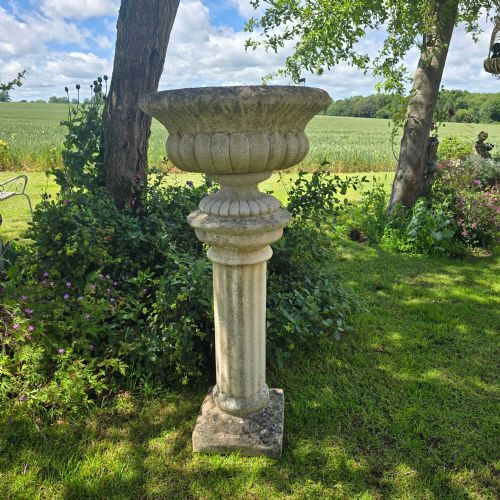
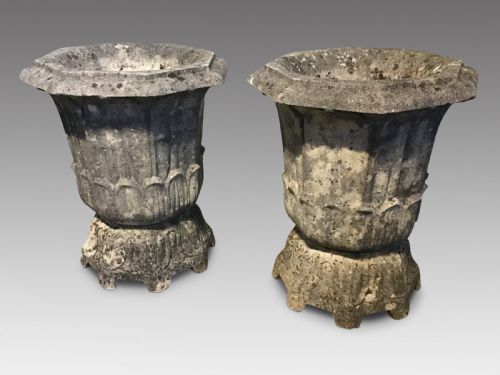
You are most likely to encounter garden urns, campana shapes, and pedestals executed in stone, reconstituted stone, and composite stone. Many examples stand upon plinths, combining planter and base into a single formal composition suitable for lawns, terraces, and country house gardens.
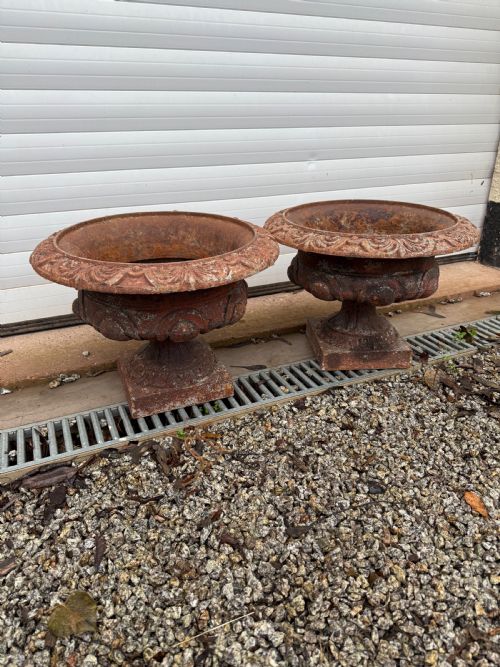
The selection ranges from early twentieth century weathered items to Victorian classical urns and Regency cast iron pairings. Forms vary from simple round planters and seven sided vessels to elaborate acanthus leaf urns and Roman funerary altar adaptations.
Materials and construction
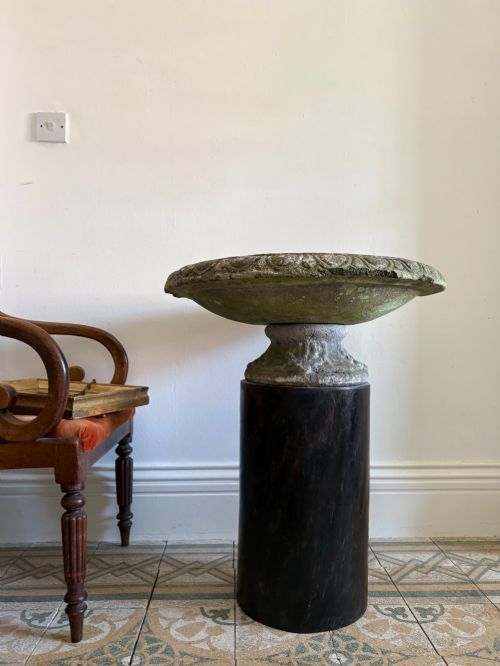
Surface finishes include aged paint layers and natural weathering accumulated over decades outdoors. This patination softens the material, integrating the vessels into garden settings.
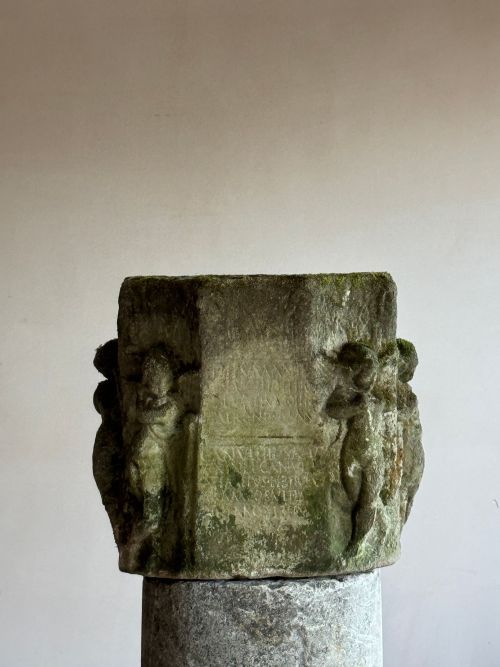
One piece reinterprets a Roman funerary altar as a garden planter.
Defining quality in garden vessels
Quality rests in the crispness of the moulding and the proportion of the ornament, such as acanthus leaves or neoclassical relief work. Finer pieces demonstrate careful attention to detail in the rim, handles, and pedestal joins.
The degree of honest weathering also distinguishes superior examples, where decades outdoors create a stable, pleasing surface texture rather than structural compromise.
Andrew Handyside
The Cast Stone Planters Glossary
- Campana urn
- A bell shaped garden vessel with a flaring rim and a footed base, frequently mounted on a pedestal or plinth.
- Reconstituted stone
- A manufactured material made from crushed stone and a binder, cast in moulds to imitate natural carved stone.
- Neoclassical
- A style drawing on classical antiquity, seen in planters featuring architectural motifs like acanthus leaves and Roman details.
- Plinth
- A heavy base or pedestal that elevates a garden urn or planter above ground level.
Cast Stone Planters: Frequently Asked Questions
Are cast stone planters frost proof?
Most heavier cast stone and reconstituted stone vessels withstand winter conditions well, provided they drain properly and do not hold standing water that freezes.
Elevating the planters on feet or plinths helps prevent moisture retention and subsequent cracking during low temperatures.
How do I clean a weathered stone planter?
Gentle brushing with water and a soft bristle brush removes loose dirt while preserving the aged patina and lichen growth.
Avoid high pressure washers and harsh chemical cleaners, which strip the weathered surface and damage the stone.
Do these planters come with pedestals?
Many listings include matching pedestals, plinths, or bases sold as pairs or single sets, while others consist of the vessel alone.
Checking the individual description confirms whether a stand forms part of the piece.
How do I date a cast stone planter?
Stylistic clues such as Victorian neoclassical motifs, Edwardian proportions, or mid twentieth century minimalism help determine the period.
The depth of the weathering and the composition of the cast material also provide indicators of age.