
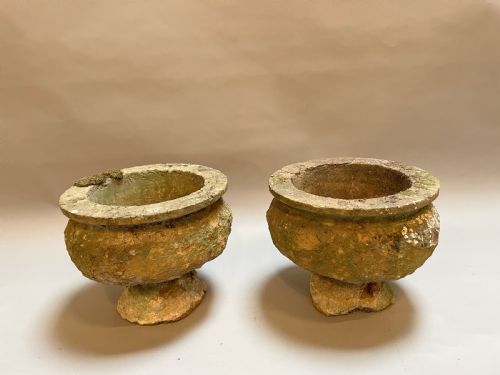


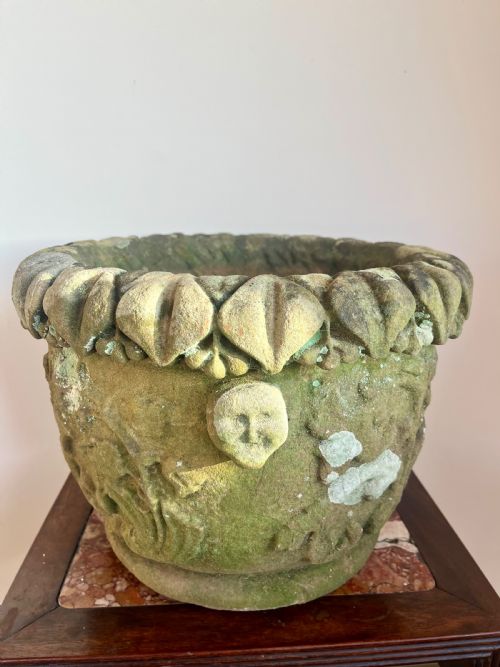


Grey Stone Garden Urns
Grey stone garden urns are classical ornaments built to anchor a terrace or lawn, offering weight and structure that modern cast concrete simply cannot replicate.
Grey Stone Garden Urns
Grey stone garden urns encompass garden ornaments and planters shaped in traditional campana, classical revival, and neoclassical forms. These pieces serve as focal points in exterior spaces, designed to weather the elements over decades.
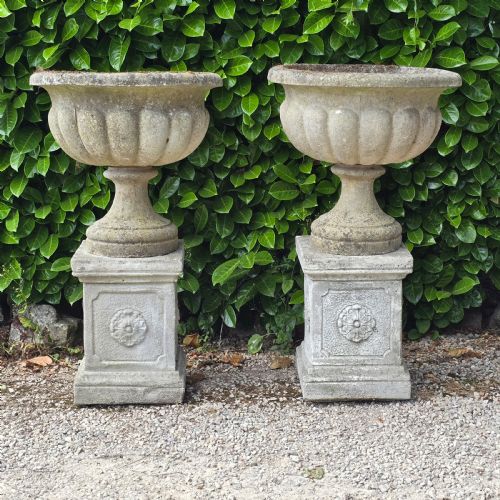
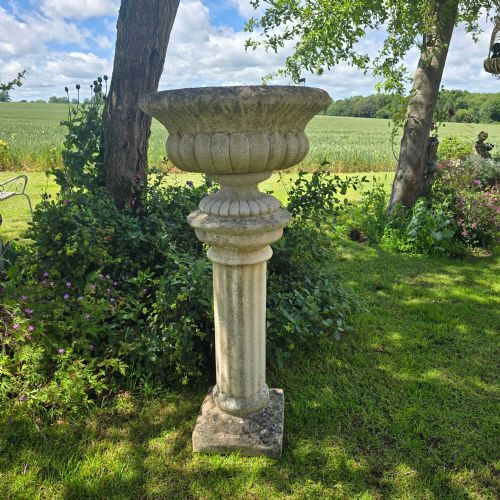
The pieces listed here draw from diverse periods including the eighteenth and nineteenth centuries, alongside early twentieth-century examples like 1920s cast stone. Buyers will encounter pairs on plinths, single campana vessels, and related architectural items such as limestone pedestals.
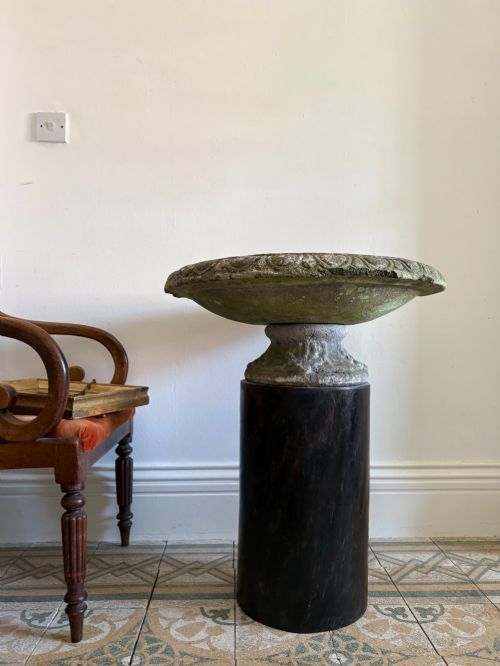
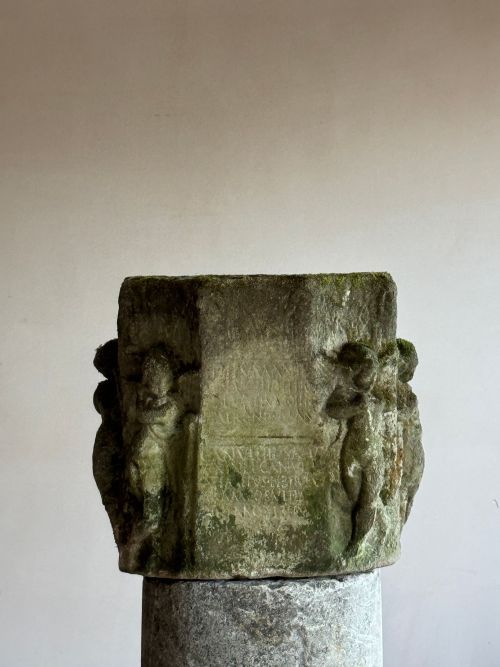
Origins range from British stonework to Indian colonial pieces from the Raj period, reflecting global traditions in stone garden decoration. Forms vary from simple round planters to seven-sided vessels and carved marble urns.
How they were made
Makers shaped these grey stone garden urns through hand carving or by casting mixtures such as reconstituted and composite stone. Hand-carved examples display the direct tool marks of the mason working in limestone, soft stone, or marble.
Cast and reconstituted stone pieces utilised moulds to achieve precise neoclassical or Gothic revival details, binding aggregate materials into durable garden furniture. Cast iron versions offer an alternative metallic medium finished in a grey or weathered surface.
Weathering occurs naturally as rain and frost interact with the mineral composition of limestone, cast stone, and marble. This process softens sharp edges and encourages lichen growth across the exterior surfaces.
Materials represented include limestone, marble, soft stone, cast iron, and reconstituted stone.
What varies in quality
Quality rests upon the integrity of the material and the crispness of the original carving or casting. Hand-carved marble and early limestone display a depth of detail and proportional balance absent in hurried mass production.
The character of the weathering defines the visual success of each piece. Surface patination that has developed organically over a century carries more aesthetic gravity than artificial chemical ageing.
Proportion between the urn bowl and its supporting plinth or pedestal dictates the architectural harmony of the ensemble. Well-matched pairs demonstrate a deliberate design cohesion valued in formal garden schemes.
Andrew Handyside
The Grey Stone Garden Urns Glossary
- Reconstituted stone
- A manufactured material made from crushed stone aggregate bound with cement. It is poured into moulds to replicate the appearance of natural carved stone.
- Plinth
- A heavy rectangular or square base block that elevates an urn or planter. It provides structural stability and visual presence on a terrace or lawn.
- Neoclassical
- A style drawing inspiration from the classical art and architecture of ancient Greece and Rome. It emphasises symmetry, proportion, and restrained ornamentation.
- Raj period
- The era of British rule in the Indian subcontinent. Stone pieces from this time often incorporate distinct regional stonework traditions.
Grey Stone Garden Urns: Frequently Asked Questions
How do I clean a stone urn?
Wash the surface gently with water and a soft brush to remove loose dirt and debris. Avoid harsh chemical cleaners that can strip away historic patination.
Allow the stone to retain its natural weathered appearance, as scrubbing away moss and lichen diminishes the age character that collectors value.
Can these urns stay outside in winter?
Most stone and cast stone urns withstand freezing temperatures if they are kept clear of stagnant water. Ensure drainage holes remain open so ice does not expand inside the bowl.
Move delicate marble or soft stone vessels under cover during severe frosts to prevent surface spalling and structural cracking.
Are these urns heavy to move?
These pieces possess substantial weight due to their solid stone, marble, or cast composition. Planters and plinths often require multiple people or lifting equipment to position safely.
Assess the load-bearing capacity of your garden terrace or balcony before placing large stone vessels into position.
How do I date a stone urn?
Examine the tool marks, the mineral composition of the stone, and the wear patterns around the rim and base. Hand-carved limestone and early cast stone exhibit specific manufacturing traits unique to their era.
Compare the decorative motifs, such as neoclassical drapery or campana proportions, against documented examples from the eighteenth and nineteenth centuries.