





Pair Stone Garden Pots
These pair stone garden pots bring enduring classical weight to a terrace, offering a structured focal point that weathers beautifully outdoors.
Pair Stone Garden Pots
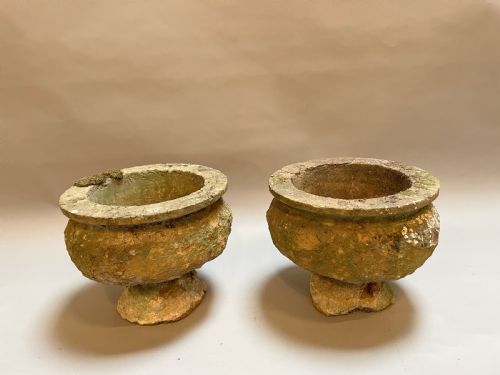
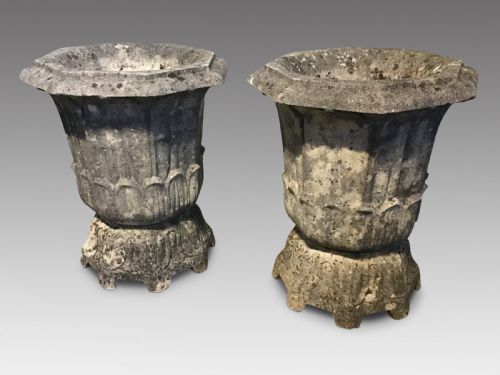
When you search for pair stone garden pots, you are looking at substantial outdoor vessels designed to frame paths, entrances, or garden focal points. The pieces listed on this page span the nineteenth and twentieth centuries, taking the form of campana urns, planters, and pedestals.
You are most likely to meet Victorian and early twentieth-century examples shaped from terracotta, soft stone, limestone, and reconstituted or cast stone. These twin vessels offer symmetrical balance for planting or architectural display in a garden or courtyard.
How they were made
Makers shaped these garden vessels using durable outdoor materials such as terracotta, cast iron, salt-glazed stoneware, and carved marble or soft stone. Traditional casting methods allowed workshops to produce uniform campana profiles and decorative classical motifs.
Moulders utilised durable mineral compositions and fired clays to withstand seasonal weathering, occasionally applying surface paint for added protection or decorative effect. The weight of these materials ensured the vessels remained stable when filled with soil and mature plants.
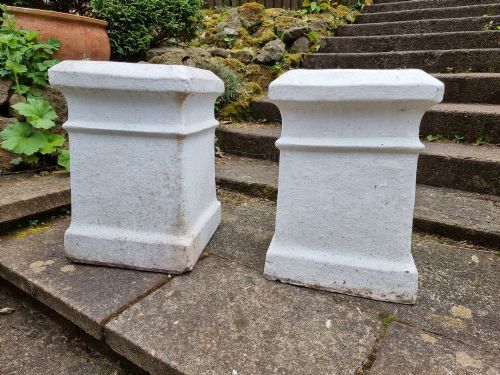
The selection includes formal Victorian campana shapes alongside twentieth-century round garden planters and chimney pot pedestals.
What varies in quality
The distinction between ordinary utility planters and finer garden ornaments lies in the crispness of the classical detailing and the depth of the material's weathering. Soft stone and carved marble display hand-finished contours that differ significantly from mass-produced industrial moulds.
Proportion and surface patina dictate the visual success of a pair, as genuine age imparts organic lichen growth and mineral patination that cannot be artificially duplicated. A well-matched twin set maintains uniform coloration and structural integrity across both vessels.
The Pair Stone Garden Pots Glossary
- Campana urn
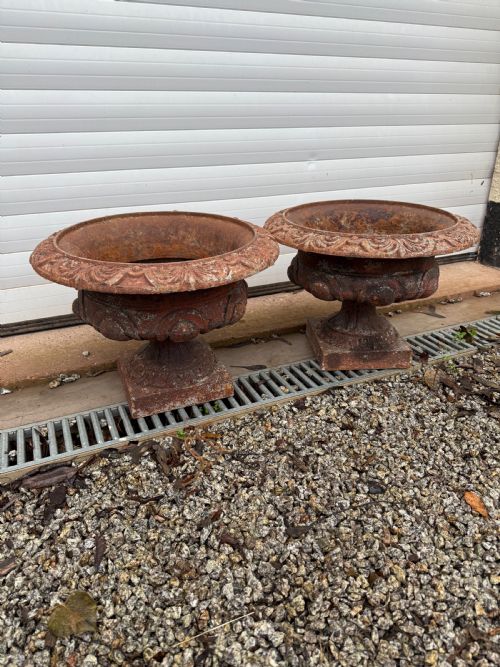
- A bell-shaped garden vessel with a flared rim, frequently mounted on a short stem and square plinth base. This classical silhouette originates from ancient Roman metal and marble forms.
- Reconstituted stone
- A durable composite material made from crushed natural stone aggregate mixed with a cement binder and cast in a mould. It provides the appearance of quarried stone at a manageable weight.
- Salt-glazed stoneware
- A dense, impermeable ceramic fired at high temperatures with common salt thrown into the kiln, producing a distinctive pitted glaze. This finish protects the clay body from frost damage.
- Terracotta
- A porous, unglazed baked red earthenware used extensively for garden pots because its breathable walls promote healthy root aeration. Over decades outdoors, it acquires a rich mossy patina.
- Plinth
- A heavy square base or pedestal that elevates an urn or planter above ground level, enhancing its architectural presence in a garden landscape.
Pair Stone Garden Pots: Frequently Asked Questions
How do I care for antique stone pots?
Position your vessels on small pot feet or bricks during freezing winter months to prevent trapped moisture from expanding and cracking the base.
Wash the surfaces gently with water and a soft brush, avoiding harsh chemical cleaners that can strip away the historic weathered patina.
Can these garden pots stay outside all winter?
Most sturdy stone, iron, and salt-glazed pots handle cold weather well, provided drainage holes remain clear and unobstructed by compacted soil.
For more porous materials like terracotta or soft stone, lining the interior with protective material or moving them under shelter during severe frost extends their lifespan.
How can I tell the period of a garden urn?
Examine the casting seams, tool marks, and surface composition, as nineteenth-century pieces often display hand-chiselled details or heavier aggregate mixtures.
Victorian and Edwardian examples frequently feature distinct neoclassical motifs and deep mineral weathering that differ from mid-twentieth-century cast stone designs.
What is the best planting method for deep stone urns?
Fill the lower third of the vessel with broken crocks or lightweight gravel to ensure efficient drainage and reduce the overall weight.
Top the drainage layer with a balanced loam-based compost suited for permanent shrubs or seasonal flowering plants.