


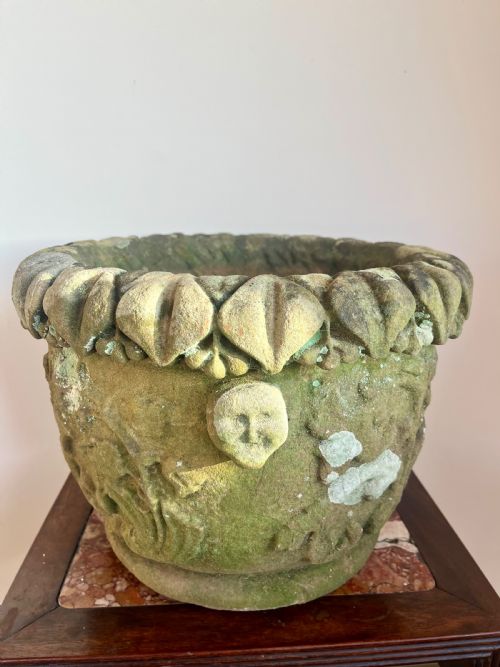


Vintage Stone Garden Planters
These vintage stone garden planters bring character and weight to a terrace, and you are most likely to find nineteenth-century examples or early twentieth-century cast stone pieces here.
Vintage Stone Garden Planters
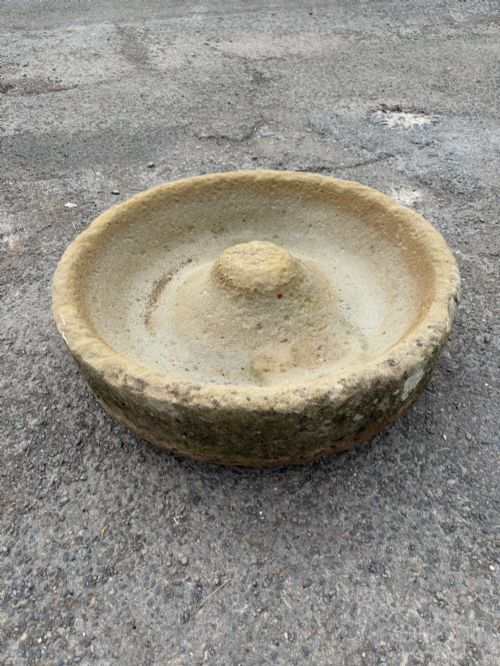
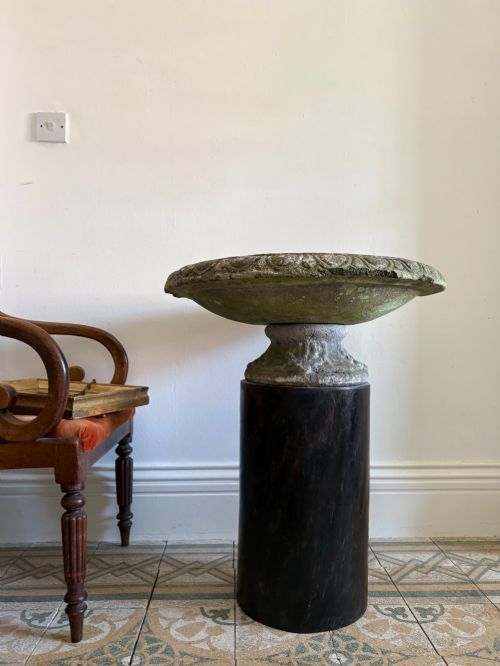
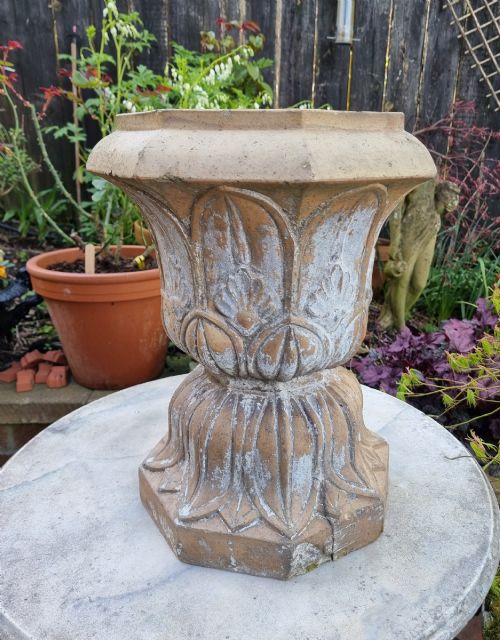
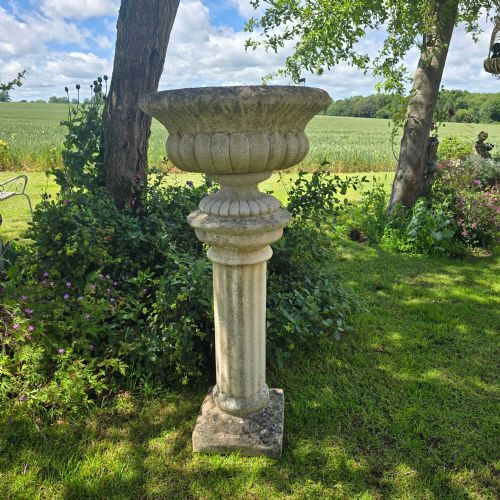
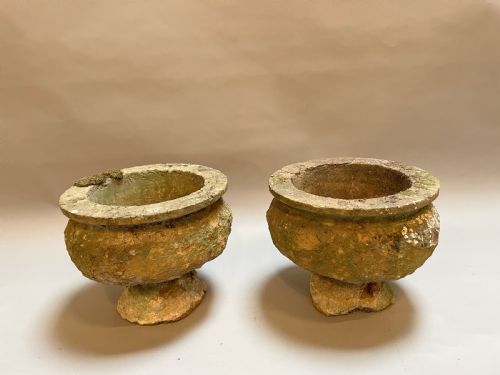
Vintage stone garden planters encompass heavy troughs, campana urns, and mortar bowls gathered from centuries of outdoor use. When you search for vintage stone garden planters, you encounter everything from eighteenth-century square troughs to Edwardian cast stone birdbath planters and Victorian iron vessels.
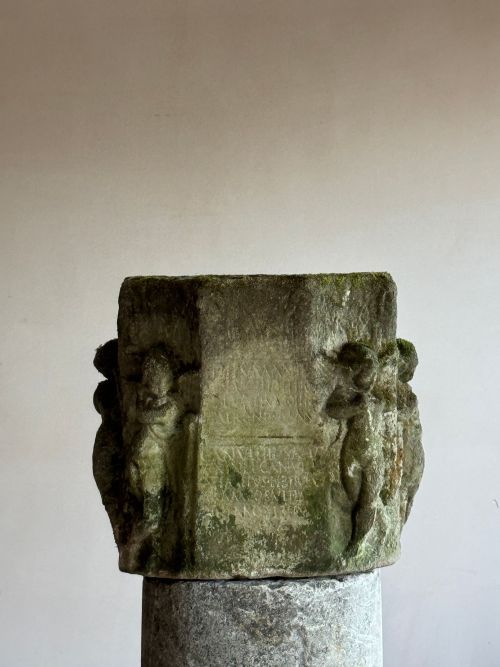
The nineteenth century and the early twentieth century supply the majority of the items on this page. Pieces range from simple granite grindstones and limestone mill stone bases to grand neoclassical campana urns and carved marble garden urns.
Origins stretch from English workshops to Scottish kilns and Indian quarries. Buyers select these objects to anchor garden paths, plant formal box hedging, or introduce authentic patination to contemporary planting schemes.
What varies in quality
Quality rests in the depth of weathering, the integrity of the material, and the harmony of proportion. Natural stone troughs and carved marble urns show superior longevity and develop organic lichen crusts that machine-cut modern alternatives cannot replicate.
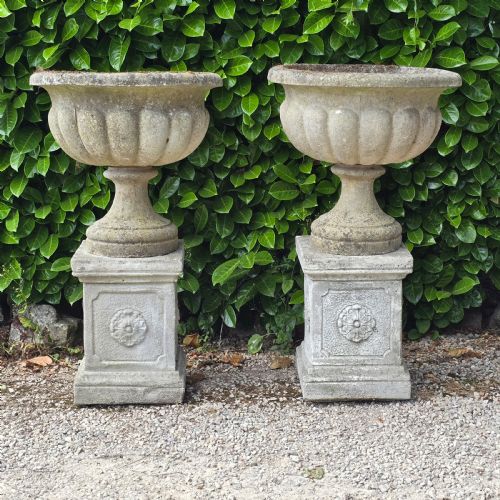
The finesse of the modelling separates standard utility vessels from fine decorative pieces. Campana urns with crisp cast relief, finely carved handles, and well-balanced pedestals command attention through their sculptural presence rather than sheer size alone.
The selection includes repurposed architectural elements, such as nineteenth-century chimney pots, mill stone bases, and reclaimed stone from blitzed parliamentary buildings.
Andrew Handyside
The Vintage Stone Garden Planters Glossary
- Campana
- A bell-shaped garden urn with a flared rim and a footed base, frequently cast in iron, terracotta, or stone during the nineteenth century.
- Trough
- A long, deep rectangular stone vessel originally utilised for feeding livestock or domestic washing, prized in gardens for planting alpines.
- Terracotta
- Fired unglazed clay that ranges in colour from buff to deep orange, commonly shaped into classical garden urns and pancheons.
- Reconstituted stone
- A durable composite material made from crushed stone and a binder, cast in moulds to imitate natural quarried masonry.
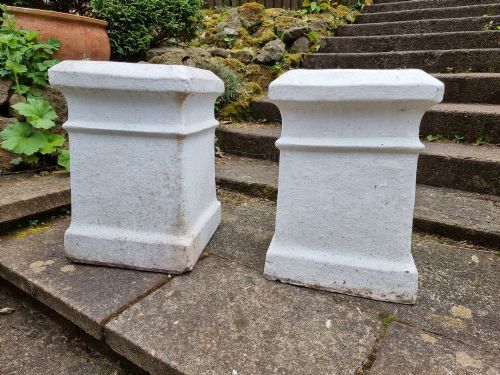
- Plinth
- A heavy stone or stoneware block that elevates an urn or planter above ground level to improve drainage and visual impact.
Vintage Stone Garden Planters: Frequently Asked Questions
How do I clean a stone planter?
Gently brush away loose soil and debris using a soft bristle brush with plain water. Avoid harsh chemical cleaners or pressure washers that strip away historic patination and damage softer limestones.
Allow the stone to dry naturally between cleanings. Preserving the accumulated moss and lichen maintains the authentic appearance of the piece.
Will stone planters crack in winter?
Natural stone and thick cast stone tolerate frost well if they have adequate drainage holes. Trapped water expanding inside porous terracotta or saturated stone causes winter cracking.
Elevate heavy planters on small feet or bricks during freezing months to keep base drainage clear. Lining vulnerable vessels with protective material also minimises freeze-thaw damage.
How do I date a stone planter?
Examine the tool marks, material composition, and surface wear for clues to the manufacturing period. Hand-chiselled surfaces and lime mortars suggest eighteenth or seventeenth-century origins, while uniform cast stone often points to the Edwardian era.
Compare stylistic details like neoclassical handles or Victorian campana proportions against known period designs. Documentation or provenance from previous collections further secures the timeline.