


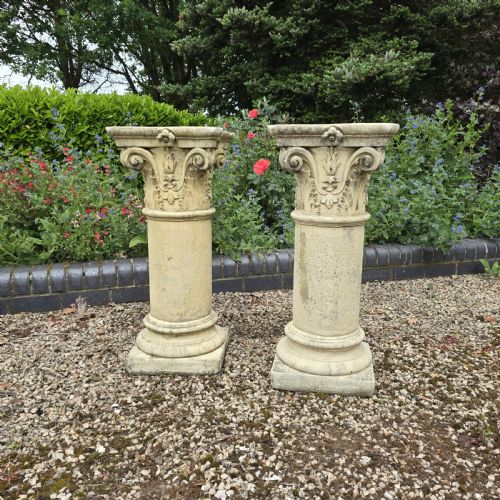
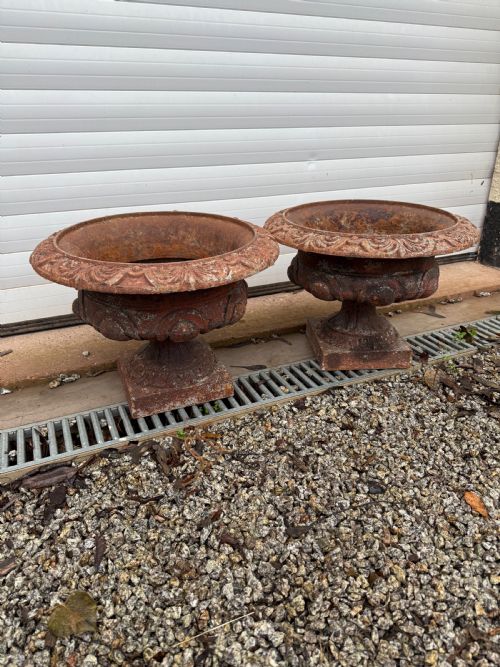

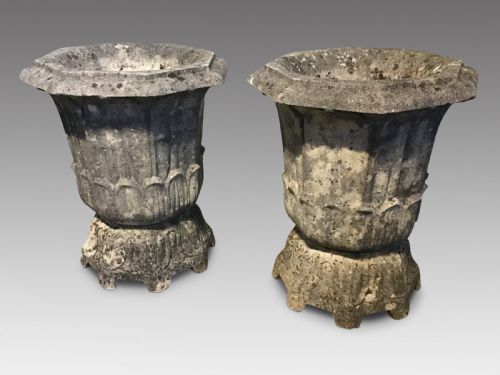


Outdoor Stone Urn Pair
An outdoor stone urn pair anchors a terrace or garden path, offering classical proportion and architectural weight to planting schemes.
Outdoor Stone Urn Pair
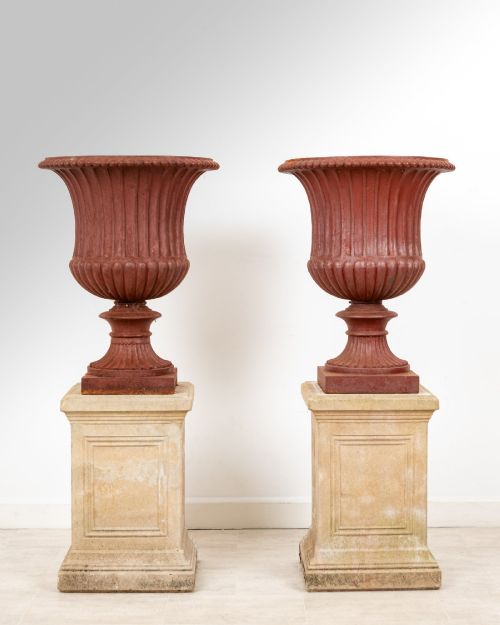
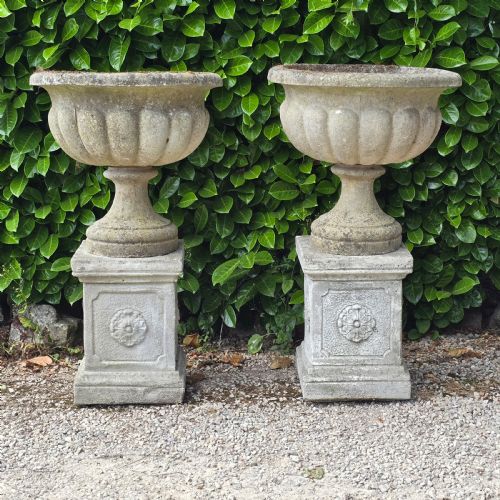
An outdoor stone urn pair consists of matching vessels designed for garden display, frequently paired with complementary plinths or pedestals to elevate the planting. These pieces draw on classical, Victorian, and Gothic Revival styles, bringing formal structure to terrace and garden settings.
The selections encountered on this page encompass materials ranging from reconstituted and composite stone to soft stone, limestone, and carved marble. Pieces date from the 19th century through to the mid-20th century, alongside campana shapes and classical column forms.
How they were made
Makers utilised casting techniques with reconstituted, composite, and soft stone mixtures, or carved solid materials like limestone and marble directly by hand. Cast iron variants also appear alongside terracotta and salt-glazed earthenware, reflecting the diverse moulding and founding methods of the Victorian and later eras.
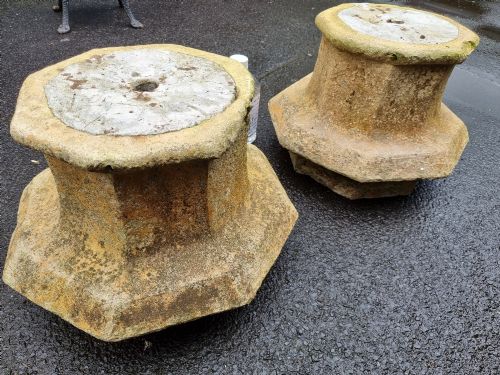
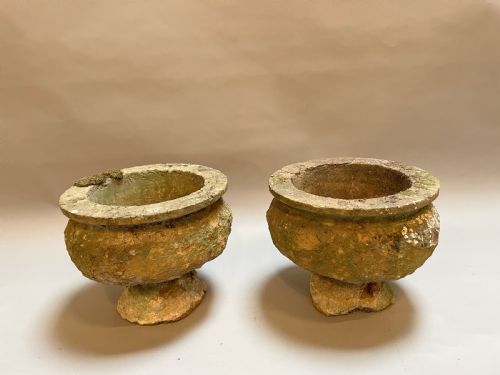
Surface weathering develops naturally over decades outdoors, as frost, moisture, and lichen soften the edges of cast stone and carved marble. Pedestals and plinths were similarly cast or carved to support the weight of the urns and withstand seasonal temperature shifts.
Listings feature periods spanning from the Regency and Victorian eras through to 1950, utilising stone, cast iron, terracotta, and marble.
What varies in quality
The definition and crispness of the moulded or carved detail distinguish finer examples from simpler utilitarian vessels, particularly in acanthus leaves, egg-and-dart moulding, and classical fluting. Sharper casting lines and more sophisticated proportions reflect the skill of the original workshop.
The choice of material alters the long-term character, with hand-carved marble and early composite stone showing a different grain and weathering pattern compared to later cast mixtures. The integration between the urn bowl and its matching plinth also affects the overall visual balance.
The Outdoor Stone Urn Pair Glossary
- Campana urn
- A bell-shaped garden vessel with an everted rim and a flared body, widely produced in iron and stone during the 19th century.
- Reconstituted stone
- A manufactured material composed of crushed stone aggregate mixed with a binder, moulded to replicate natural carved stone.
- Plinth
- A heavy rectangular or square base block that elevates a garden urn, often decorated with neoclassical or Gothic panels.
- Salt glaze
- A vitreous coating formed by throwing common salt into the kiln during high-temperature firing, creating a durable textured finish on earthenware.
- Corinthian column
- An architectural support featuring an ornate capital carved with acanthus leaves, adapted in some instances as garden pedestals.
Outdoor Stone Urn Pair: Frequently Asked Questions
How do I secure an outdoor stone urn pair?
Heavy garden urns and their plinths generally rely on their own substantial weight to remain stable on a level stone or paved surface. For extra security on elevated terraces, appropriate masonry adhesives or discreet stainless steel dowels can be utilised between the vessel and the base.
Positioning the pair on a well-drained foundation prevents the base from shifting unevenly as the ground settles through winter frosts. Ensuring the drainage hole remains clear stops water accumulation from freezing and cracking the stone body.
Can these garden urns stay outside all winter?
Most 19th-century and period composite stone urns withstand freezing conditions well, provided moisture does not become trapped inside the bowl. Raising the base slightly off damp soil allows water to drain freely from the bottom.
Placing gravel or broken crocks at the base of the planting interior improves drainage and protects the material during hard freezes. Very porous soft stone pieces benefit from being sheltered or covered during severe winter weather.
What is the difference between cast stone and carved marble?
Cast stone and composite stone are produced by pouring aggregate mixtures into moulds, which allows for consistent replication of classical motifs across Victorian and later garden pieces. This method creates a textured surface that gathers weathering and moss evenly over time.
Carved marble involves hand-chiselling solid stone blocks, resulting in sharper detail and a smoother crystalline grain that ages with a distinctive grey patina. Both materials fulfil the traditional role of a garden urn but carry different visual weights and surface textures.
How do I tell an older urn from a mid-century one?
Nineteenth-century and early 20th-century pieces typically display heavier mineral aggregate mixes, hand-finished tool marks, and deeper weathering patinas accumulated over generations outdoors. Victorian designs frequently favour pronounced campana silhouettes, classical relief friezes, or Gothic Revival panel details.
Mid-century examples from around 1950 often utilise smoother reconstituted mixes with simpler geometric forms and round planter profiles. Examining the interior surfaces and the weathering patterns around the rim helps indicate the age of the material.