



Sterling Silver Urn
When you search for a sterling silver urn, you are looking at classical vessel forms rendered in precious metal across Georgian, Victorian, and Edwardian periods.
Sterling Silver Urn
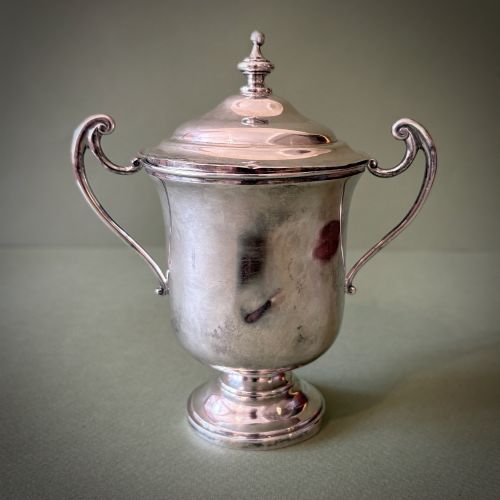
A sterling silver urn functions as a decorative or utilitarian vessel, frequently appearing in forms such as tea caddies, sugar baskets, trophies, and vases.
The pieces on this page span the eighteenth, nineteenth, and early twentieth centuries, drawing heavily upon neoclassical design principles and traditional pedestal bases.
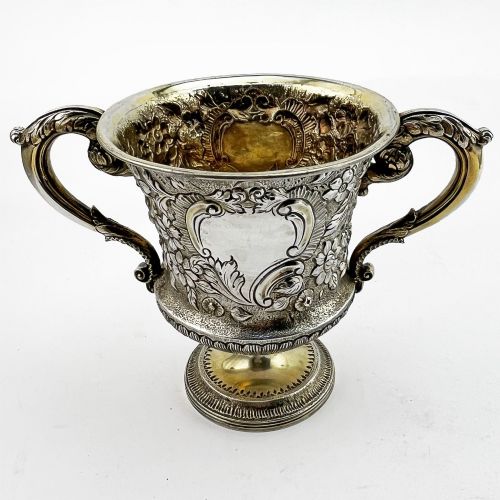
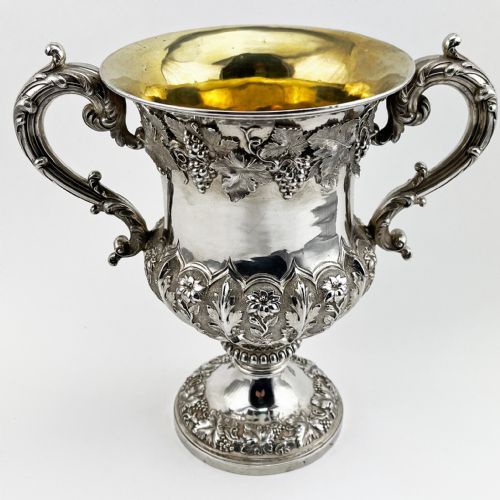
Makers adapted the classical urn shape for domestic dining, display, and presentation, creating items that range from small pot pourri boxes to large campana-shaped presentation cups.
Materials and construction
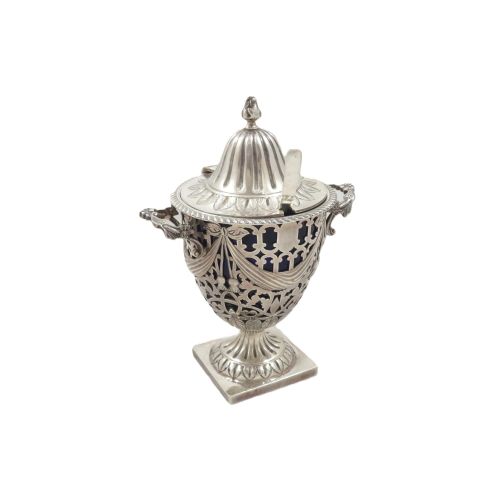
Silversmiths constructed these vessels primarily from solid sterling silver, occasionally incorporating silver gilt, vermeil, or cobalt glass liners to contrast with the polished metal.
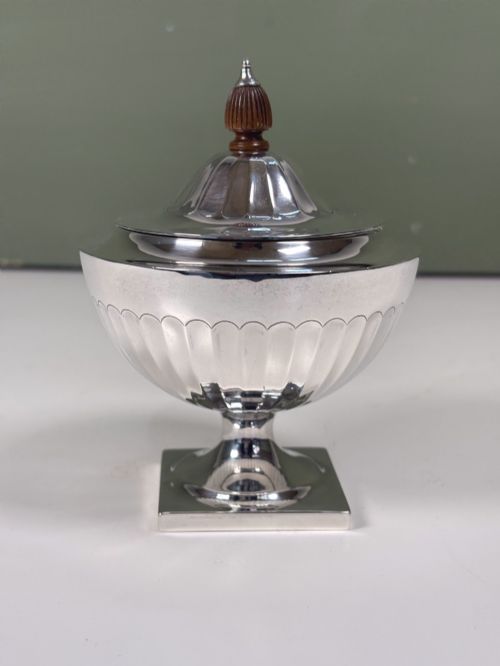
Many examples utilise secondary materials like ebonised wood bases or wooden handles, while surface ornamentation includes fine engraving, chasing, and foliate trimming.
Forming the body often involved hammering sheet silver over stakes or casting heavier components such as handles and feet separately before soldering them to the main vessel.
Some nineteenth-century silversmiths designed small urns specifically to sit quietly on the table and dispense fragrant dried rose petals.
Judging quality in silver urns
Quality rests upon the crispness of the chased or engraved detail and the proportional harmony of the pedestal, handles, and body.
Heavier gauge silver provides a more substantial feel in the hand and ensures structural integrity at stress points like the stem and rim joints.
Pieces bearing clear hallmarks from notable makers or workshops demonstrate superior provenance and skilled craftsmanship compared to unmarked or generic alternatives.
Mappin and Webb·Walker and Hall·Goldsmiths and Silversmiths Co·Henry Tatton and Son·Paul Storr·Rebecca Emes
The Sterling Silver Urn Glossary
- Campana
- A bell-shaped vessel with a flared rim and footed base, frequently seen in Georgian and neoclassical urn designs.
- Silver Gilt
- Sterling silver that has been coated with a thin layer of gold, often used on the interior of drinking vessels and sugar urns.
- Vermeil
- Another term for gilded silver, providing a warm golden tone over the underlying white metal.
- Pot Pourri
- A mixture of dried plant materials scented with spices, housed within pierced or lidded decorative containers like urns and boxes.
- Hallmark
- An official stamp applied by an assay office to indicate the purity of the metal, the maker, and the year of manufacture.
Sterling Silver Urn: Frequently Asked Questions
What is a sterling silver urn used for?
These vessels served various domestic and ceremonial functions, ranging from holding loose tea leaves and sugar to displaying pot pourri or acting as presentation trophies.
Over the centuries, owners placed them on sideboards and mantelpieces primarily for visual display, reflecting classical architectural tastes within domestic interiors.
How do I date a silver urn?
Dating relies primarily on the official hallmarks stamped into the metal by assay offices, which indicate the exact year and city of manufacture.
Stylistic markers, such as neoclassical handles, Edwardian proportions, or Victorian engraving styles, also help narrow down the period of production.
How do I clean a sterling silver urn?
Maintenance requires a soft microfiber cloth and a dedicated silver polish formulated to remove tarnish without abrading the surface or wearing down fine engravings.
Avoid harsh chemical dips, especially on pieces with gilt interiors, cobalt glass liners, or wooden components that might suffer damage from liquid exposure.
Are these urns made of solid silver?
The pieces recorded here consist of solid sterling silver, adhering to standard British and international purity thresholds for precious metal objects.
Some examples include weighted bases filled with other materials for stability or secondary elements like wooden handles and glass liners.