



Silver Chalice Trophy
A silver chalice trophy carries the weight of past victories, offering a grand decorative form forged from sterling silver or silver plate.
Silver Chalice Trophy
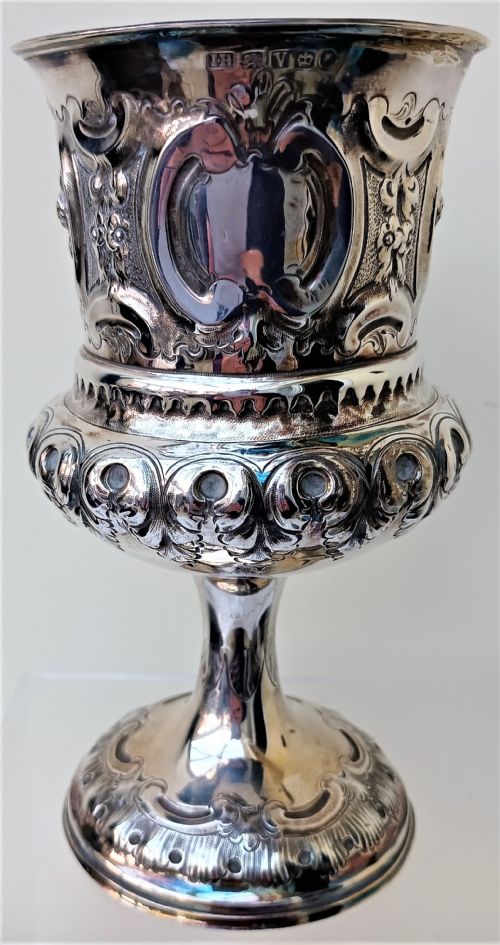
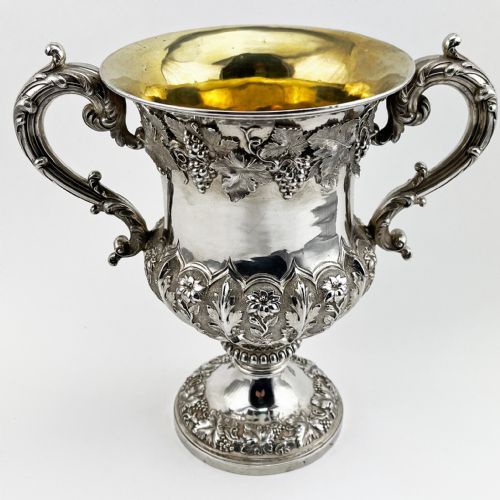
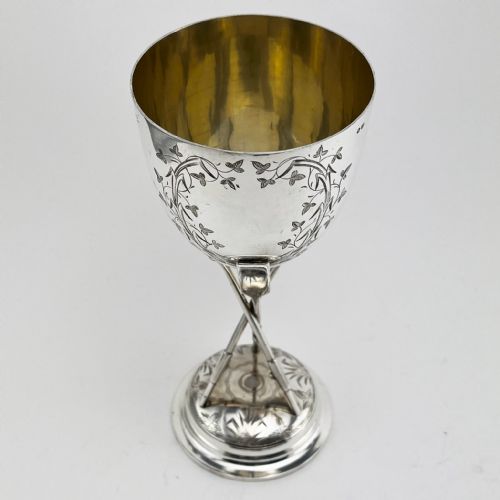
When searching for a silver chalice trophy, collectors encounter a diverse group of presentation vessels spanning the Georgian, Victorian, and Edwardian eras. These objects manifest primarily as trophy cups, goblets, and loving cups, often bearing specific inscriptions or engravings tied to sporting events and competitive triumphs.
The pieces on this page derive from varied origins, including English workshops, Chinese Export silver production, and Irish silversmithing traditions. Forms range from simple single-handle chalices to large presentation cups and covers equipped with ebonised wood bases.
How they were made
Maker's workshops utilised sterling silver, Old Sheffield plate, and silver plate, sometimes adding vermeil or gold gilt highlights to interior bowls and chased details. Metals were hammered, spun, or cast into deep chalice and goblet profiles, then supported on stepped or pedestal feet.
Surface decoration relied on hand engraving, repoussé work, and parcel gilt finishes to accentuate armorial bearings, floral motifs, and koi carp designs. Handles were cast separately and soldered securely to the body, while presentation covers often featured distinct finials.
Some nineteenth-century silver goblets feature hand-chased koi carp swimming around the bowl, bringing river life directly to the dining table.
What varies in quality
Quality in these pieces is dictated by the crispness of the hand engraving and the substantial weight of the metal used in the body and base. Superior examples display balanced proportions, secure handle joints, and well-executed chased or repoussé ornamentation without thinning from excessive polishing.
The presence of crisp hallmarks, maker's marks, and documented historical provenance elevates a piece above standard unmarked or heavily worn alternatives. The integration of structural elements like liners or fitted ebonised wooden bases further distinguishes the finer pieces in this category.
James Deakin & Sons·Henry Tatton & Son·Zee Wo·Joseph Rodgers & Sons·Thomas Sutton·Mappin & Webb
The Silver Chalice Trophy Glossary
- Sterling Silver
- An alloy consisting of ninety-two point five percent silver by mass, with the remainder composed of copper or other metals. This standard guarantees the purity of British and many international silver pieces.
- Vermeil
- Sterling silver coated with a thin layer of gold. This technique provides a rich two-tone appearance, frequently utilised on the interior bowls of chalices and loving cups.
- Loving Cup
- A large drinking vessel equipped with two or more handles, traditionally passed among guests at banquets and celebrations. Many examples were later repurposed or inscribed as sports trophies.
- Old Sheffield Plated
- An early composite material made by fusing a thin sheet of sterling silver to a thicker copper base. This method produces a durable surface that reveals the underlying copper only after extensive wear.
- Parcel Gilt
- A decorative treatment where only specific sections of an object are gilded while the rest retains the natural silver finish. It highlights engraved inscriptions, chased borders, and figural details.
Silver Chalice Trophy: Frequently Asked Questions
How were silver trophies used?
These vessels functioned primarily as perpetual challenge cups or presentation prizes for rowing, cricket, hunting, and various other competitions. Winning teams or individuals received them to display, and loving cups were additionally passed around at formal banquets.
Over time, many transitioned from active sporting arenas into decorative cabinet pieces and collections.
How do I date a silver trophy?
Dating relies heavily on official hallmarks stamped into the metal, which record the assay office, date letter, and maker's mark for British pieces. Stylistic clues such as Victorian chased floral motifs, Edwardian proportions, or Georgian engraving styles also help narrow down the period.
Inscribed dates on the body often record the exact year the prize was awarded.
How do I care for antique silver?
Maintaining these objects requires gentle cleaning with a soft cloth and specialised silver polish formulated to preserve the delicate surface metal. Avoid abrasive materials that can wear away thin silver plate or soften hand-engraved details.
Displaying pieces away from direct sunlight and damp environments protects both the silver and any associated wooden bases.