


Victorian Presentation Cup
A victorian presentation cup is a substantial commemoration in metal or ceramic, built to mark a victory or honour a life.
Victorian Presentation Cup
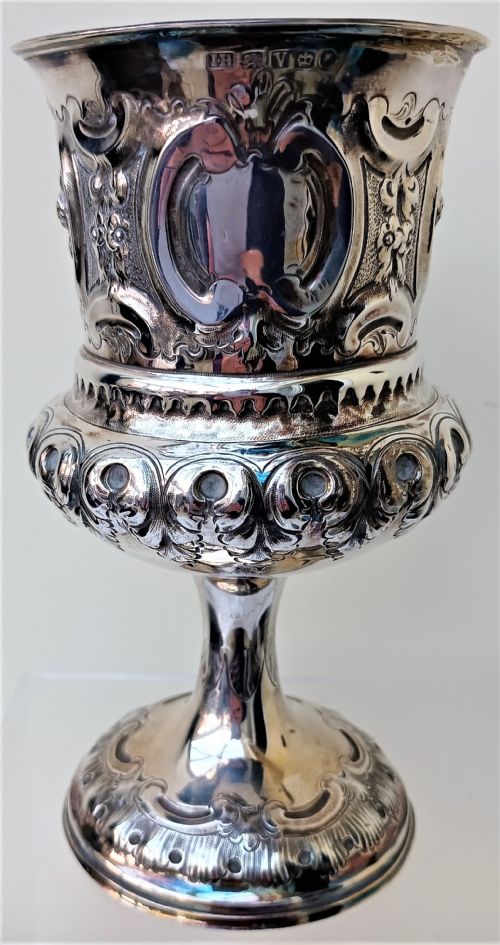
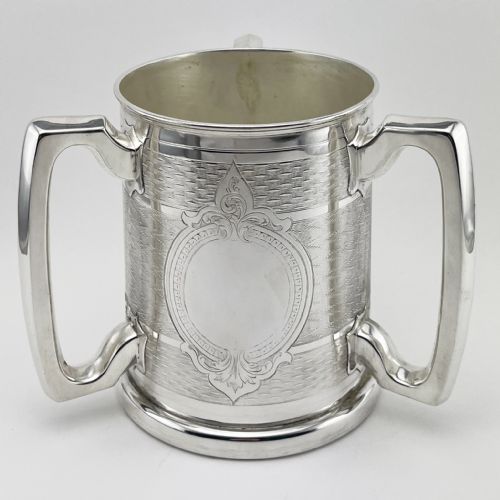
A victorian presentation cup appears in forms ranging from monumental two-handled loving cups and covered trophies to modest christening mugs and chalices. These vessels were commissioned for athletic contests, regattas, rifle shooting, and civic milestones, carrying crisp engraved inscriptions that record the original recipient and date. Most examples seen here date from the nineteenth century, reflecting an era of athletic clubs and competitive sporting culture.
The materials span solid sterling silver, silver plate, electroplated nickel silver, and ceramics such as porcelain and hand-painted earthenware. Many of the silver pieces originate from Birmingham and Sheffield assay offices, bearing clear hallmarks that date them precisely to decades like the 1870s and 1880s. Alongside British silver, one encounters regional variations such as Anglo-Indian Kutch silver and decorated Royal Worcester ceramics.
Materials and construction
Silversmiths constructed these presentation pieces using heavy-gauge sterling silver or durable silver plate over base metals, often shaping them into deep bowls supported on knop stems and circular feet. Handles are frequently cast in bold scroll forms, while covers on larger trophies add height and architectural presence.
Decoration relied on hand-engraving, chasing, and repoussé work, creating floral cartouches, crests, and detailed inscription panels. Ceramic examples incorporate hand-painted enamel and subtle gilding, fired to produce lasting gloss surfaces.
Listings for this phrase include both solid sterling silver and silver-plated examples alongside hand-painted ceramic loving cups from the nineteenth century.
Assessing quality and proportion
Quality rests on the weight of the metal, the balance of the vessel, and the depth of the hand-engraving. Crisp, deeply cut foliage and legible lettering distinguish finer commissions from simpler, machine-etched alternatives.
The presence of a fitted presentation box, original covers, or matching sets adds context and completeness. Superior pieces maintain clean lines without distortion to the bowl rim, showing careful hand-raising and finishing by the silversmith.
Henry Tatton & Son·Royal Worcester
The Victorian Presentation Cup Glossary
- Hallmark
- A series of official marks stamped on precious metals indicating the standard of purity, the assay office, and the year of manufacture.
- Repoussé
- A metalworking technique where the artisan hammers the design from the reverse side to form raised relief work on the front.
- Loving cup
- A large drinking vessel featuring two or three handles, traditionally passed around a gathering for shared toasts.
- Chalice
- A stemmed sacramental cup with a deep bowl, adopted in secular contexts for presentation and commemoration.
- Chasing
- The process of indenting metal from the front with specialised punches to refine and sharpen a repoussé or engraved design.
Victorian Presentation Cup: Frequently Asked Questions
What were victorian presentation cups used for?
These vessels served as prizes for sporting events, military matches, and regattas, as well as retirement gifts or commemorative tokens.
Clubs and societies commissioned them to honour victors, engraving the specific competition and date directly onto the body of the silver or ceramic cup.
How can I date a silver presentation cup?
British silver pieces carry hallmarks that include a date letter corresponding to a specific year and assay office. Sheffield, Birmingham, and London hallmarks allow precise dating of the metalwork.
Engraved inscriptions often provide the exact year of the event, matching or closely following the assay date stamped on the base.
Are silver plated cups worth collecting?
Silver plated and electroplated nickel silver examples offer substantial scale and decorative presence at a different level than solid sterling pieces. Many feature the same high standard of Victorian engraving and craftsmanship.
The durability of the plating and the quality of the original design determine the desirability of these plated trophies.
How do I care for antique silver cups?
Regular, gentle dusting with a soft cloth keeps silver free from airborne particles. When polishing becomes necessary, use a non-abrasive cream formulated specifically for silver to protect the delicate engraved details.
Avoid harsh dips that strip the natural patina accumulated over the nineteenth century.