


Chased Sterling Silver Cup
A chased sterling silver cup brings tactile weight and historic craftsmanship to a desk or cabinet.
Chased Sterling Silver Cup
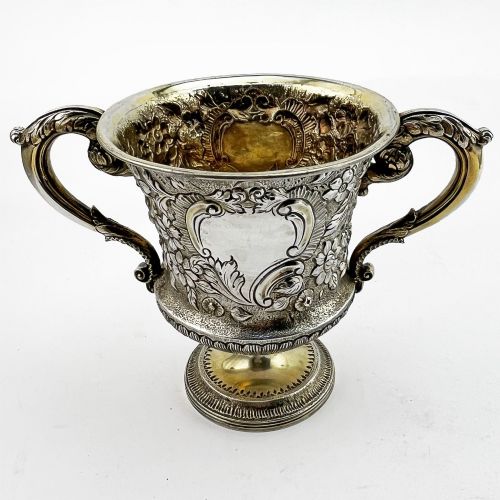
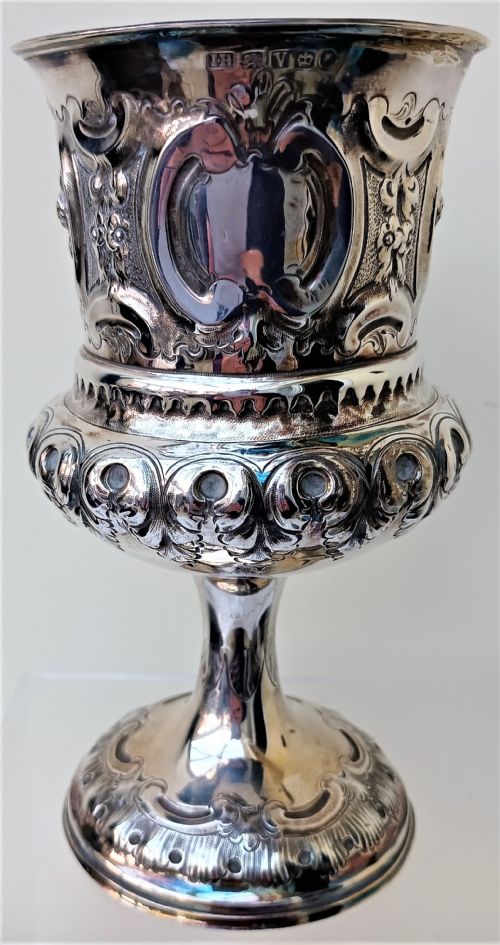
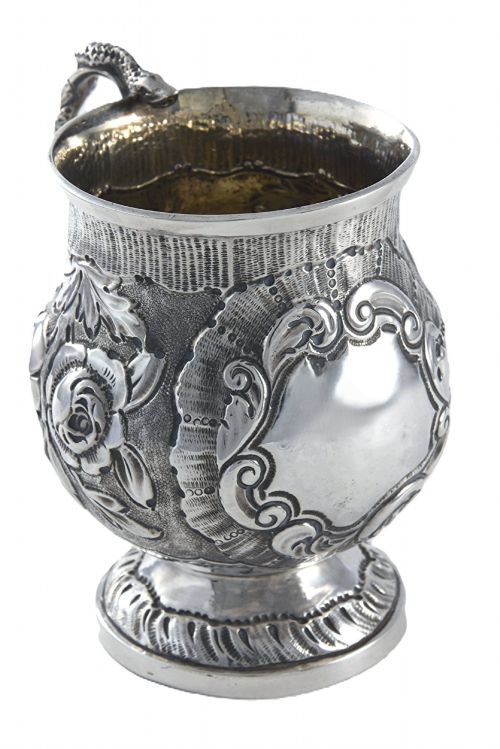
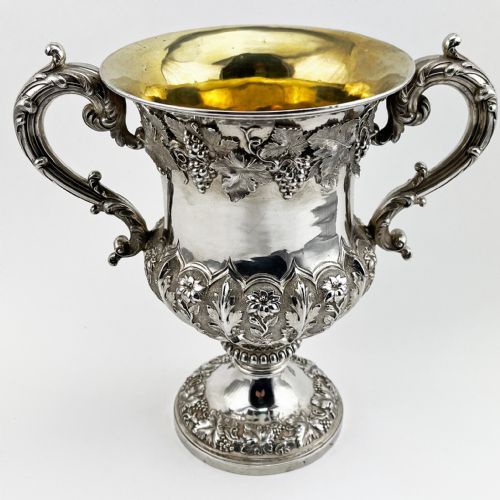
A chased sterling silver cup spans centuries of domestic and ceremonial silver, drawing on Georgian, Victorian, and Edwardian periods. Buyers searching for a chased sterling silver cup encounter forms ranging from heavy campana shapes and chalices to christening mugs, tankards, and wager cups.
The selection on this page leans heavily into the nineteenth century, with Victorian and Georgian examples appearing alongside Edwardian pieces. These vessels served practical and commemorative roles, functioning as christening gifts, trophies, and marriage cups.
Regional British assay offices, including London, Sheffield, and Chester, stamp their marks across these objects, alongside Anglo-Indian variations. Forms such as the two-handled trophy cup and the embossed beaker reflect distinct stylistic shifts from classical revival to Art Nouveau.
How they were made
Silversmiths constructed these vessels primarily in sterling silver, occasionally applying silver-gilt or vermeil finishes to the interior or entire surface to create a contrasting golden lustre. The technique of chasing involves hammering metal from the exterior to sink the design and raise relief details without cutting away the material.
Workshops utilised heavy-gauge sterling silver to support deep embossing and intricate chasing, ensuring structural integrity in forms like the campana-shaped cup or the handled tankard. Hand-hammered surfaces, applied handles, and chased foliage or figurative scenes required precise control of heat and metal.
Some nineteenth-century drinking vessels are inverted double-cups engineered specifically to catch out tipsy wedding guests.
What varies in quality
Quality rests in the crispness of the chased relief work and the proportional harmony of the vessel, where sharper definition distinguishes superior hand-tooling from softer, worn patterns. The weight of the sterling silver relative to the vessel's size dictates its physical presence and durability.
Maker attribution and legible hallmarks from assay offices like London or Sheffield add documentary clarity that elevates certain pieces. The complexity of the form, such as dual handles on a campana cup or figural elements on a wager cup, signals ambitious workshop production.
Bernard Muller·D&J Wellby
The Chased Sterling Silver Cup Glossary
- Sterling silver
- An alloy comprising a high proportion of pure silver combined with other metals to ensure strength for smithing. This standard forms the baseline material for British silverwork.
- Chasing
- A metalworking technique where the smith pushes and shapes the metal from the front using punches and hammers to create raised decorative patterns. It is distinct from engraving, which removes metal.
- Silver-gilt
- Sterling silver that has been coated with a thin layer of gold through a chemical or electrochemical process, often called vermeil. This finish protects the interior of drinking vessels from tarnishing.
- Wager cup
- A double-cup vessel used in traditional drinking games where the drinker had to invert the larger figure and consume liquor from the smaller swinging cup without spilling. These novelty items test the balance and dexterity of the user.
Chased Sterling Silver Cup: Frequently Asked Questions
What is a chased sterling silver cup used for?
These vessels originally served various ceremonial, domestic, and commemorative functions, including christening gifts for infants, racing trophies, and communal drinking cups at weddings or banquets.
Today, collectors use them as decorative cabinet pieces, mantle displays, or traditional desk accessories that retain a tangible link to past domestic rituals.
How do I identify the age of a silver cup?
Dating relies heavily on the hallmarked stamps punched into the metal by official assay offices, which record the year letter, maker's mark, and town mark.
Stylistic indicators such as Victorian Gothic revival, Georgian campana curves, or Art Nouveau flowing lines also help narrow down the period of manufacture.
What is the difference between chased and embossed silver?
Chasing involves sinking and shaping the metal from the exterior using specialised punches to create low-relief surface designs without removing material.
Embossing pushes the metal outward from the inside to create higher relief forms, though silversmiths frequently combined both techniques on a single vessel.
How should I clean antique sterling silver?
Maintenance requires gentle washing with warm water and mild soap, followed by drying with a soft, non-abrasive cloth to prevent scratching the historic surface.
Harsh chemical dips and aggressive polishing should be avoided to preserve the subtle details of the hand-chased decoration and the natural patina.