




Sterling Silver Presentation Cup
A sterling silver presentation cup marks a victory on the water, the field or the parade ground, cast in precious metal to honour achievement.
Sterling Silver Presentation Cup
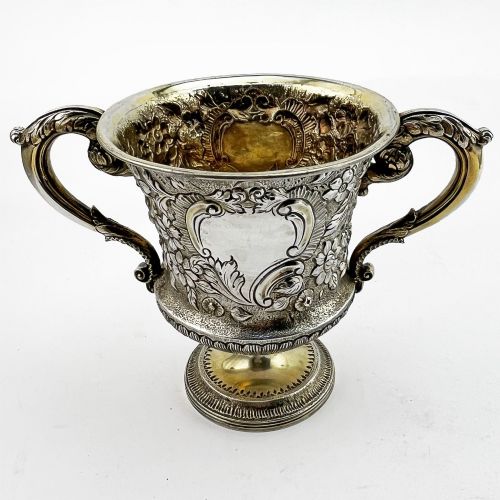
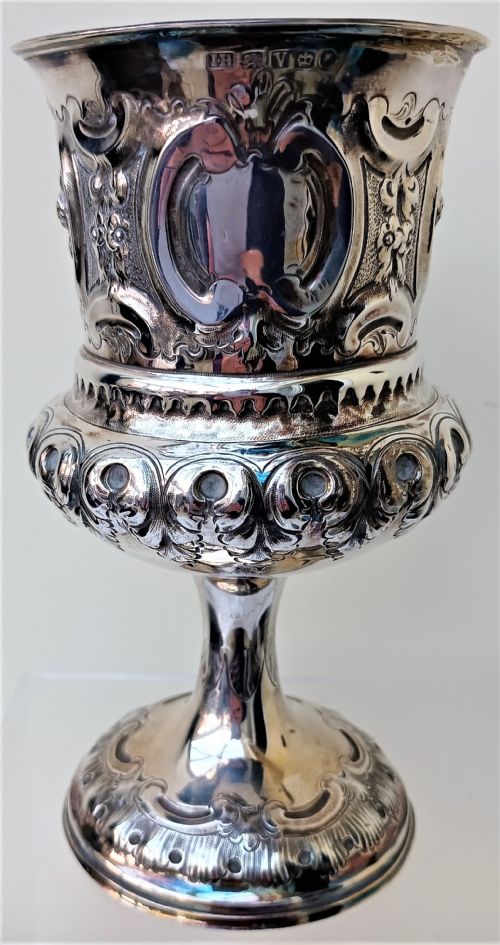
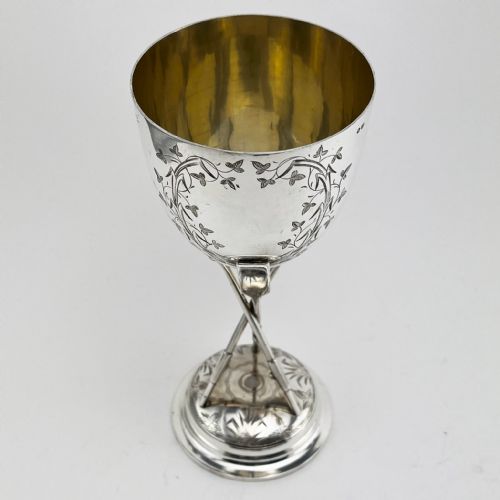
A sterling silver presentation cup takes several distinct forms across the centuries, ranging from two-handled campana shaped vessels and covered urns to simple chalices, mugs and tall goblets. Buyers seeking a sterling silver presentation cup will encounter pieces spanning the Georgian, Victorian, Edwardian and George V periods, alongside Chinese Export and continental examples.
Many of these vessels record specific sporting and civic triumphs, carrying contemporary engraved inscriptions for rowing, cricket, rifle shooting, regattas and military events. The selection also includes fitted christening sets, boxed shot glasses and loving cups that served ceremonial or domestic functions rather than athletic ones.
What varies in quality
Quality rests significantly upon the crispness of the hand engraving and the sculptural weight of the vessel, particularly in the thickness of the silver walls and the sturdiness of applied handles. Substantial pieces with robust cast mounts and crisp, deep chasing occupy the upper tier of the range.
The presence of a matching cover, an original fitted presentation case, or documented provenance relating to a notable military regiment or sporting event elevates a piece considerably. Maker attribution and clear, legible hallmarks likewise distinguish superior workshop output from standard commercial production.
Several pieces preserve the sweat and glory of Victorian rowing regattas, rifle ranges and horse guards long after the crowds went home.
James Deakin & Sons·Henry Tatton & Son·Richard Gurney·Joseph Rodgers & Sons
The Sterling Silver Presentation Cup Glossary
- Sterling silver
- A standard of silver alloy containing 92.5 percent pure silver by mass, with the remainder comprising other metals, usually copper. This composition provides the durability required for substantial hollowware and flatware.
- Silver gilt
- Sterling silver that has been coated with a thin layer of gold on its surface, often applied to the interior bowl of a cup. This technique prevented acidic beverages from tarnishing the silver.
- Campana
- A bell-shaped vessel form featuring a flaring rim and a footed base, popular during the neoclassical and Georgian periods. These silhouettes lent themselves well to classical ornamentation and heraldic engraving.
- Repoussé
- A metalworking technique where the silversmith hammers the design from the reverse side to form a raised pattern in relief on the front. It is frequently combined with chasing to refine details on presentation vessels.
- Chalice
- A stemmed sacramental cup designed with a deep bowl and a flared foot, later adopted for secular presentation and trophy use. Their clean proportions suited commemorative inscriptions.
Sterling Silver Presentation Cup: Frequently Asked Questions
What were presentation cups used for?
These vessels functioned primarily as commemorative prizes for sporting contests, military achievements, regattas and civic milestones. Recipients displayed them prominently in clubhouses, mess halls and homes to mark past victories.
Over time, some pieces also transitioned into domestic service or were commissioned as christening gifts for newborns, accompanied by fitted boxes and spoons.
How do I identify the period of a cup?
Hallmarks stamped directly onto the silver provide the most reliable guide to dating, indicating the assay office, standard and date letter. Stylistic cues such as Georgian neoclassical lines, Victorian high relief chasing or Arts and Crafts simplicity also point to specific eras.
Inscribed dates on the body usually record the year of the competition, which generally aligns closely with the year of manufacture marked by the assay office.
Are all presentation cups engraved?
Many examples feature detailed contemporary engraving detailing the event, winner's name, date and organising club. This lettering provides valuable historical context and provenance regarding the piece's original use.
However, some vessels left the workshop plain or carry only a family crest or monogram, intended to receive an inscription later or to serve a domestic function.
How should I care for sterling silver?
Routine maintenance involves gentle dusting and occasional cleaning with a specialist silver polish to remove tarnish without abrading the metal or softening engraved details. Storing pieces away from damp environments preserves both the silver and any original fitted velvet or silk cases.
Handling items with clean hands prevents natural skin oils from accelerating the tarnishing process on polished surfaces.