



Sterling Silver Salt Set
These sterling silver salt sets bring the polish of the dining table from the Georgian period through to the mid twentieth century into daily use.
Sterling Silver Salt Set
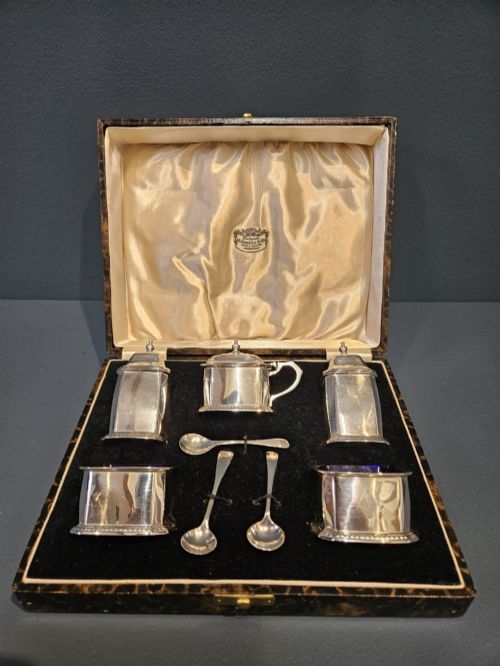
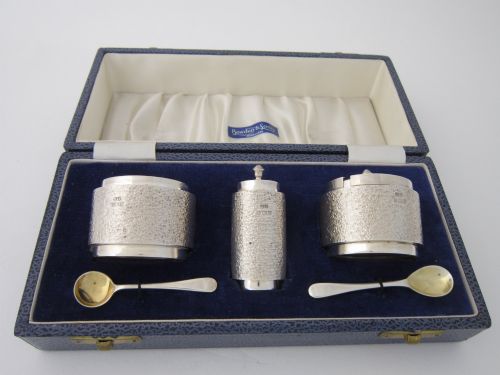
A sterling silver salt set comprises matched salt cellars, condiment stands, cruet sets, and novelty pepper pots designed for table service. The selection spans George III pieces, Victorian cauldron salts and shell dishes, Edwardian novelty salt and pepper pots modelled as animals, and Art Deco sets from the 1930s.
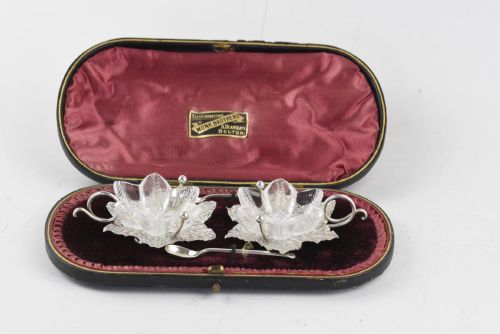
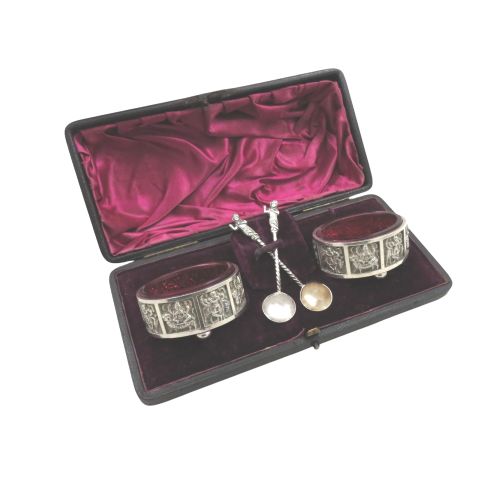
Buyers most frequently encounter Victorian cased sets of four salts with spoons, alongside Georgian cruet frames and twentieth-century condiment sets. These items range from simple boat-shaped table salts to elaborate fitted boxes lined with velvet, silk, or satin.
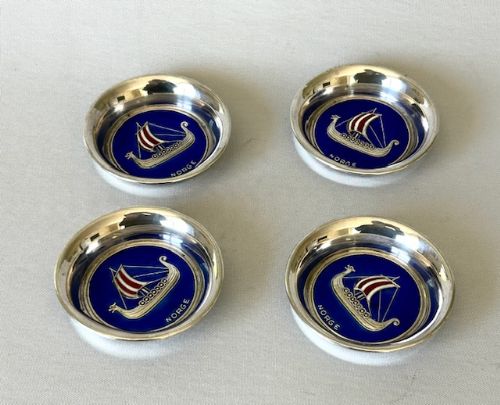
The objects originate primarily from British workshops spanning the eighteenth, nineteenth, and twentieth centuries, with occasional French and Norwegian examples appearing in the listings.
Assessing Craftsmanship
Quality rests upon the crispness of the chasing on novelty animals, the substantial weight of the silver in Georgian and Victorian cauldron salts, and the completeness of matched sets with their original spoons and liners. Maker attribution to notable workshops like those of Paul Storr or Sampson Mordan elevates the standing of a piece.
The survival of fitted presentation cases and the clarity of the town marks, date letters, and maker punches significantly influence the standing of these condiment sets within the market.
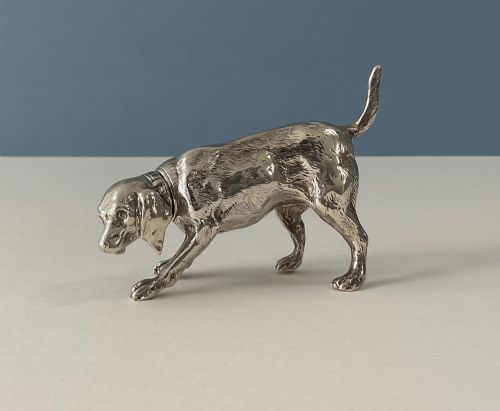
Victorian silver novelty peppers shaped as tiny chicks, owls, and dogs let diners season their food under the watchful eye of a metal farmyard.
Georg Jensen·William Neale·Bricks and Sons·Paul Storr·Thomas Smily·Sampson Mordan·Wilmot Manufacturing Company·HJ Lias and Son·J T Younge·Walker and Crowder
The Sterling Silver Salt Set Glossary
- Cruet set
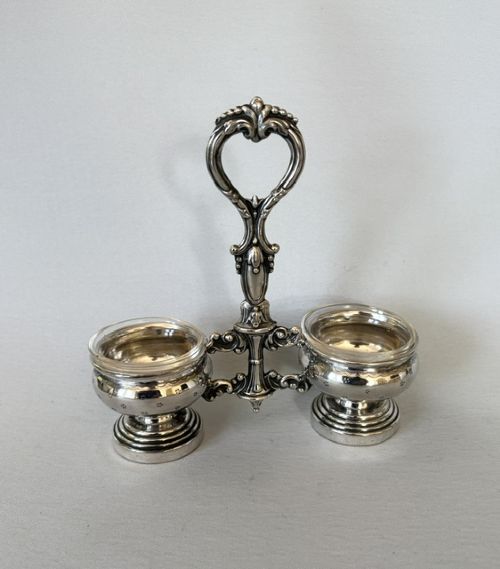
- A fitted stand holding glass bottles, casters, or containers for condiments such as oil, vinegar, salt, and pepper. These frames often feature a central carrying handle.
- Cauldron salt
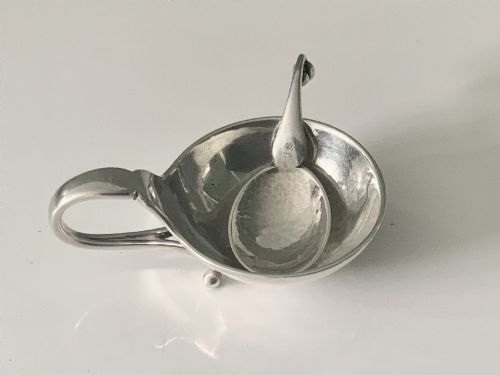
- A small, round salt cellar raised on three feet, resembling a cooking pot in miniature. They were widely produced in sterling silver during the Victorian period.
- Salt liner
- A removable insert, frequently made of blue cobalt glass, placed inside open silver salt cellars to prevent salt corrosion. They allow the silver vessel to remain pristine.
- Novelty pepper
- A condiment pot shaped to represent an animal, bird, or figurative subject rather than a standard shaker. Examples modelled as chicks, owls, and dogs are typical.
- Repoussé
- A metalworking technique where the silversmith hammers the silver from the reverse side to form a raised design in relief on the front.
Sterling Silver Salt Set: Frequently Asked Questions
How do I clean tarnished silver salt cellars?
Silver salt cellars require gentle cleaning with a specialist silver cloth or a mild polish to preserve the original hallmarks and surface detail. Avoid harsh abrasives that can wear down engraved patterns or thin silver walls.
Removable glass liners should be taken out and washed separately in warm soapy water. Ensure the interior of the silver vessel is completely dry before replacing the liner to prevent moisture damage.
Were these salt sets meant for everyday use?
Most antique silver salt sets were produced for formal dining tables in wealthy households, where condiments were portioned out into individual cellars for each guest. They formed part of larger silver services that included cruet stands and mustard pots.
Over time, many sets were stored in fitted presentation cases lined with velvet or silk, suggesting they were treated as valued possessions or given as wedding and anniversary gifts.
How do I identify the date of a silver salt set?
British sterling silver salt sets carry hallmarks stamped directly onto the metal, usually including a maker's mark, a lion passant indicating sterling standard, a city mark for the assay office, and a date letter. These marks provide the exact year of manufacture and the silversmith responsible.
Stylistic indicators also help, such as the neoclassical lines of Georgian pieces, the heavy ornamentation of Victorian items, or the clean geometric shapes of Art Deco sets from the 1930s.
Can I use antique silver salts for dining today?
Antique sterling silver salt cellars function well on modern dining tables, particularly when fitted with their original glass liners to protect the silver from salt. Many collectors enjoy using them for dinners and special occasions.
Care should be taken to empty and clean the cellars promptly after use, as salt left in direct contact with silver for extended periods can cause pitting and corrosion.