
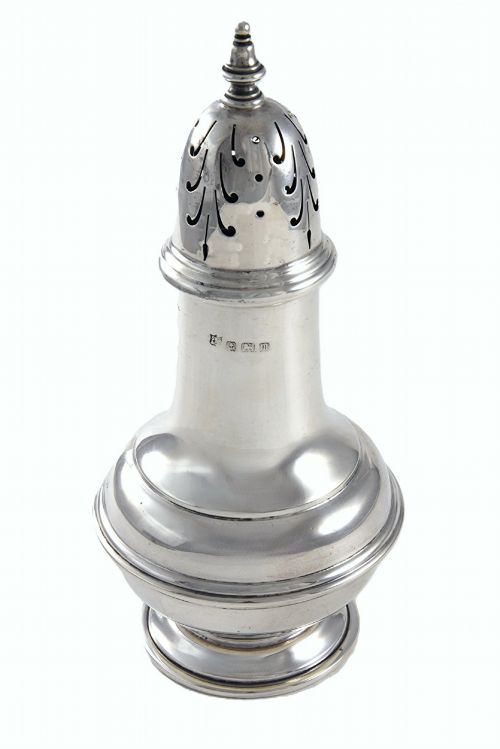
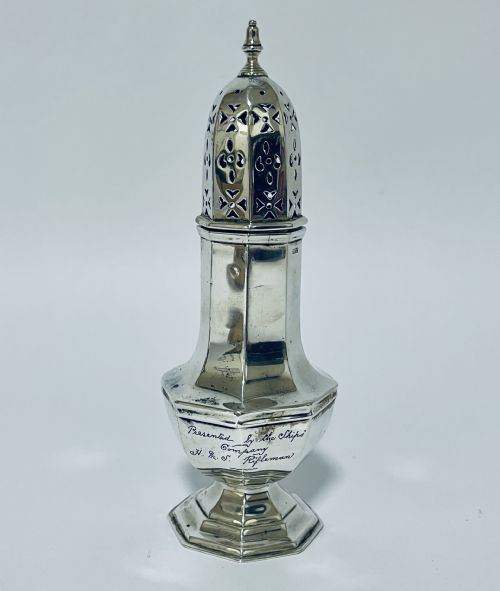


Sterling Silver Caster
A sterling silver caster brings period elegance to the table, dispensing sugar and condiments with pierced lids designed for grace as much as utility.
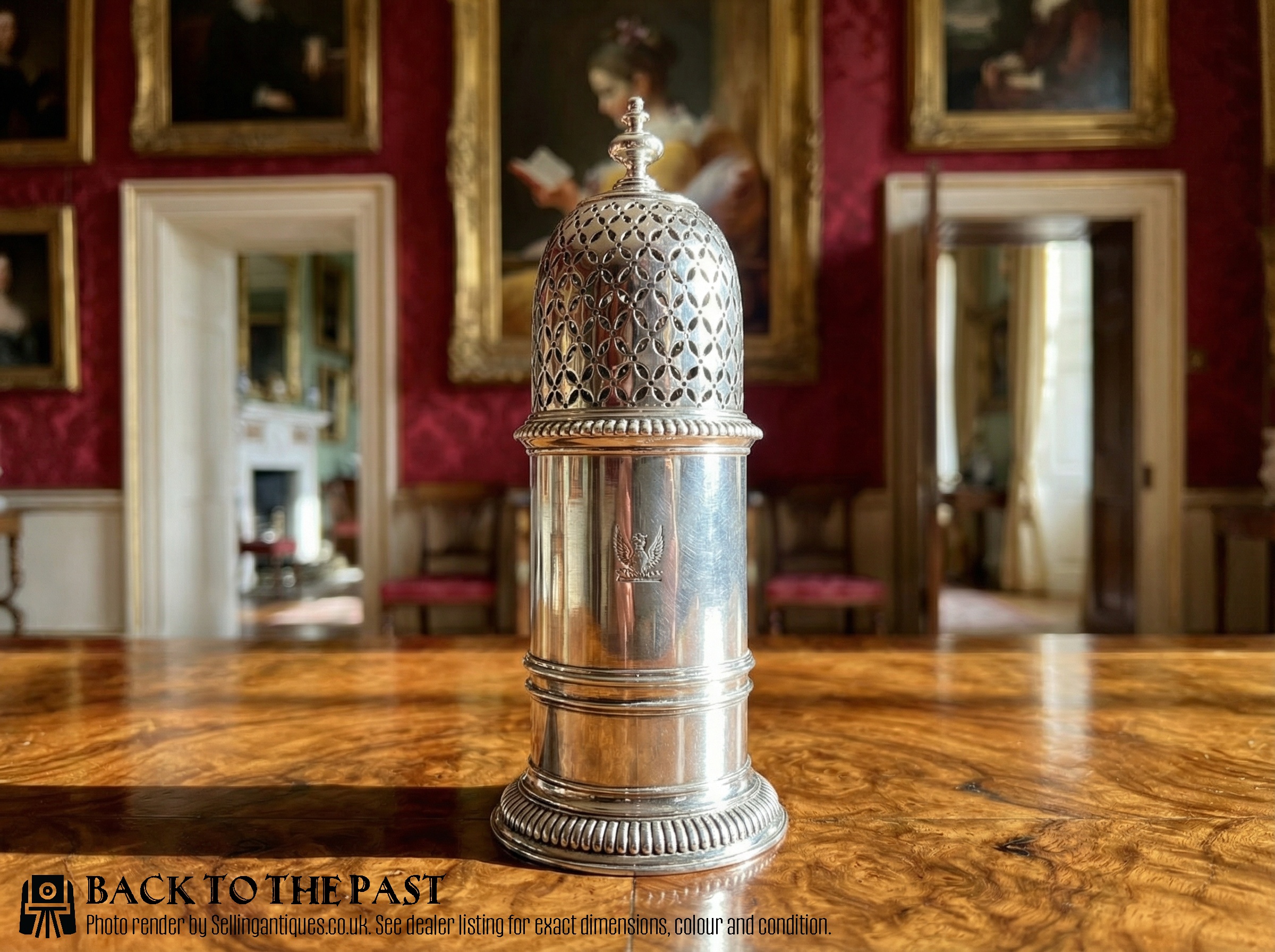
Sterling Silver Caster
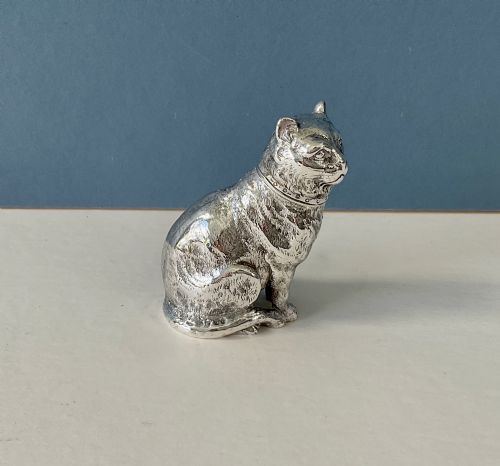
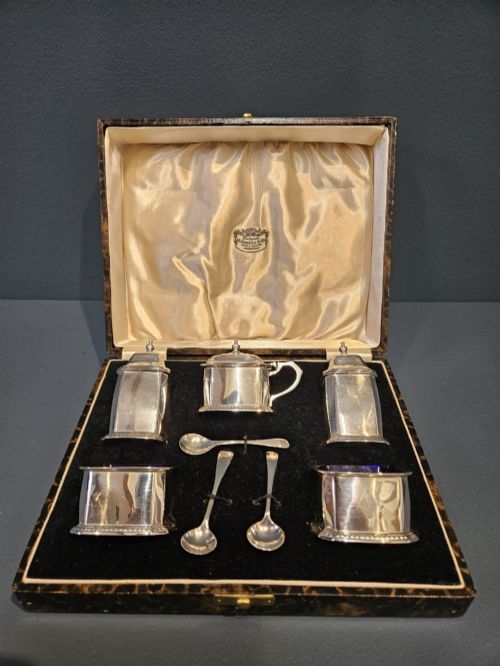
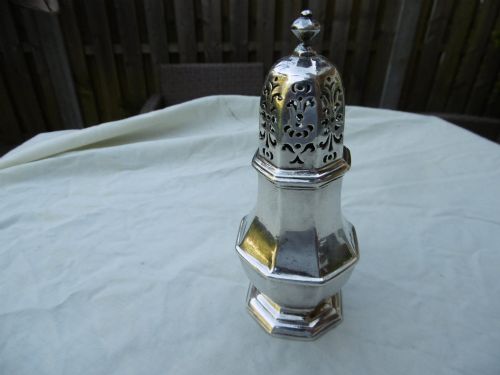
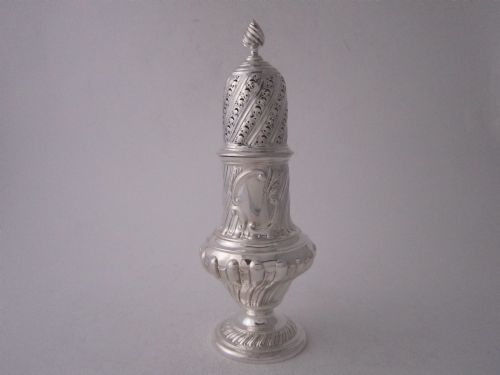
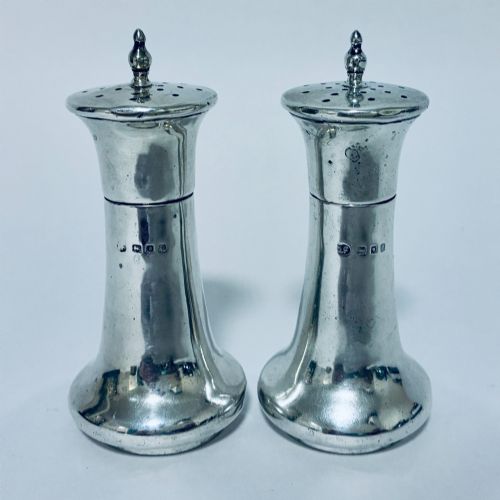
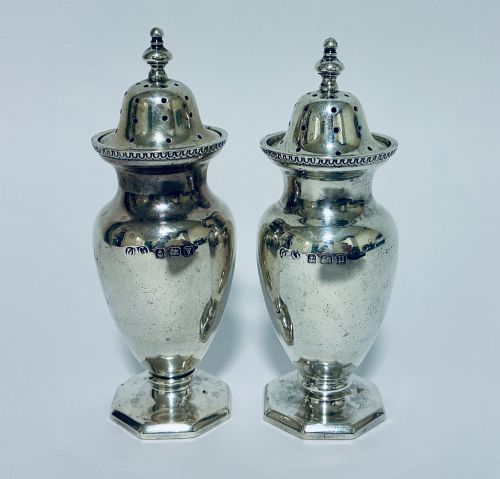
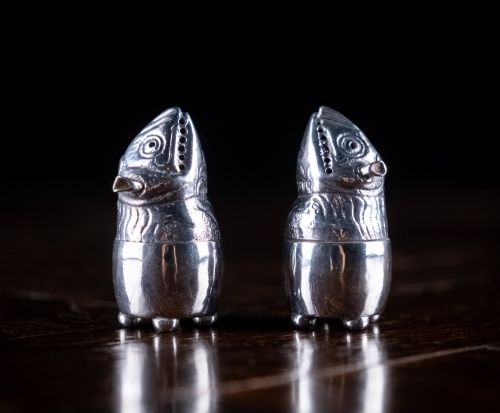
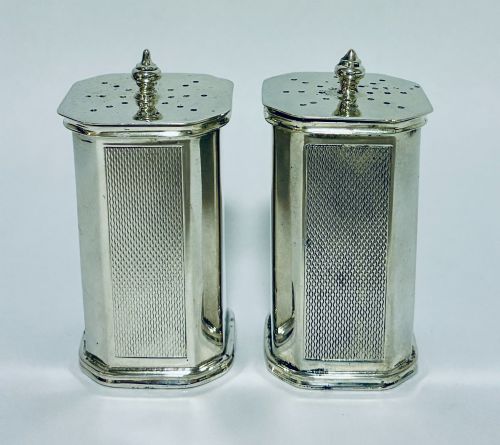
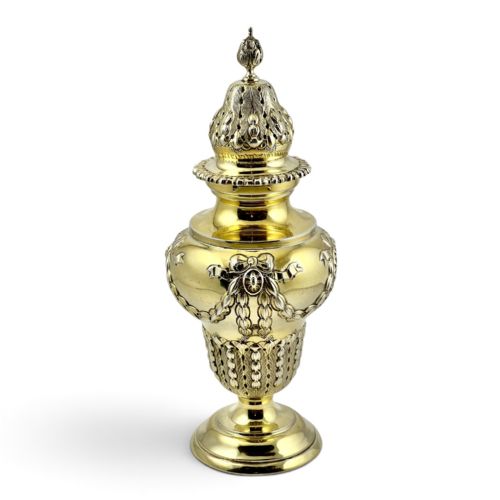
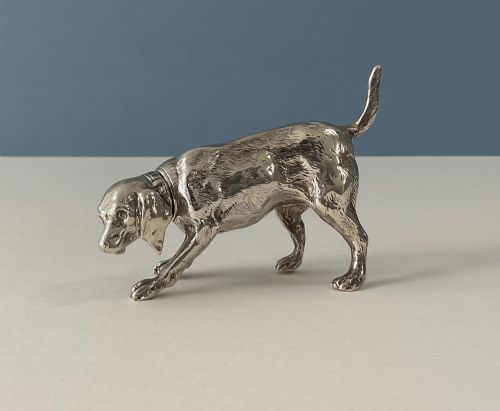
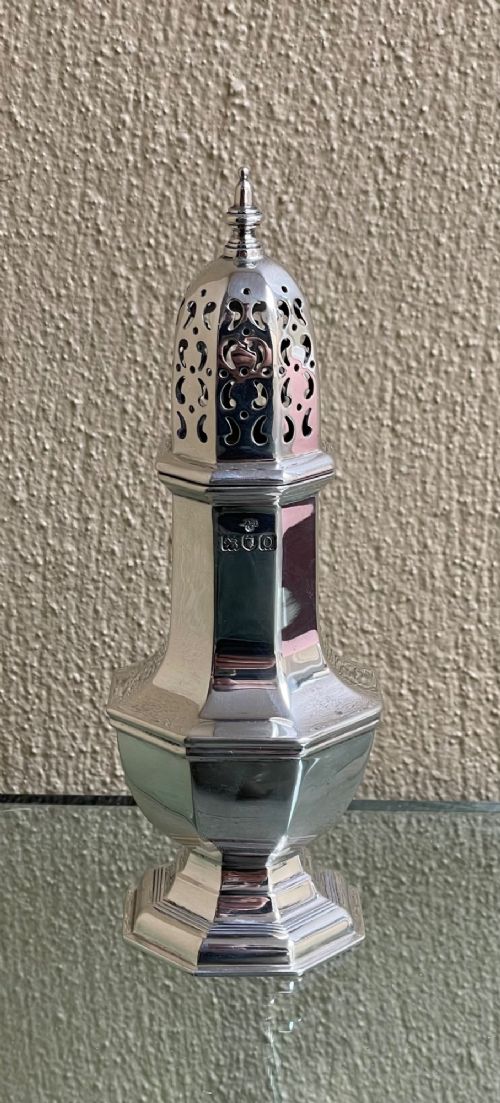
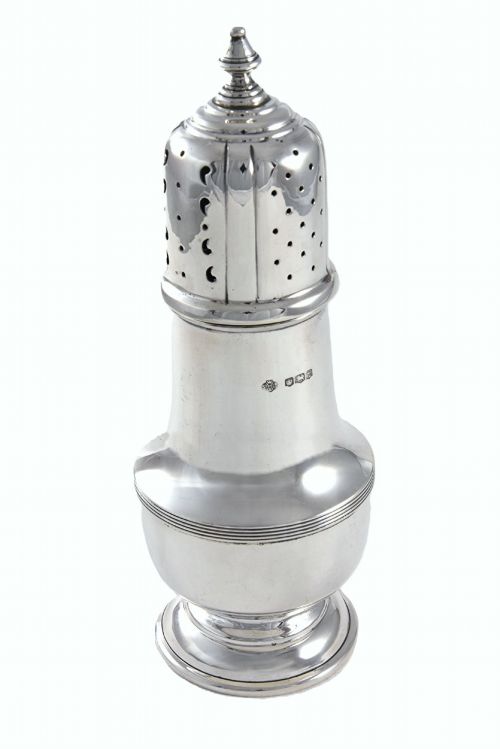
A sterling silver caster functions as a table vessel for sugar, spices, or dry condiments, often shaped with a pierced dome top and a tapering body. Search results span simple sugar shakers to elaborate cruet sets and novelty figural pepper pots shaped like owls, cats, dogs, and chicks.
Examples on this page date from the early eighteenth century through the Georgian, Victorian, and Edwardian eras into the Art Deco period. Forms range from tall octagonal vessels and inverted pear shapes to multi-bottle condiment frames and individual pepperettes.

How They Were Made
Makers shaped these pieces primarily from sterling silver, occasionally incorporating silver gilt, glass liners, cut glass bottles, blue glass inserts, or horn. Silversmiths utilised techniques such as casting, piercing, hammering, and polygonal faceting to construct bodies and screw-fit or push-on lids.
Sterling Silver Caster Retail Price Guide 2026
Typical asking prices for sterling silver caster among the pieces listed under this phrase on Sellingantiques today, from the lower quarter to the upper quarter. They describe what is for sale here now, not the wider market.
What Varies in Quality
Material thickness and weight distinguish sturdier utilitarian vessels from lighter domestic examples, whilst the crispness of the lid piercing reveals the maker's precision. Early eighteenth-century vessels by prominent Huguenot silversmiths demonstrate exceptional weight and structural restraint.
Artistry in design elevates certain items, particularly novelty animal models and pieces bearing marks of distinguished makers, above standard production tableware.
Frederick Brasted·Charles Thomas Fox·Stephen Adams·James Goodwin·Simon Pantin·James Dixon & Sons Ltd·Evald Nielsen·Horace Woodward & Co Ltd·Roberts & Belk·Elkington & Co·Thomas Bamford·William Comyns
The Sterling Silver Caster Glossary
- Caster
- A small container with a pierced top used for sprinkling sugar or fine spices over food. These vessels appeared in various forms from the Georgian period onward.
- Cruet set
- A matched group of bottles or casters held together in a frame for serving condiments at the dining table. Victorian examples frequently incorporated multiple glass bottles alongside silver mounts.
- Pounce pot
- An early container used to sprinkle powdered resin or sand over freshly written ink to dry it. George I examples occasionally appear among early silver tableware.
- Pepperette
- A small shaker designed specifically for holding and dispensing ground pepper. Makers frequently cast these in whimsical animal shapes.
- Silver gilt
- Sterling silver that has been coated with a thin layer of gold on its surface. Edwardian casters occasionally utilised this finish for decorative contrast.
Sterling Silver Caster: Frequently Asked Questions
What is a sterling silver caster used for?
These pieces served primarily at the dining table for dispensing sugar, pepper, or dry condiments onto food. The pierced lids allowed contents to be sprinkled evenly over meals or beverages.
Over centuries, domestic habits changed, turning these functional dining items into collectible display pieces and decorative tableware.
How do I identify the date of a caster?
British pieces typically carry hallmarks stamped directly into the silver, recording the assay office, standard mark, and a specific date letter. Consulting standard hallmarking guides matches these punch marks to exact years of production.
Stylistic cues, such as Georgian octagonal geometry or Art Deco polygon sides, also offer broad chronological context.
What is the difference between a caster and a shaker?
Historical terminology often distinguishes between casters, which traditionally featured removable pierced tops for sugar, and smaller pepper shakers or pepperettes. Over time, collectors and dealers frequently use the terms interchangeably for similar tall pierced vessels.
Both forms rely on perforated lids to release dry seasonings onto the plate.
How should I clean antique silver casters?
Maintenance requires gentle washing with warm water and mild soap, followed by thorough drying with a soft cloth to protect the metal. Harsh chemical dips or abrasive pastes damage the original surface and wear away antique hallmarks.
Regular handling and careful storage prevent tarnish accumulation without harming the historic silver.