
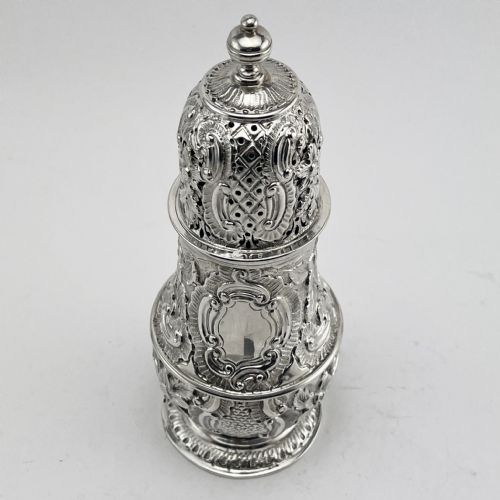


Baluster Silver Caster
A baluster silver caster holds sugar, pepper, or pounce in a distinctive curved profile that grounds any traditional table setting.
Baluster Silver Caster
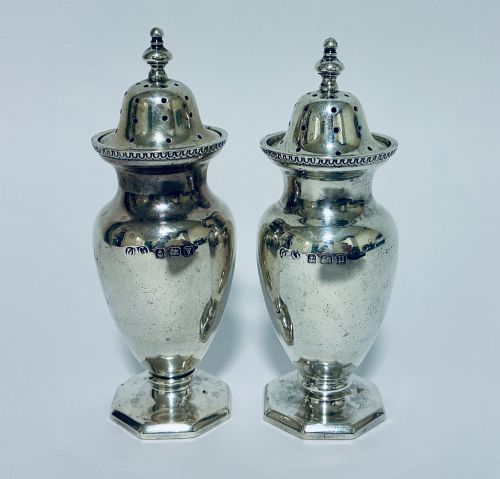
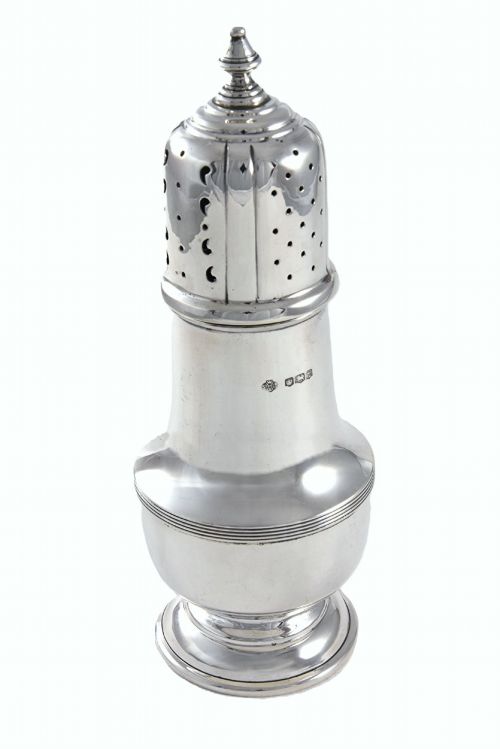
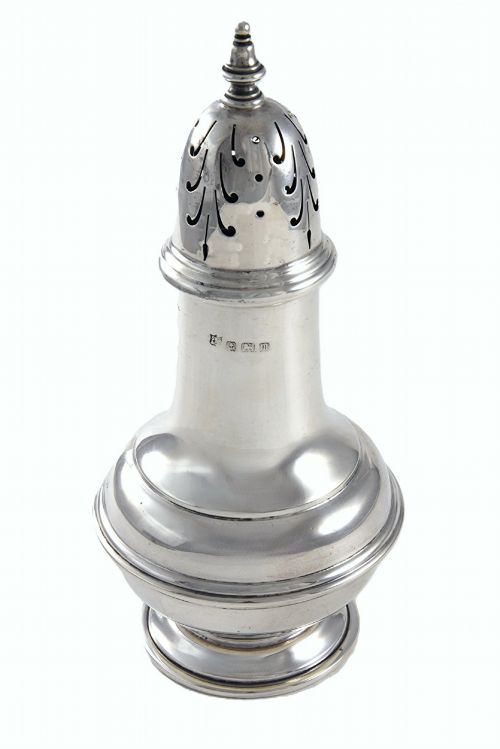
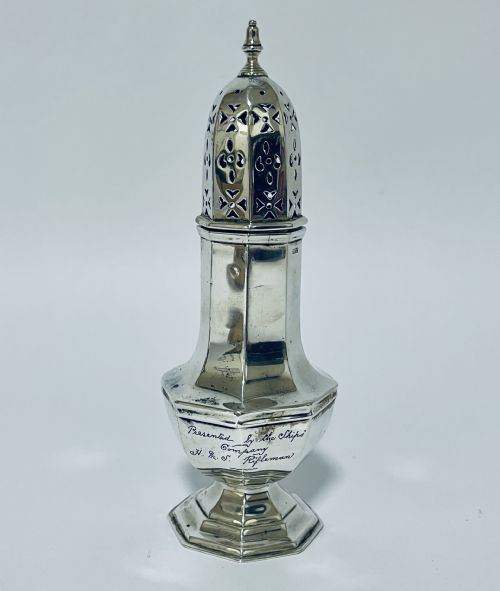
A baluster silver caster stands as a functional piece of tableware designed with a swelling lower body tapering towards a footed base and a pierced, removable cover. These items serve primarily as sugar shakers, pepper pots, or pounce pots for sprinkling sand on wet ink.
The versions met most frequently span the Georgian, Victorian, and early twentieth-century periods, showing influences from George I through to Art Deco and mid-century modern designs. Makers produced these in sterling silver across various scales, from small pepperettes to large sugar shakers.
Materials and construction methods
Silversmiths constructed these pieces using sterling silver, shaping the metal into the characteristic baluster form through raising, spinning, or casting techniques. The main bodies often sit upon moulded foot rings, providing stability for the vessel.
The removable tops feature pierced holes arranged in symmetrical patterns for dispensing dry contents, secured to the body by bayonet fittings or push-on rims.
Baluster Silver Caster Retail Price Guide 2026
Typical asking prices for baluster silver caster among the pieces listed under this phrase on Sellingantiques today, from the lower quarter to the upper quarter. They describe what is for sale here now, not the wider market.
The listings show baluster silver casters spanning the Georgian, Victorian, Edwardian, and mid-twentieth-century periods in sterling silver.
Distinctions in quality and execution
Quality rests upon the weight of the sterling silver and the crispness of the piercing on the cover, where finer examples display meticulously pierced floral or geometric motifs. The balance of the baluster silhouette and the legibility of the hallmarks also define superior craftsmanship.
Earlier eighteenth-century pieces often demonstrate heavier gauge metal and hand-cut piercing, whereas later twentieth-century production utilises alternative manufacturing methods while retaining the traditional profile.
Stephen Adams·James Goodwin·Simon Pantin·James Dixon & Sons Ltd·Charles Alchorne·John Delmester
The Baluster Silver Caster Glossary
- Baluster
- A vertical architectural form resembling a vase or pillar, which gives this group of silver casters their characteristic curved profile.
- Pounce pot
- A small shaker used to sprinkle fine gum sandarac powder over parchment or paper to prepare the surface for writing or to dry ink.
- Muffineer
- An alternative term for a sugar caster or shaker, historically used when applying sugar to breakfast muffins.
- Sterling silver
- An alloy consisting of silver and other metals, typically copper, standardly marked to guarantee its purity for tableware.
- Hallmark
- A series of official marks stamped on items to indicate the standard of silver, the maker, the assay office, and the year of manufacture.
Baluster Silver Caster: Frequently Asked Questions
What is a baluster silver caster used for?
These vessels were originally manufactured to dispense fine sugar onto desserts or fruit, or to sprinkle pepper and pounce during meals and writing tasks. Their pierced lids allowed controlled distribution of the contents.
Today, collectors use them as decorative dining table accessories or display them alongside other antique silver holloware.
How do I identify a Georgian silver caster?
Georgian examples often feature hallmarks stamped on the base and the cover, indicating London or provincial assay offices alongside maker's marks from the eighteenth century. They display heavier gauge sterling silver and hand-pierced decorative patterns on the top.
Stylistic cues include the classic baluster silhouette popularised during the reigns of George I through to George III.
What is the difference between a sugar shaker and a pepper pot?
Sugar shakers and muffineers generally stand taller with larger capacities and wider bodies to hold granulated sugar or sweeteners. Pepper pots and pepperettes are smaller in scale with tighter piercing to restrict the flow of spice.
Both share the baluster form, but their height and internal volume separate their specific table functions.
How should I clean antique silver casters?
Maintenance requires a soft cloth and proprietary silver polish applied gently to avoid wearing down hallmarks or delicate piercing on the cover. Rinsing in warm water removes residual polish from the small holes.
Storage in a dry environment helps prevent natural tarnishing of the sterling silver over time.