


Georgian Silver Caster
A georgian silver caster brings the refined elegance of eighteenth-century dining and writing tables directly into the modern home.
Identifying a georgian silver caster
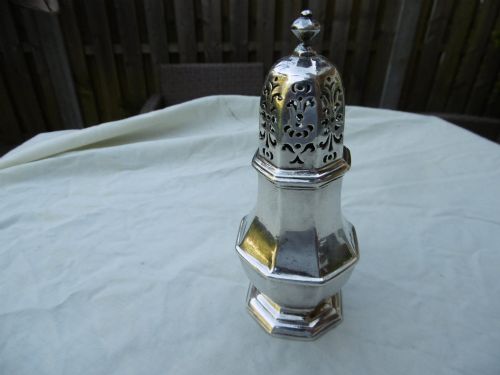
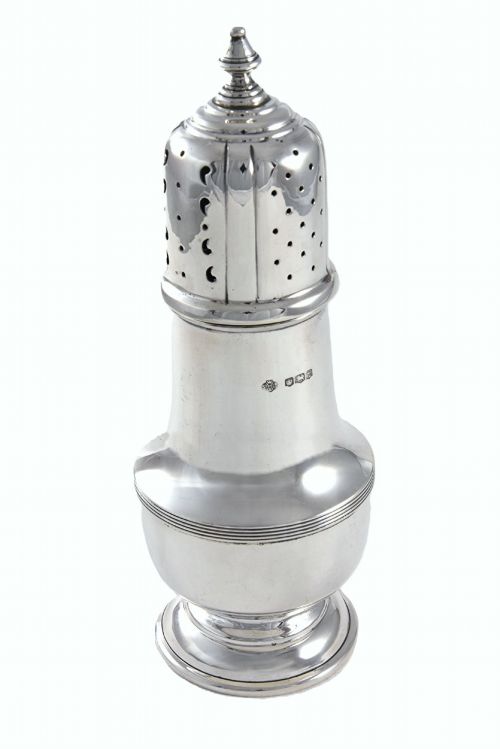
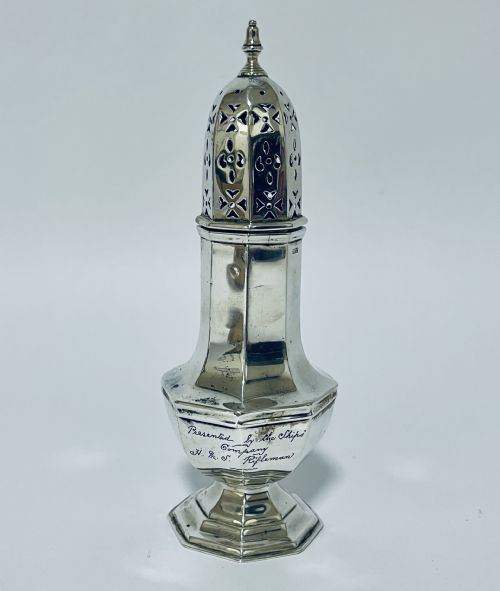
When searching for a georgian silver caster, collectors encounter various forms designed for condiments, sugar, spices, or ink powder. These small vessels range from early eighteenth-century octagonal shapes to later baluster silhouettes.
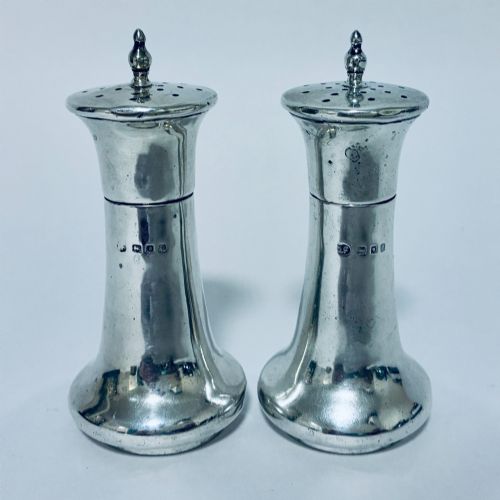
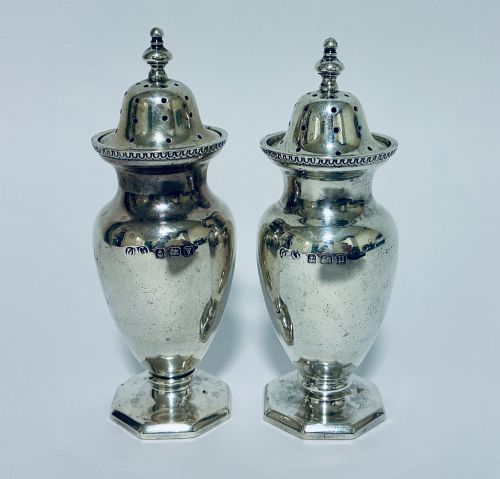
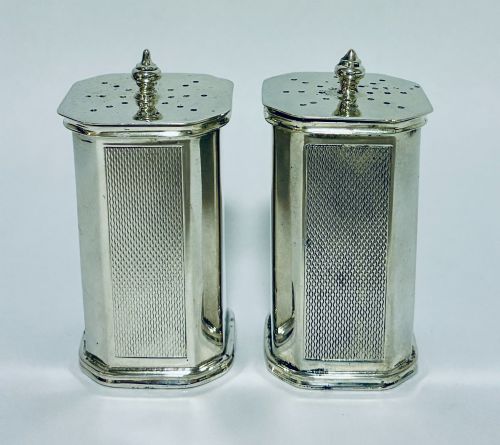
The objects on this page span the Georgian period, the eighteenth century, and later revivals from the twentieth century. Sugar casters, pepper pots, and pounce pots form the core of these historic table accessories.
Most pieces are fashioned from sterling silver, occasionally paired with cut glass bodies or highlighted with gilding. They represent both the functional dining traditions and the meticulous craftsmanship of British silversmiths.
Production and materials
Silversmiths shaped sterling silver using traditional hammering, raising, and turning techniques to achieve smooth baluster forms or crisp, faceted octagonal geometries. Pierced lids required precise hand-sawing or punching to create delicate patterns for sifting spices or sugar.
Many early examples incorporate bayonet twist mechanisms to secure the lid firmly to the body during use. Later twentieth-century revivals adapted these established silhouettes while maintaining traditional hallmarking practices.
Retail Price Guide 2026
Typical UK retail prices for georgian silver caster, calculated from the Sellingantiques database of over a million retail prices indexed since 2003. This retail price guide relies exclusively on Sellingantiques data; no external sources or auction records are used, so the figures do not describe the wider market.
Listings include sterling silver pieces spanning the Georgian period, the eighteenth century, and twentieth-century revivals.
Standards of craftsmanship
The distinction between ordinary and exceptional pieces lies in the crispness of the piercing on the lid and the weight of the sterling silver. Early makers achieved remarkable precision in faceted bodies and engraved armorial bearings.
Makers such as Simon Pantin or Stephen Adams demonstrate superior control over proportion and surface finish. A well-preserved hallmark and an intact, original lid mechanism elevate the desirability of any piece.
Stephen Adams·James Goodwin·Simon Pantin·Samuel Taylor·John Delmester·Nathan and Hayes
The Georgian Silver Caster Glossary
- Caster
- A small vessel with a perforated lid used for sprinkling sugar, pepper, or spices over food. These items formed an essential part of formal dining services.
- Pounce Pot
- A small container with a pierced top used to sprinkle resin powder onto rough paper. This absorbed excess moisture and prepared the surface for ink.
- Muffineer
- A larger type of caster specifically used for sifting sugar over warm muffins or buttered toast. They share a similar silhouette with standard sugar casters.
- Hallmark
- An official stamp applied to precious metals indicating the standard of purity, the assay office, and the date letter. British silver relies on these marks for accurate dating.
- Baluster
- An architectural shape featuring a rounded swelling lower portion tapering towards a neck. This profile dominates many eighteenth-century silver vessels.
Frequently Asked Questions
How do I clean a silver caster?
Use a soft microfiber cloth and a mild, specialised silver cleaner to gently remove tarnish without disturbing engraved details or hallmarks.
Avoid abrasive pastes or harsh chemical dips that can strip the natural patina accumulated over centuries of care.
What is the difference between a sugar caster and a pepper pot?
Sugar casters are generally taller with larger capacities and finer, more decorative piercing patterns designed for sweet granules.
Pepper pots tend to be smaller in scale, reflecting the higher cost and lesser quantity of spice used at the historic dining table.
Can I use an antique caster for daily dining?
These silver vessels remain fully functional for dispensing fine sugar or spices during meals if handled with appropriate care.
Wash them by hand immediately after use to prevent acidic residues from tarnishing the interior metal surface.
How do I identify a reproduction from a genuine Georgian piece?
Examine the hallmarks carefully for official town marks, standard marks, and date letters that correspond to eighteenth-century registers.
Inspect the construction methods, as hand-raised silver and contemporary wear patterns differ significantly from twentieth-century cast replicas.