


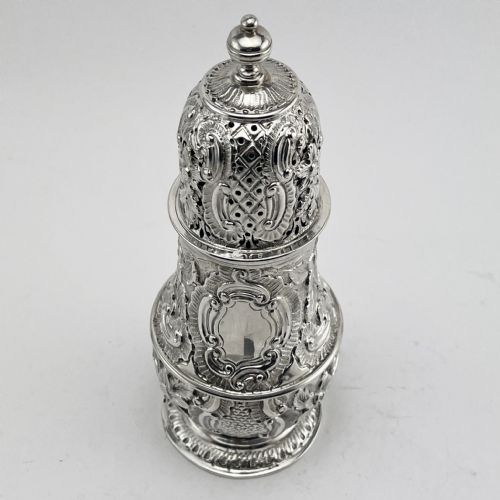


Silver Spice Caster
A silver spice caster brings period elegance to the dining table, offering fine sterling silver craftsmanship for modern homes.
What silver spice casters are
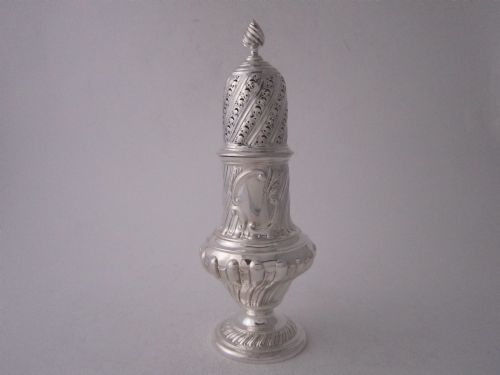
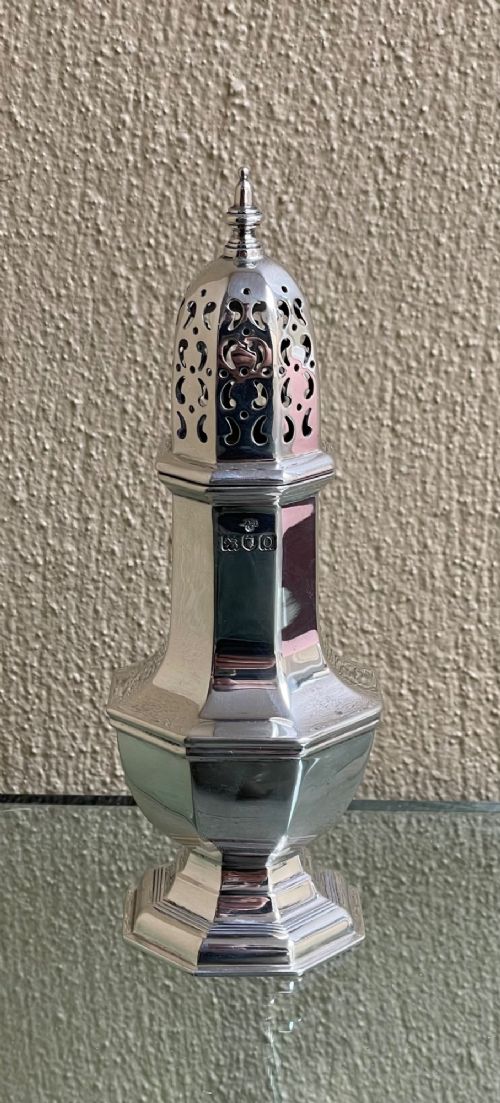
A silver spice caster is a traditional tableware item designed for dispensing sugar, pepper, or other spices onto food at the table. These pieces span several distinct eras, appearing in Georgian, Victorian, and Edwardian styles.
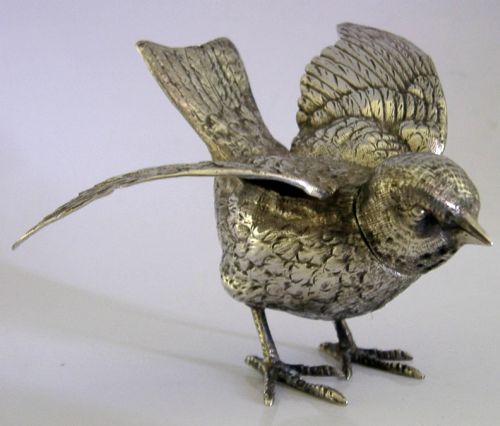
The selection on this page includes sugar casters, condiment casters, pepper pots, and muffineers. Buyers most frequently encounter sterling silver examples originating from London workshops and major British manufacturing periods.
How they were made
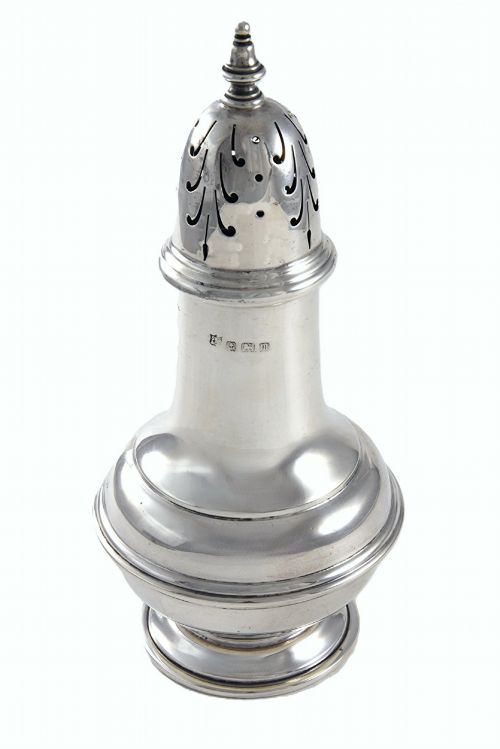
Every piece in the inventory is fashioned from sterling silver, utilising traditional silversmithing techniques to shape the metal into graceful vessels. Pierced covers are carefully worked to allow the controlled release of fine spices.
Master makers utilised skilled hammering, turning, and soldering methods to construct the bodies and secure the weighted or footed bases. Hallmarks stamped directly into the sterling silver record the assay office, date letter, and maker's mark.
Retail Price Guide 2026
Typical UK retail prices for silver spice caster, calculated from the Sellingantiques database of over a million retail prices indexed since 2003. This retail price guide relies exclusively on Sellingantiques data; no external sources or auction records are used, so the figures do not describe the wider market.
The listings span from the eighteenth century through the Georgian, Victorian, and Edwardian periods, all executed in solid sterling silver.
What varies in quality
Quality in a silver spice caster rests primarily on the crispness of the piercing work on the lid and the overall balance of the form. Finer pieces demonstrate superior gauge silver and crisp hallmarks that remain sharp and legible.
The reputation of the maker heavily influences distinction, with master silversmiths achieving superior proportions and cleaner junction lines. Simpler late Victorian or Edwardian utilitarian pots sit at a different level of craftsmanship compared to early Georgian Huguenot creations.
Stephen Adams·Simon Pantin·Levi & Salaman
The Silver Spice Caster Glossary
- Sterling silver
- A standard alloy of silver containing ninety-two point five percent pure silver and seven point five percent other metals, usually copper, chosen to ensure durability. This material forms the foundation of every piece listed.
- Muffineer
- A small caster or shaker specifically utilised for dusting sugar or spices onto breakfast muffins or tea cakes. These functional tableware items mirror the form of larger sugar casters.
- Hallmark
- An official stamp applied by an assay office to guarantee the fineness of the precious metal. It typically includes marks for the maker, the standard, the town of assay, and the date.
- Huguenot
- A French Protestant refugee silversmith working in Britain, renowned for introducing advanced continental techniques and exceptional design standards during the early eighteenth century.
Frequently Asked Questions
What is a silver spice caster?
A silver spice caster is a small perforated vessel utilised historically for sprinkling sugar, pepper, or spices onto food.
These tableware items range from early Georgian examples to later Edwardian and Victorian utilitarian pots.
How do I date a silver spice caster?
Dating relies on reading the hallmarks stamped into the sterling silver body, which reveal the assay office and date letter.
Stylistic elements such as footed bases and lid piercing patterns also help identify whether a piece is Georgian or Edwardian.
Can I use an antique silver caster?
Many buyers choose to utilise these sterling silver vessels for their original purpose at the dining table.
Gentle hand washing with warm soapy water helps maintain the polished finish without damaging the antique metal.
What is the difference between a muffineer and a caster?
A muffineer is traditionally a smaller version of a sugar caster intended specifically for sweetening breakfast pastries.
Both items feature perforated lids and sterling silver construction, varying mainly in scale and context of use.