
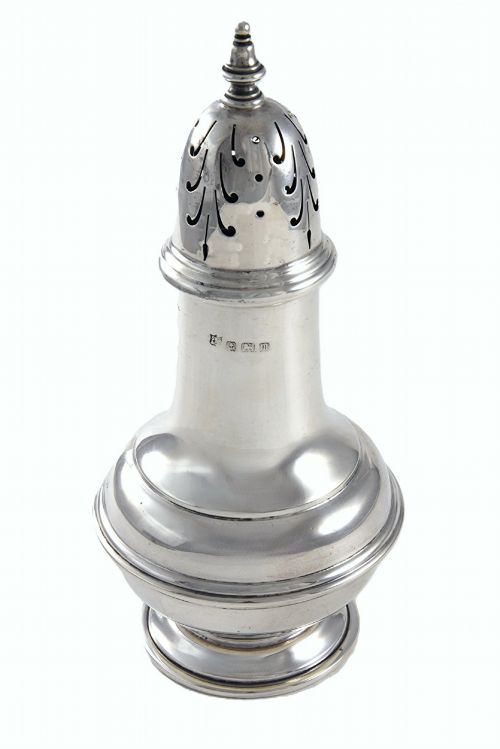
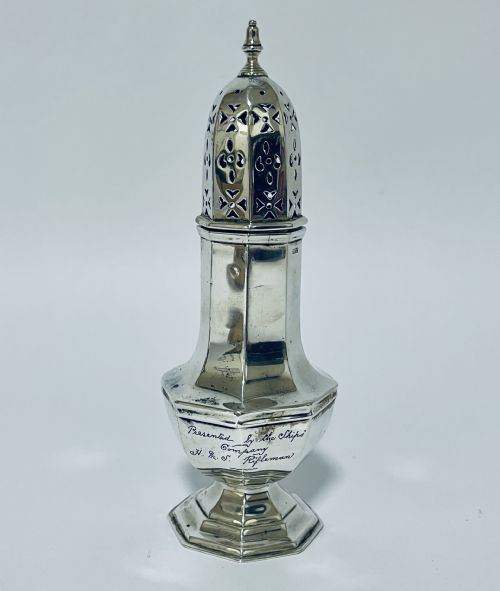


Antique Silver Muffineer
An antique silver muffineer is a small table shaker for sugar, offering elegant proportion and practical service for tea time.
What They Are
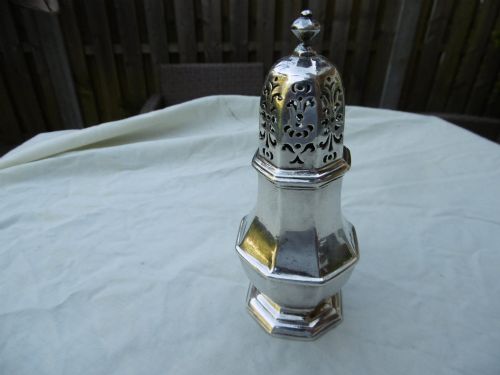
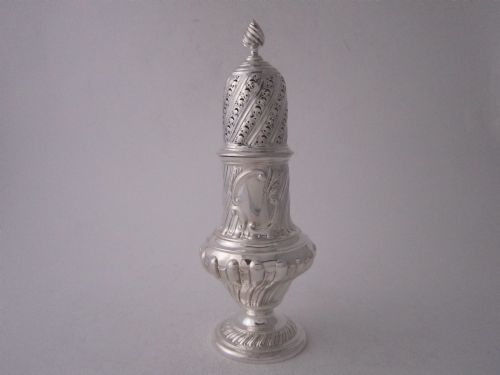
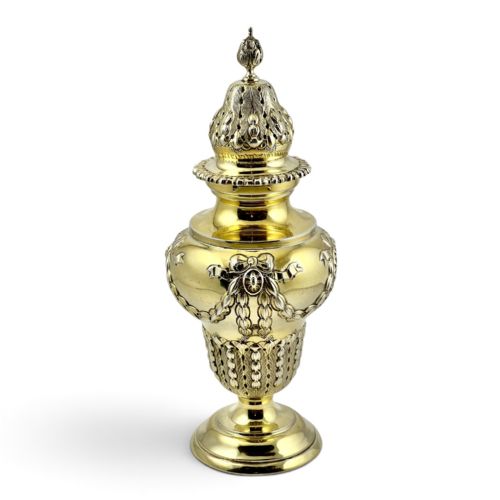
An antique silver muffineer, also listed as a sugar shaker, caster, or castor, stands as a small tabletop vessel designed for sprinkling sugar over food. These pieces appear from both the Georgian period and the George V era, showing traditional forms shaped in sterling silver.
The inventory on this page includes items identified as sugar casters and silver shakers. Each piece reflects the functional domestic silverwork of its respective decade, combining utility with refined metalwork.
How They Were Made
Makers shaped these vessels from solid sterling silver using traditional metalworking techniques. The bodies often feature raised or cast forms designed to hold dry sugar securely.
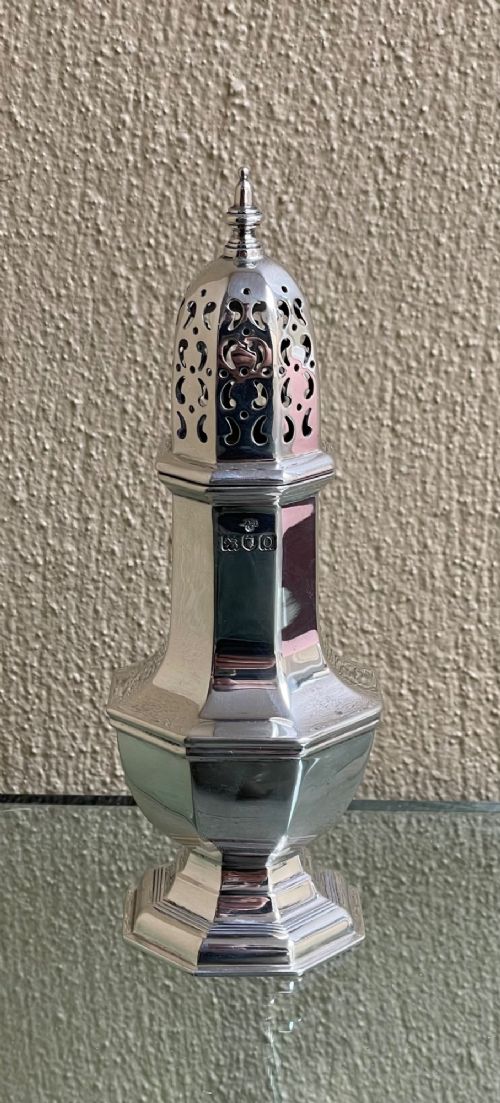
Perforated lids allow the contents to be dispensed smoothly. Silversmiths pierced these covers by hand or punch to create decorative patterns that matched the style of the body.
Even the smallest muffineer carries a tiny pierced lid that turns simple breakfast sugar into an exercise in refined table etiquette.
What Varies in Quality
The distinction between standard examples and exceptional pieces rests in the weight and proportion of the silver. Substantial metal thickness and balanced form elevate an item above lighter productions.
Makership also defines the grade of a piece, where defined piercing on the cap and clear punch marks indicate careful workshop execution.
Thomas Ross
The Antique Silver Muffineer Glossary
- Muffineer
- A small silver caster used specifically for sprinkling sugar onto muffins or toast. These vessels became popular accessories on tea tables during the eighteenth and early twentieth centuries.
- Caster
- A container with a perforated top used for shaking fine condiments like sugar or spice over food. The name derives from casting the contents across a dish.
- Sterling silver
- An alloy of silver containing 92.5 percent pure silver and 7.5 percent other metals, usually copper. This standard ensures durability while maintaining a bright metallic lustre.
- George V
- A stylistic and historical period spanning the early twentieth century, noted here in items produced around nineteen eleven. Design often drew inspiration from earlier Georgian precedents.
Frequently Asked Questions
What is a muffineer used for?
A muffineer serves as a small table shaker designed specifically for sprinkling sugar over warm baked goods like muffins.
In historical domestic settings, it sat upon the tea table alongside other silver tableware for convenient guest use.
How do I date a silver shaker?
Dating relies on examining the hallmarks stamped into the metal by the assay office. These marks reveal the year of manufacture, the maker's mark, and the standard of silver.
Stylistic cues such as the profile and decorative motifs also help assign a piece to the Georgian era or the George V period.
Is sterling silver used for all of these?
The pieces recorded on this page are formed from sterling silver. This material provides the necessary durability and weight for functional tableware.
Assay office stamps verify the silver standard used by the silversmith.
How should I clean antique silver?
Cleaning requires a soft cloth and a specialised silver polish formulated to remove tarnish without scratching the surface. Gentle maintenance preserves both the engraved details and the original hallmarks.
Avoid harsh abrasives or chemical dips that can damage the antique finish of the metal.