
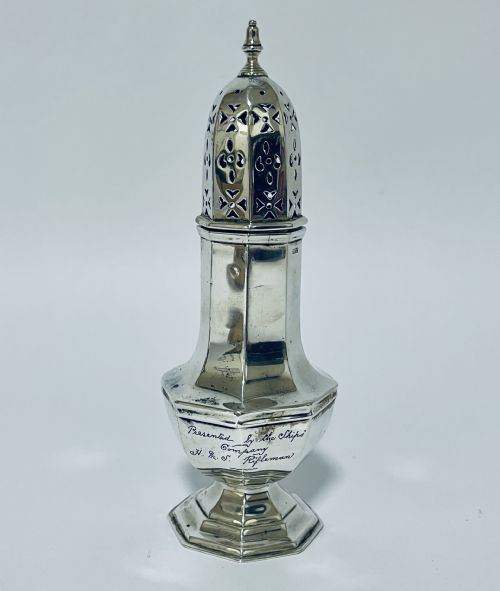
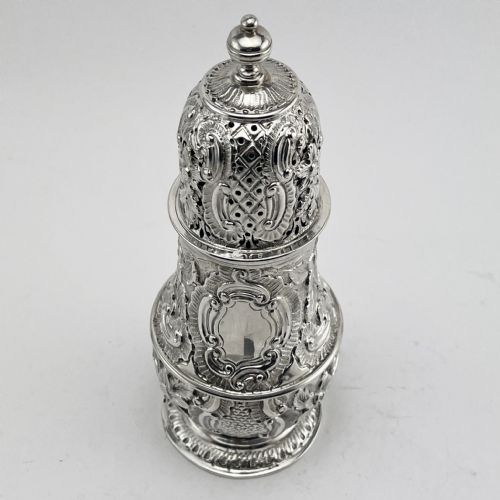


Pierced Silver Shaker
A pierced silver shaker brings genuine refinement to the dining table, offering both decorative pierced work and functional service.
Pierced Silver Shaker
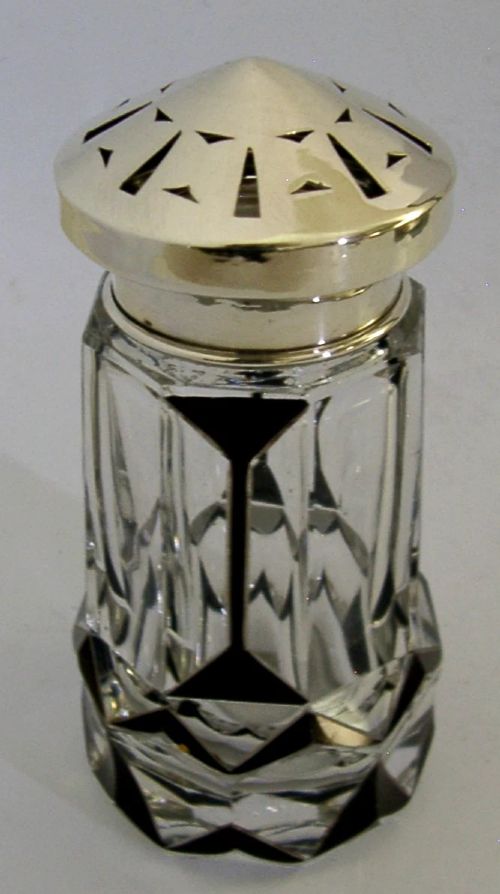
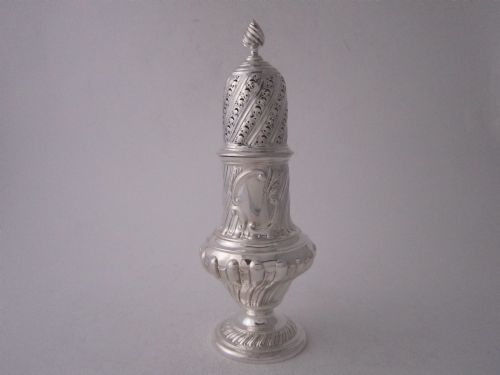
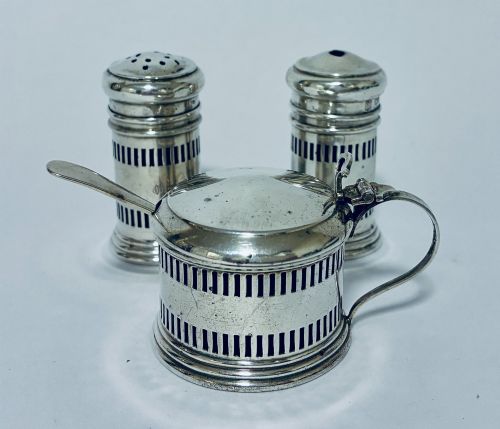
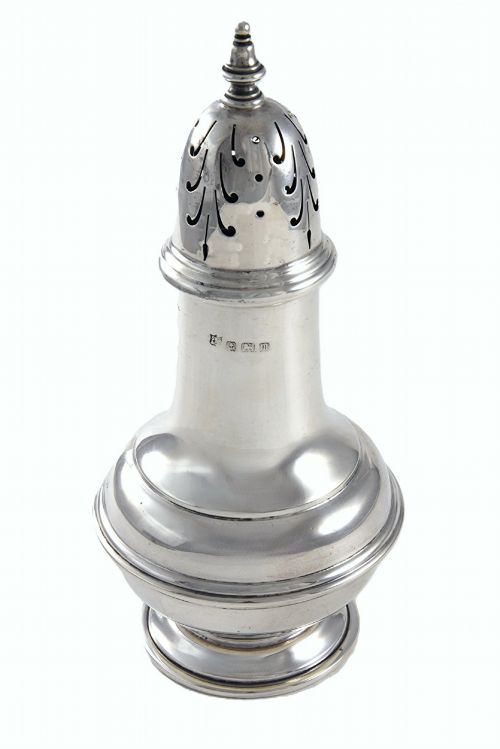
A pierced silver shaker encompasses sugar casters, pepper pots, and pounce pots designed for domestic service across several centuries. The selection brings together sugar casters and cruet items alongside desk accessories and table salts.
Examples span from eighteenth-century pieces by makers such as James Goodwin and Thomas Ross through to Victorian, Edwardian, and later twentieth-century iterations. Most items you encounter date from the Georgian, Victorian, and Edwardian periods.
The primary forms include tall sugar casters with pierced tops alongside smaller pepper pots, salts, and pounce pots for ink drying. Many items utilise classic Georgian styles or revival designs produced in sterling silver.
How they were made
Silversmiths constructed these pieces primarily from sterling silver and standard silver, frequently incorporating cobalt glass liners within salt cellars and cruet components. Metalwork techniques involved shaping the body and piercing the removable top to allow the contents to be dispensed.
Early eighteenth-century pieces reflect traditional silversmithing methods with hand-pierced motifs, while later Victorian and Edwardian examples utilise established manufacturing techniques of the period.
Pounce pots once helped writers dry ink by showering resin dust upon the page, leaving historical documents subtly sparkling under magnification.
What varies in quality
Quality rests upon the crispness of the pierced decoration and the substantial weight of the silver used in the body and cap. Early eighteenth-century vessels by known silversmiths demonstrate superior hand-craftsmanship compared to mass-produced twentieth-century counterparts.
The balance of the form and the structural integrity of the screw-fit or push-on pierced lid distinguish finer examples from standard domestic wares.
James Goodwin·Thomas Ross·Charles Alchorne
The Pierced Silver Shaker Glossary
- Sterling silver
- A silver alloy containing ninety-two point five percent pure silver by mass and seven point five percent other metals. This standard composition ensures durability for functional tableware.
- Pounce pot
- A small container with a pierced lid used to sprinkle gum sandarac powder over parchment before writing. This prepares the porous surface to receive ink without spreading.
- Caster
- A cylindrical or vase-shaped container with a pierced cover used for sprinkling sugar, pepper, or other dry condiments. They frequently appear individually or paired within larger cruet sets.
- Cobalt glass
- Deep blue glass utilised as interior liners for open salt cellars and cruet bottles. The vivid colour provides a striking visual contrast against pierced sterling silver frameworks.
- Cruet set
- A matched collection of condiment containers held together on a stand or frame. These typically house oil, vinegar, mustard, pepper, and sugar vessels for table service.
Pierced Silver Shaker: Frequently Asked Questions
What is the difference between a sugar caster and a pepper pot?
Sugar casters are traditionally taller vessels designed for dusting sugar over baked goods and desserts. Pepper pots are smaller in scale and intended for savory table seasoning.
Both pieces feature pierced tops, but their internal capacities and overall dimensions reflect their distinct culinary uses.
How do I clean antique silver shakers safely?
Clean silver shakers using a soft cloth and a specialised silver polish formulated to remove tarnish gently. Avoid harsh abrasive materials that can damage hand-pierced patterns or wear away hallmarks.
Wash the pieces thoroughly in warm soapy water afterwards and dry them immediately with a lint-free cloth.
Can I use antique silver shakers for daily dining?
Sterling silver shakers remain fully functional for modern dining provided they receive proper care and regular cleaning. Ensure that salt and other condiments are emptied after use to prevent corrosion of the interior silver.
Glass-lined salt cellars protect the metal framework from direct contact with corrosive contents.
How do I identify the date of a silver shaker?
British silver shakers carry hallmarks stamped directly onto the metal, indicating the assay office, the maker's mark, and a date letter corresponding to the year of manufacture. Examining these punches provides the most accurate guide to the period of origin.
Stylistic elements like Georgian profiles or Victorian ornamentation offer further clues when hallmarks are rubbed.