
Silver Condiment Casters
Silver condiment casters deliver refined table service through pierced tops and precious metal bodies, offering both functional utility and classic dining style.

Silver Condiment Casters
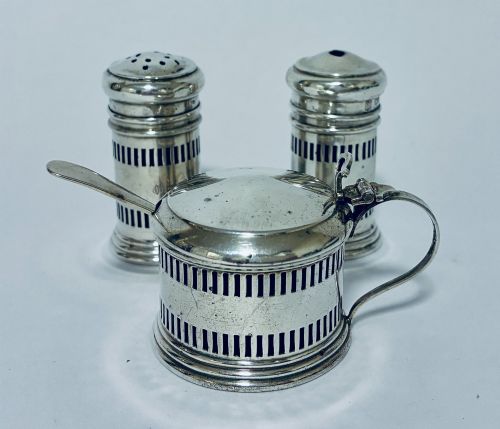
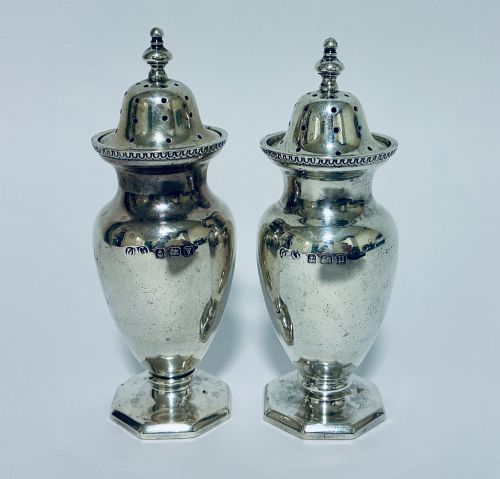
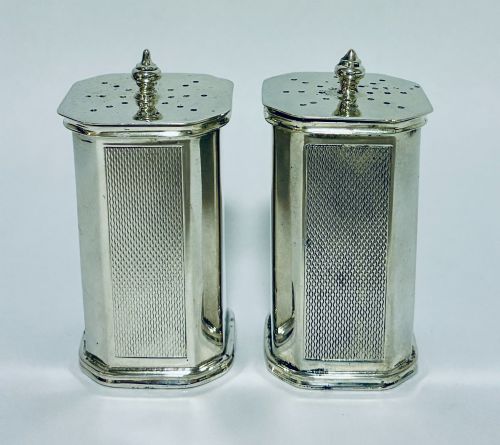
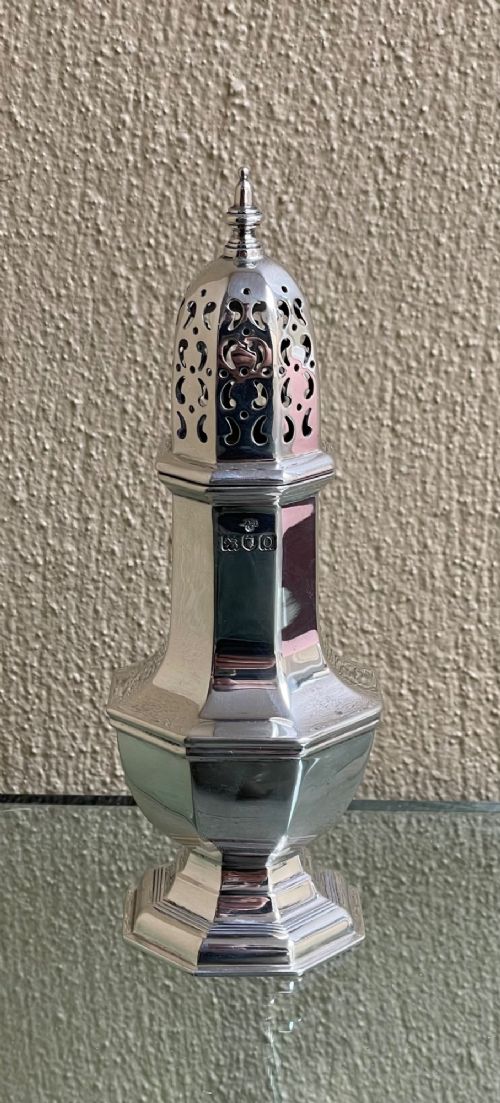
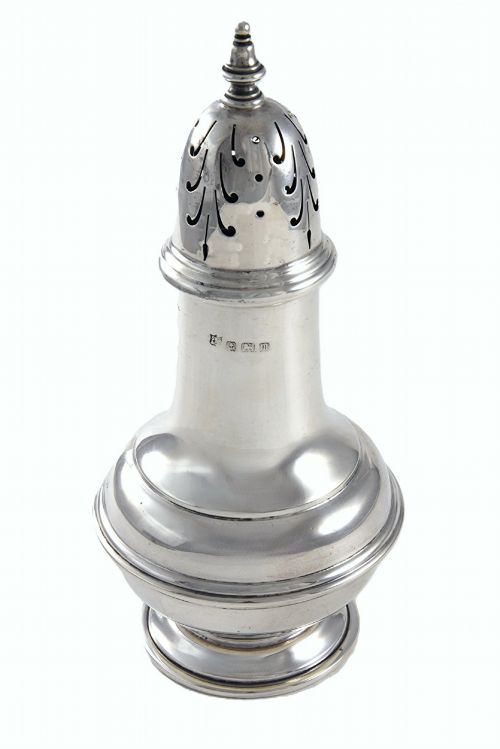
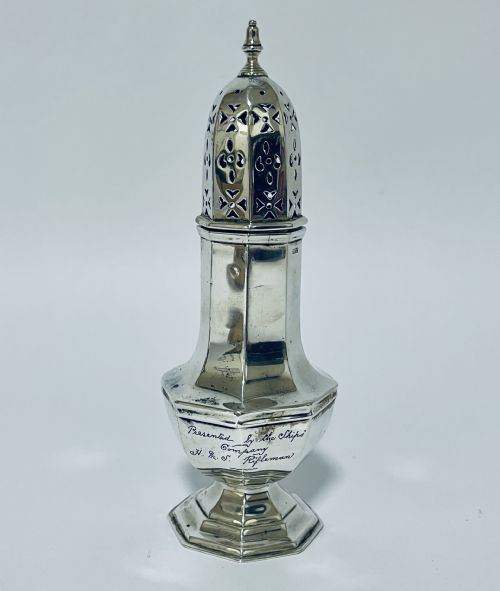
Silver condiment casters encompass sugar shakers, pepper pots, and multi-bottle cruet frames designed for formal dining tables. These functional vessels appear across Victorian, Edwardian, and Art Deco periods, alongside Georgian revivals.
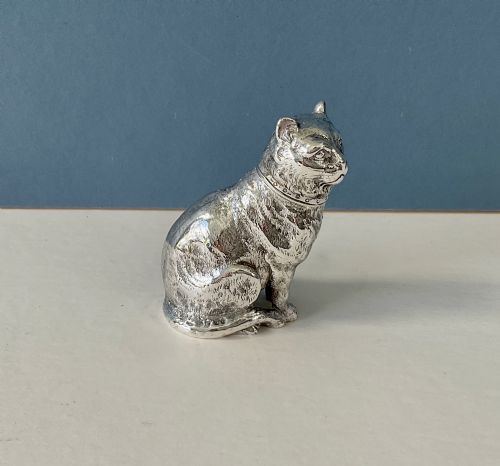
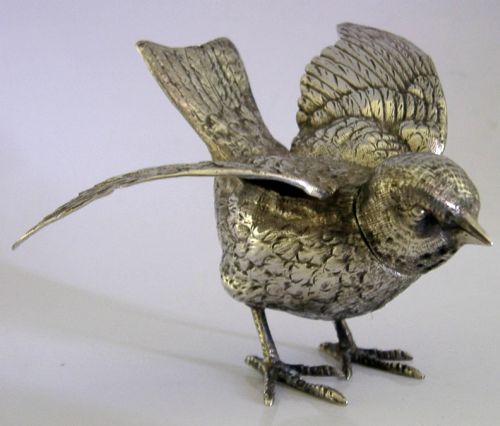
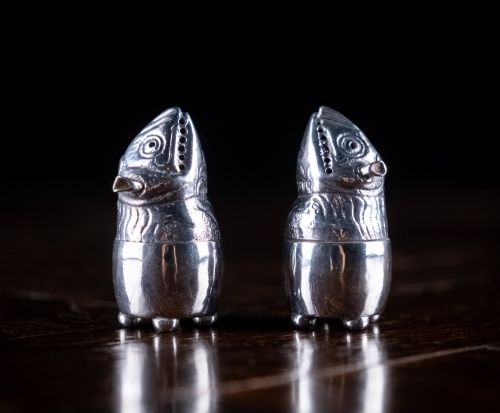
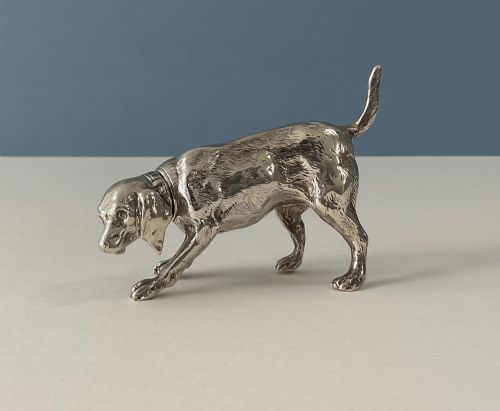
Buyers frequently encounter individual pepper pots and sugar casters alongside matched cruet sets containing multiple bottles. The selection spans straightforward domestic tableware and playful novelty animal shapes such as cats, owls, and birds.
Origins range from British sterling silver productions to Continental silver and silver-plated frameworks fitted with cut glass inserts. Pieces date from the eighteenth century through to the interwar decades of the twentieth century.
Materials and Techniques
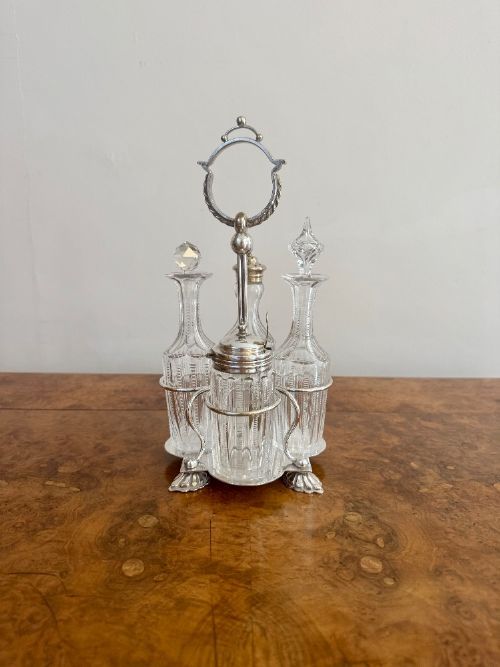
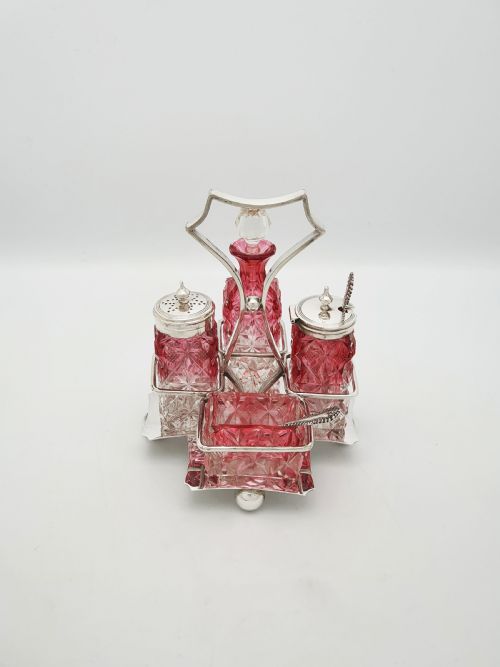
Silversmiths formed the bodies of these vessels from solid sterling silver or applied silver plate over base metal frames. Many examples incorporate glass elements, utilising cut glass, blue glass liners, and cranberry flashed glass bottles.
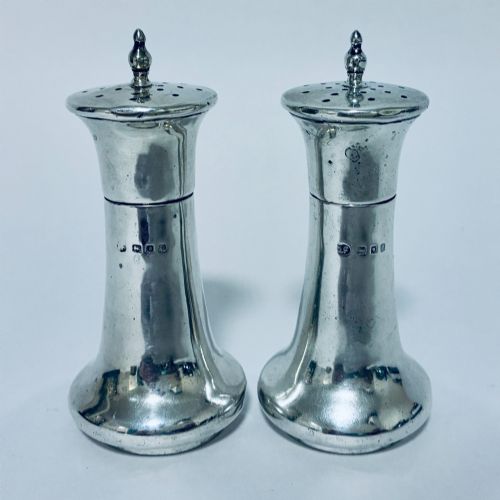
Piercing and chasing techniques decorate the detachable screw-on or push-fit lids, creating functional sprinkler patterns for dry seasonings. Interior gilding, known as silver gilt, often protects sugar casters and salt cellars from the corrosive nature of their contents.
Listings feature silver condiment casters spanning the Georgian, Victorian, Edwardian, and Art Deco periods, utilising sterling silver, silver plate, and cut glass.
Standards of Craftsmanship
Execution of detail separates standard utility wares from superior examples, particularly in the crispness of piercing on shaker lids and the hand-chased definition of novelty animal forms. The weight of the metal and the balance of the vessel indicate the original maker's investment in materials.
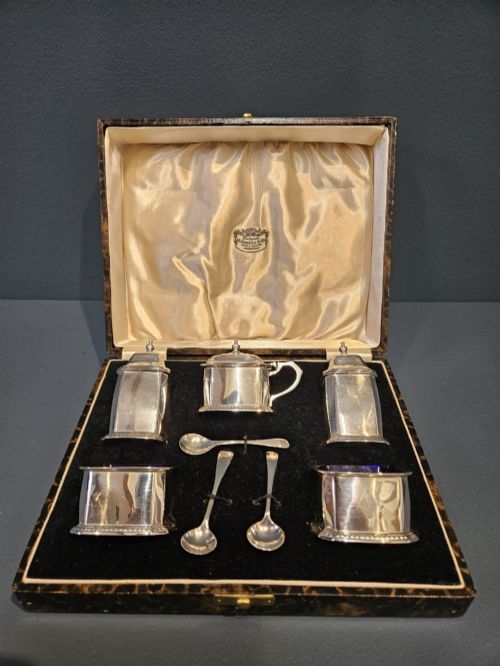
Completeness dictates overall standing, especially for multi-bottle cruet sets requiring matching glass bottles, undamaged stoppers, and original silver frames. Hallmarks stamped into sterling silver provide clear evidence of origin and date, anchoring the piece to a specific workshop.
Frederick Brasted·Mappin Brothers·Walker & Hall·Charles Thomas Fox·Elkington & Co·Roberts & Belk
The Silver Condiment Casters Glossary
- Caster
- A small tabletop vessel with a pierced top designed for sprinkling sugar or dry seasonings onto food. These objects feature removable lids secured by threaded collars or friction fits.
- Cruet set
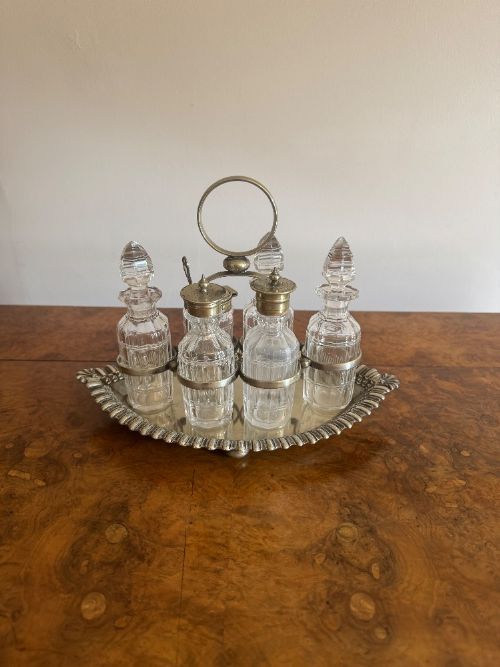
- A fitted frame holding multiple bottles, jars, or castors for condiments such as oil, vinegar, mustard, and pepper. These stands often incorporate carrying handles and dedicated feet.
- Silver gilt
- Silver that has been coated with a thin layer of gold on its interior surfaces. This treatment prevents acidic condiments from tarnishing and staining the silver.
- Pepperette
- A small individual pot or shaker specifically intended for dispensing ground pepper at the table. They frequently match larger salt cellars within a dining set.
Silver Condiment Casters: Frequently Asked Questions
What is a silver condiment caster used for?
These vessels serve to dispense dry seasonings such as caster sugar and ground pepper onto food during meals. They stand upon dining tables as both functional tableware and decorative ornaments.
Makers designed the pierced lids to control the flow of the contents while keeping moisture out. Many pieces form part of larger cruet sets that hold multiple condiments simultaneously.
How do I clean antique silver condiment pieces?
Maintenance requires gentle washing in warm soapy water using a soft cloth to protect the silver surface and any glass inserts. Chemical dips and abrasive cleaning products damage the original finish and wear down engraved details.
Thorough drying prevents moisture spots from forming on sterling silver and silver-plated elements. Storing pieces away from direct sunlight and damp environments preserves their condition.
Are novelty pepper pots functional?
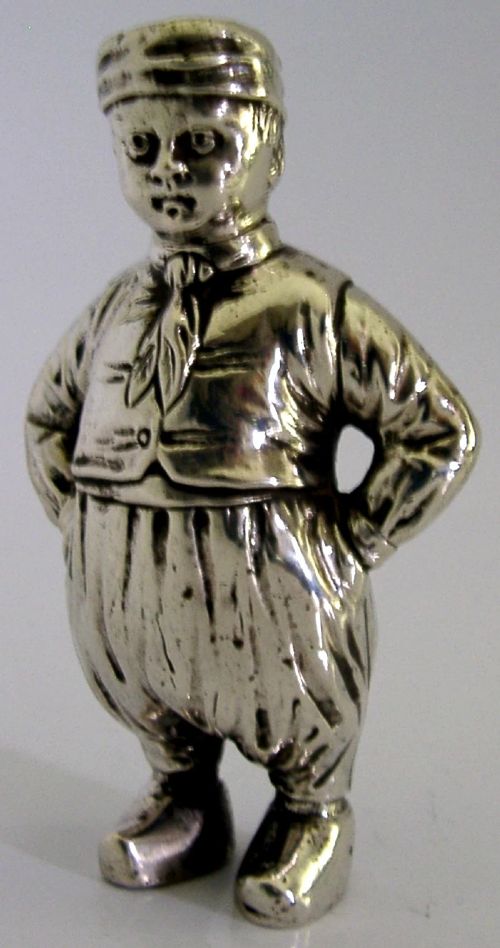
Novelty peppers shaped like animals or figures function identically to standard pots, featuring removable heads or base plugs for refilling. Makers balanced the weight distribution so these sculptural pieces remain stable on the dining table.
Many collectors use them as decorative display items rather than daily table service pieces. Their intricate chased details require careful handling during cleaning.
How do I identify the date of a silver caster?
Hallmarks stamped onto sterling silver pieces reveal the assay office, the purity standard, and a date letter corresponding to the year of manufacture. Examining the style of the chasing and the shape of the vessel provides further context.
Silver-plated items generally lack full hallmarks, relying instead on maker marks and manufacturing style to indicate their period. Comparative study of form helps narrow down the era of production.