
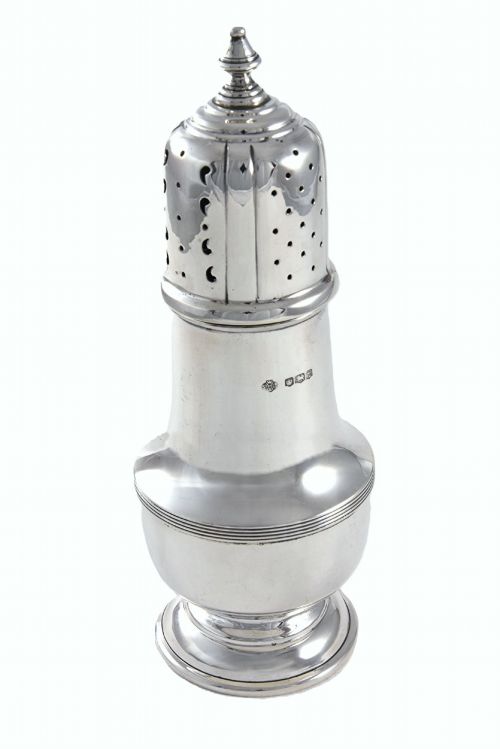
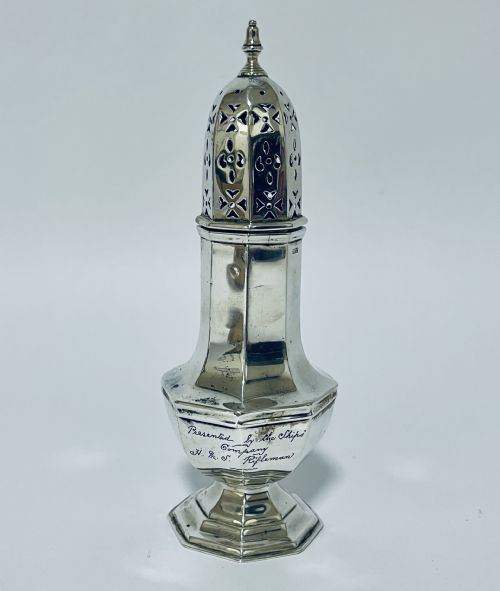


Georgian Silver Shaker
A georgian silver shaker is a pierced vessel for dispensing sugar or spice, prized for graceful proportions and bright silver work.
Georgian Silver Shaker
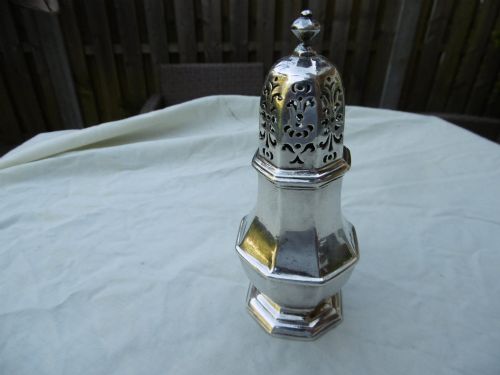
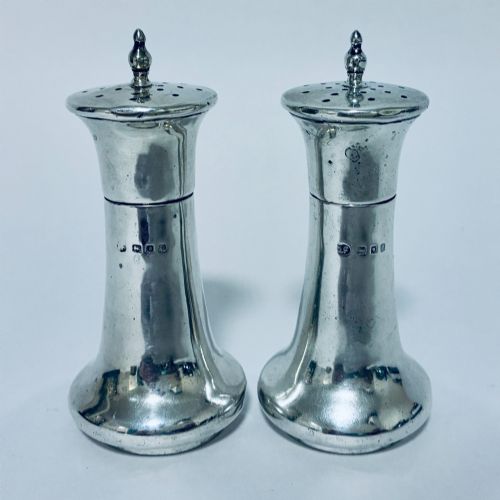
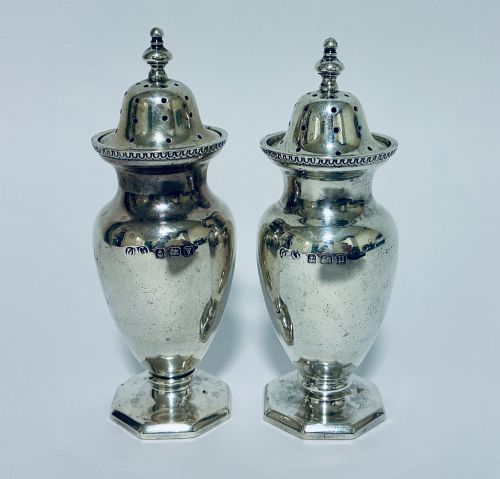
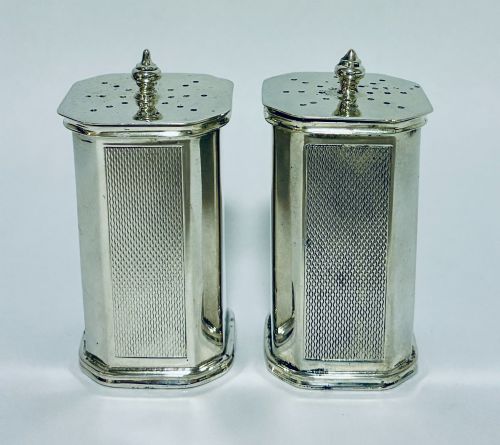
When you search for a georgian silver shaker, you encounter functional tableware designed to dispense sugar, pepper, or pounce onto food and documents. These pieces appear as tall, footed casters with pierced covers, alongside pepper pots, condiment sets, and sugar sifters fitted with cut glass.
The selection ranges from early eighteenth-century octagonal forms and Queen Anne sets to later Georgian muffineers and Victorian revivals. Alongside authentic eighteenth-century examples, the listings include twentieth-century revivals and silver plate alternatives that echo earlier silhouettes.
How they were made
Silversmiths formed these vessels from sterling silver, using hammering and joining techniques to create octagonal, polygon, or rounded bodies. Tops were pierced with decorative patterns using hand-cut or punched holes to allow free flow of contents.
Many examples incorporate cut glass bodies paired with silver collars and pierced tops, while fitted sets often rest within frames accompanied by velvet or satin linings.
Early pounce pots allowed writers to dust their parchment with powdered resin, stopping wet ink from feathering across the page.
What varies in quality
Quality rests upon the crispness of the piercing on the cover and the overall balance of the form, from base to finial. Substantial weight in the silver and clear hallmarks signify superior manufacture.
Early work by prominent makers displays refined proportions and engraved armorials, distinguishing master smiths from later revival pieces.
Stephen Adams·James Goodwin·Simon Pantin·Thomas Ross·Charles Alchorne·Thomas Pritchard·The Barker Brothers·Roberts & Belk·Viners
The Georgian Silver Shaker Glossary
- Caster
- A small container with a pierced top used for sprinkling sugar or spices over food. These vessels form the primary shape found in this category.
- Muffineer
- An alternative term for a sugar caster, specifically used for dispensing sugar onto muffins and hot breads. The name reflects the dining habits of the period.
- Pounce Pot
- A small shaker used to sprinkle resin powder onto rough paper to prepare the surface for writing. They share the pierced lid format of sugar casters.
- Cruet Set
- A matched collection of condiment bottles and casters held within a frame for table service. These assemblies often combine silver and cut glass elements.
- Sterling Silver
- An alloy consisting of pure silver and other metals to provide durability for tableware. Most pieces in this category utilise this standard.
Georgian Silver Shaker: Frequently Asked Questions
What is a georgian silver shaker?
A georgian silver shaker is a hollowware vessel featuring a pierced lid, designed to hold and sprinkle sugar, pepper, or dry condiments at the dining table.
These pieces range in date from the early eighteenth century through the Victorian era and later twentieth-century revivals.
How were they used?
These vessels served at the table for dusting sugar onto desserts or distributing spices and pepper over meals. Some smaller versions, known as pounce pots, dispensed resin powder onto writing paper.
They functioned as both practical tableware and decorative objects displaying the owner's status through silver work and armorial engravings.
What materials are used?
The primary material is sterling silver, shaped into bodies with pierced slip-on or screw-fit covers. Many examples combine silver with cut glass.
Fitted sets may also include internal linings of velvet or satin within presentation boxes or cruet frames.
How do I identify the period?
Periods are identified through hallmarks stamped on the silver, stylistic details such as octagonal or polygon sides, and maker marks. Eighteenth-century examples often feature simpler, heavier construction and Huguenot influences.
Later Victorian and twentieth-century pieces frequently adopt earlier Georgian revival styles while retaining contemporary date letters.
How should I clean silver casters?
Care involves gentle washing in warm soapy water and drying with a soft cloth to preserve the finish. Avoid harsh abrasive polishes that wear away engraved details and hallmarks.
Store pieces in dry environments away from direct moisture to maintain the silver surface.