


.JPG)
Solid Silver Sugar Sifter
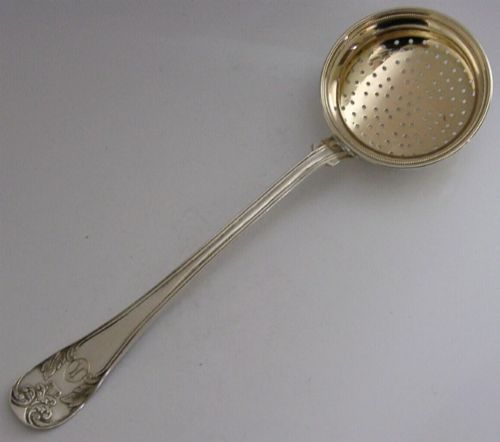
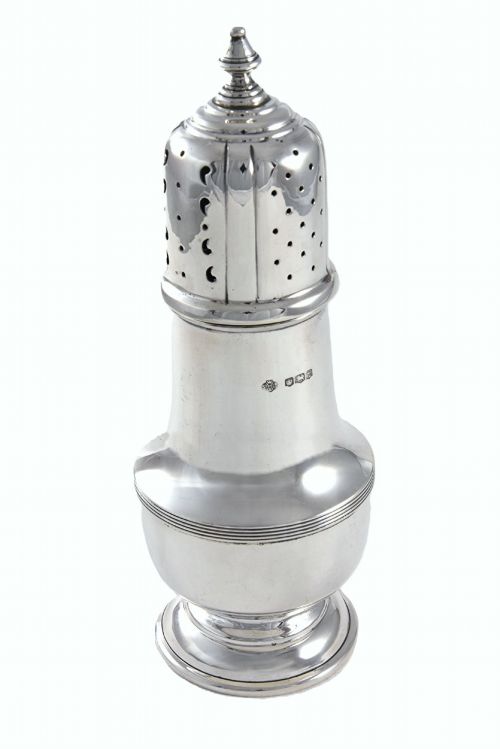
A solid silver sugar sifter brings refined historical utility to the table, taking the form of upright casters and perforated spoons designed for dispensing powdered sugar.
Solid Silver Sugar Sifter
A solid silver sugar sifter encompasses both upright cast vessels and perforated spoons created to scatter sugar over food and drink. When you search for a solid silver sugar sifter, you encounter forms that span from the eighteenth century through the twentieth century, reflecting shifting dining habits over generations.
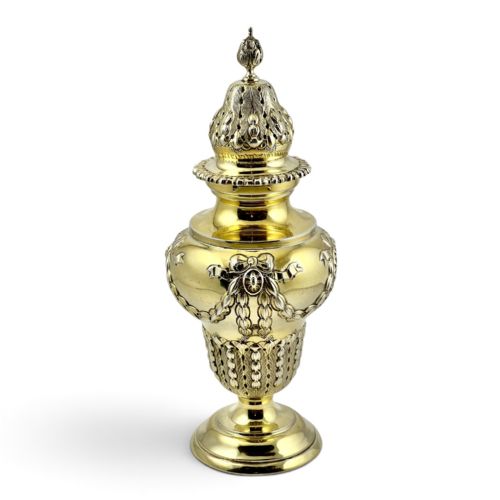
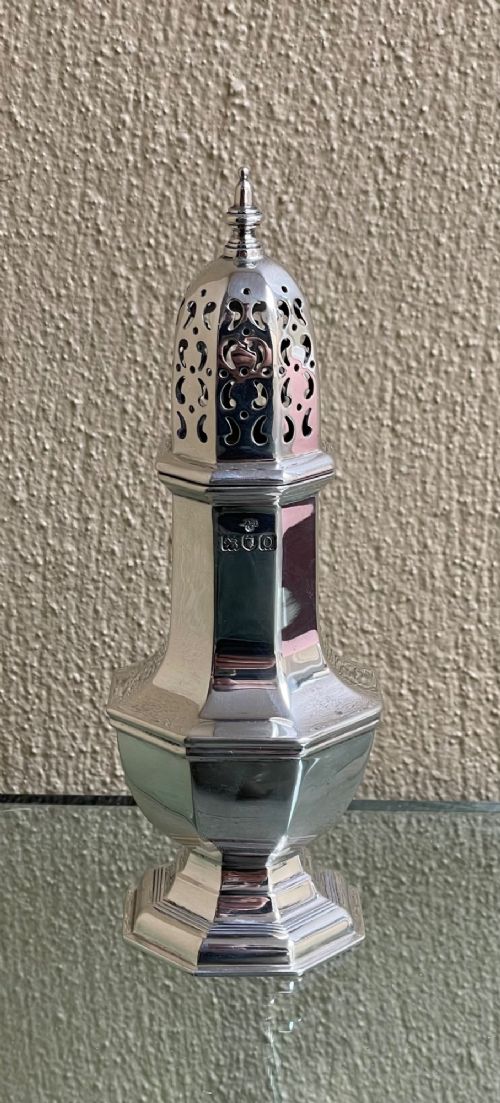
The selection on this page most frequently presents upright casters, often described as muffineers, alongside sifter spoons and fitted sets. These pieces emerge in styles ranging from early octagonal silhouettes to Edwardian interpretations and Art Deco polygonal designs.
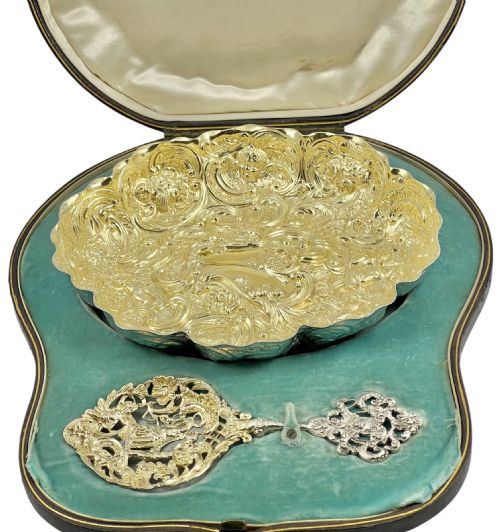
Origins stretch across British workshops in London, Birmingham, and Sheffield, alongside continental European pieces from France, Russia, Sweden, and Denmark. The objects include standalone items, cased sets with velvet or leather interiors, and combinations involving cut glass.
How they were made
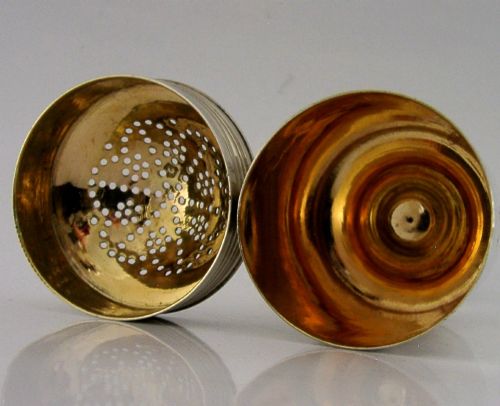
Silversmiths constructed these items primarily from sterling and solid silver, occasionally applying silver-gilt finishes to the interior or exterior surfaces of bowls and casters. Certain pieces incorporate cut glass bodies fitted with solid silver tops, combining heavy crystal cutting with pierced metalwork.
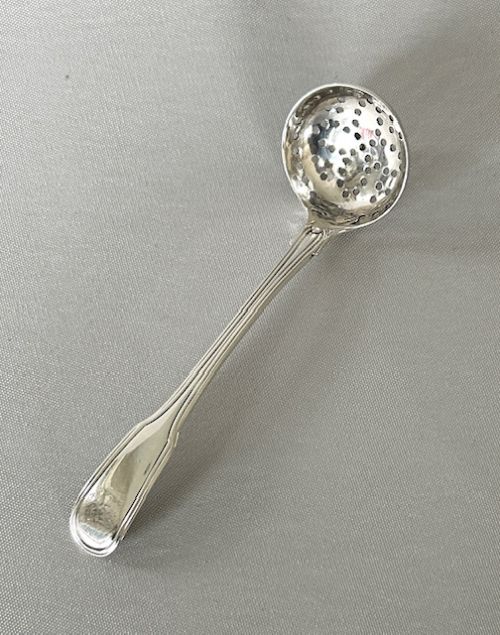
Piercing forms the defining technique for the lids of casters and the bowls of sifter spoons, where intricate patterns allow sugar to pass through evenly. Makers employed methods such as casting, hammering, and engraving, often adding figural terminals or grapevine designs to spoon handles.
Some Victorian sifter spoons feature unexpected figural terminals shaped like tiny grapes or vines, turning a simple sugar tool into a tactile sculpture.
What varies in quality
Quality rests upon the crispness of the piercing in the sifter lid or spoon bowl, where clean edges dictate both aesthetic success and functional precision. Weight and gauge of the metal also define the standard, alongside the complexity of the silhouette, such as octagonal or polygon sides compared to plain round forms.
The presence of crisp hallmarks, maker marks, and original fitted cases lined with velvet or leather elevate the standing of a piece. Hand-engraved detailing, figural terminals, and integrated design motifs like grapevines separate standard utilitarian items from exceptional examples.
Stephen Adams·The Barker Brothers·Roberts & Belk·Francis Higgins·Taylor & Perry·A B Savory & Sons·Chawner & Co·Martin Hall & Co
The Solid Silver Sugar Sifter Glossary
- Caster
- A small upright vessel with a perforated top used for sprinkling dry condiments like sugar or spices over food. These form a major category within silver tableware.
- Muffineer
- An alternative nineteenth-century term for a sugar caster, originally associated with seasoning hot baked bread or muffins. They share the same upright pierced construction.
- Sifter spoon
- A ladle or spoon featuring a pierced bowl designed to dust powdered or caster sugar onto desserts and beverages. They appear in diverse regional styles across Britain and Europe.
- Silver-gilt
- Silver that has been coated with a thin layer of gold on its surface, often referred to as vermeil. This treatment protects the silver and provides a rich two-tone appearance.
- Hallmark
- An official stamp applied to precious metals indicating the standard of purity, the assay office, and the date letter. These marks allow collectors to date pieces accurately.
Solid Silver Sugar Sifter: Frequently Asked Questions
What is a caster used for?
A caster holds and dispenses dry seasonings, specifically fine sugar, onto food through a pierced cover. The perforated top allows controlled distribution without lumps.
Historically, these vessels sat on dining tables alongside cruet sets to accompany desserts and pastries. Their forms evolved from pear shapes in the eighteenth century to geometric Art Deco profiles.
How do I date a silver sifter?
Dating relies primarily on the hallmarks stamped into the silver, which indicate the assay office and the specific year of production. Style markers also provide guidance, such as octagonal Georgian shapes or later Art Deco polygon sides.
Examining the manufacturing techniques and any engraved ciphers helps confirm the historical period. Comparing the maker's mark against historical records anchors the piece in its era.
What is the difference between a sifter and a caster?
A caster is an upright container with a pierced lid, whereas a sifter spoon is a ladle with a perforated bowl. Both serve the function of sprinkling sugar, but they employ different physical formats.
Casters stand independently on a table or tray, while sifter spoons are held in the hand to dust desserts or dissolve sugar in drinks. Some collections group both under the broader heading of sugar sifters.
How should I clean antique silver?
Cleaning requires a soft microfiber cloth and a mild silver cleaning agent formulated specifically for antiques. Harsh abrasive pastes wear away thin plating and crisp engraved details.
Rinsing the piece in warm water and drying it immediately prevents residue buildup in the pierced holes of the lids. Proper storage in anti-tarnish cloth reduces the frequency of cleaning needed.