


Georgian Silver Pepper Caster
These georgian silver pepper caster examples bring tactile elegance to the dining table, offering authentic period form alongside everyday utility.
Georgian Silver Pepper Caster
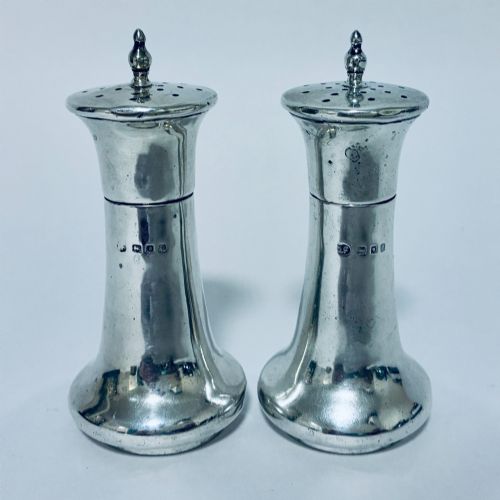
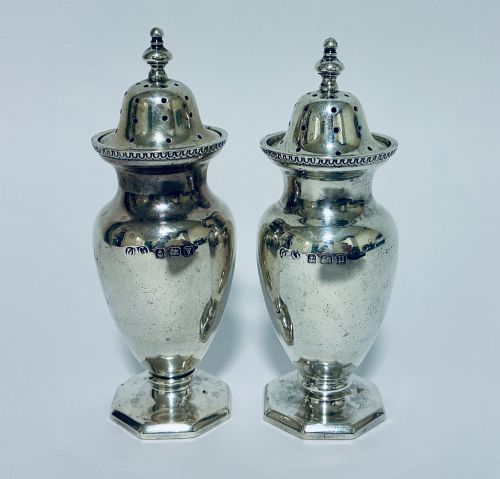
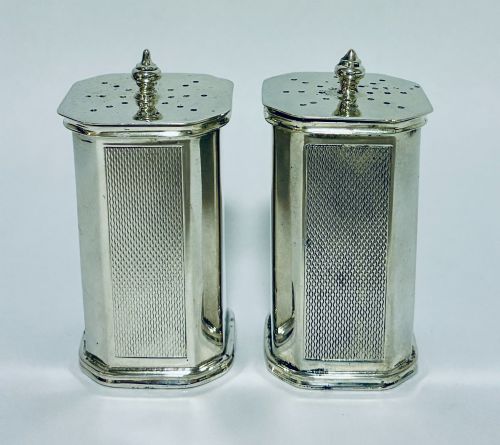
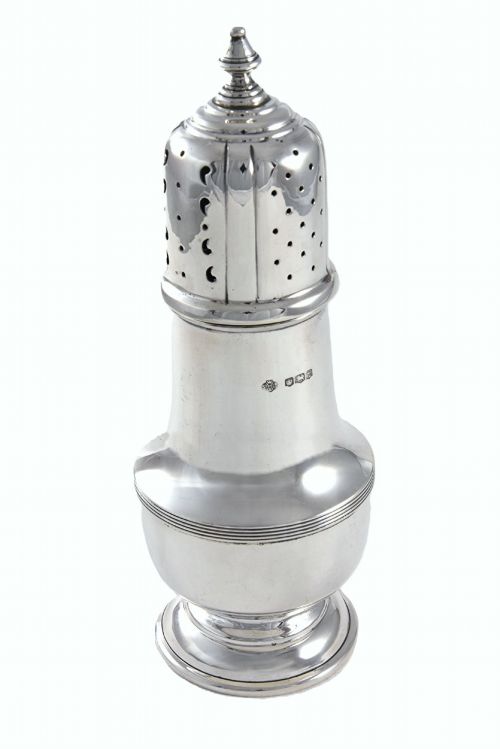
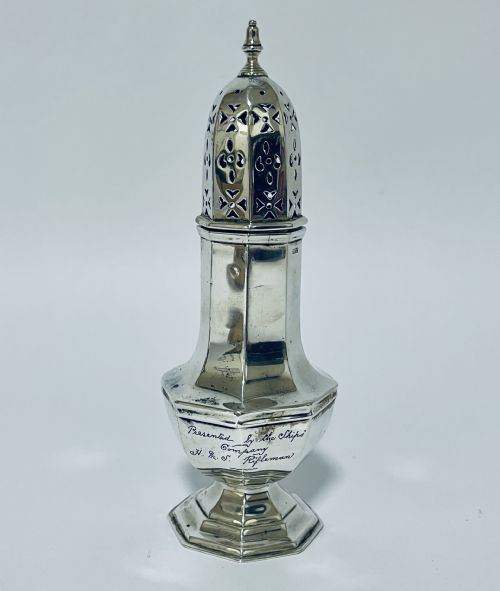
A georgian silver pepper caster is a small tabletop vessel designed for dispensing seasoning, featuring a pierced top and a balanced foot. These dining accessories appear in various silhouettes ranging from early tapering cylindrical bodies to later baluster and urn shapes. Buyers seeking these items will find both individual pieces and matched pairs alongside larger cruet sets.
The pieces on this page span genuine eighteenth-century Georgian production as well as subsequent revivals and later twentieth-century interpretations. Makers working in the Georgian style continued to utilise traditional proportions, creating functional tableware that mirrors earlier silversmithing standards. Alongside dedicated pepper pots, the selections include related forms such as sugar shakers, muffineers and pounce pots.
Cruet frames holding multiple bottles and castors represent another common format found within these listings. Whether acquired as a single cabinet specimen or part of a matched condiment set, each item reflects the shifting dining customs of its period. The forms vary from plain silver surfaces to pieces adorned with crests, armorials and fine piercing.
Materials and Construction
Silversmiths constructed these vessels primarily using sterling silver, shaped through raising or casting techniques to achieve the characteristic weight and rigidity of the form. Many examples display crisp hallmarking stamped directly into the metal, recording the assay office, date letter and maker's mark. Surface enrichment often includes hand-pierced lids with intricate floral or geometric patterns designed to let the seasoning flow evenly.
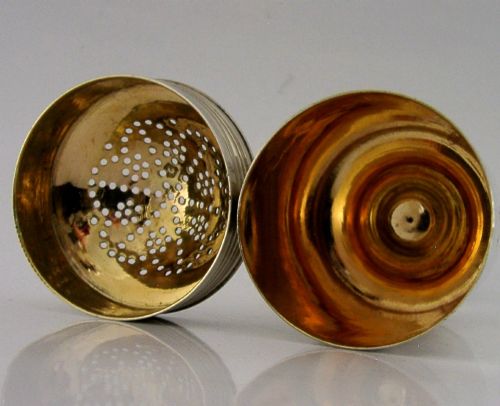
Associated items within the broader category incorporate supplementary materials such as cut glass bottles and fitted frames lined with velvet or satin. Later twentieth-century manufacturing methods occasionally utilised silver plate alongside solid sterling standards, while certain pieces feature a gold wash known as vermeil inside the bowl. Each construction method dictates how the metal responds to handling and cleaning over centuries of use.
Listings feature sterling silver and silver plate alongside cut glass, velvet and satin within fitted cruet sets.
Assessing Quality and Craftsmanship
Quality in these pieces rests upon the crispness of the piercing, the thickness of the silver gauge, and the integrity of the maker's marks. Superior examples exhibit balanced proportions where the lid fits securely onto the body without rocking or distortion. Engraved armorials, crests and family ciphers executed by skilled hands elevate the sculptural presence of the silver.
Charles Thomas Fox·Stephen Adams·James Goodwin·Simon Pantin·The Barker Brothers·Thomas Ross·Charles Alchorne·Thomas Pritchard·Viners
The Georgian Silver Pepper Caster Glossary
- Muffineer
- A small caster traditionally used for sprinkling sugar rather than pepper. These vessels share a similar pierced dome lid with pepper pots.
- Pounce pot
- A small container used for dusting gum sandarac powder over parchment to prepare it for writing. They feature pierced tops closely resembling early condiment castors.
- Cruet set
- A fitted stand holding multiple bottles or castors for oil, vinegar, mustard and various spices. These sets formed the centrepiece of formal dining tables.
- Vermeil
- Sterling silver coated with a thin layer of gold. This technique was frequently applied to the interior bowls of condiment vessels.
- Armorial
- A heraldic coat of arms or crest engraved onto the surface of the silver. These markings often denote the original owning family.
- Hallmark
- An official stamp applied by an assay office to guarantee the purity of the metal. It typically includes symbols for the maker, standard and date.
Georgian Silver Pepper Caster: Frequently Asked Questions
What is the difference between a pepper pot and a sugar caster?
Pepper pots generally feature finer piercing designed for dry ground spice, whereas sugar casters and muffineers are larger with wider apertures for granulated sugar.
Both forms utilise threaded or slip-on pierced lids, though the internal capacity and overall height usually indicate the intended dining function.
How do I date a silver pepper caster?
Dating relies primarily on the stamped hallmarks showing the assay office city, date letter and sovereign's head where applicable.
Stylistic markers such as the shift from cylindrical early eighteenth-century silhouettes to baluster and urn shapes in the Georgian era also provide broad chronological clues.
Can I use antique silver castors for daily dining?
Solid sterling silver pieces are durable enough for regular table use provided they are washed by hand using mild soap and dried immediately.
Avoiding harsh abrasive cleaners protects the historic hallmarks and delicate surface engraving from premature wear.
What does Georgian Revival mean for these pieces?
Georgian Revival items are later twentieth-century pieces manufactured to imitate the aesthetic forms and proportions of the eighteenth century.
These items allow collectors to enjoy classic design aesthetics while benefiting from twentieth-century manufacturing standards and distinct modern date letters.