
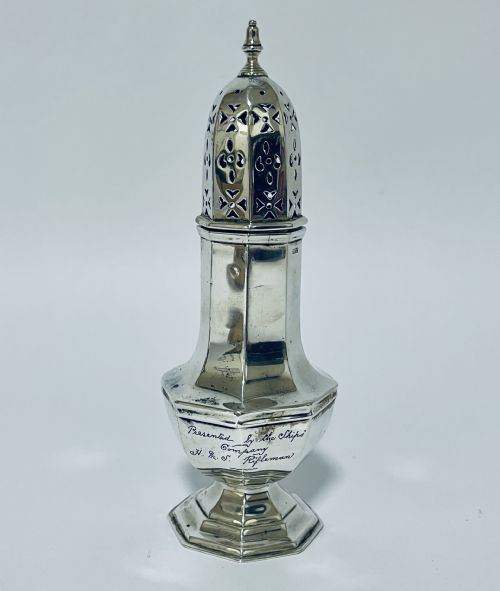


Sterling Silver Muffineer
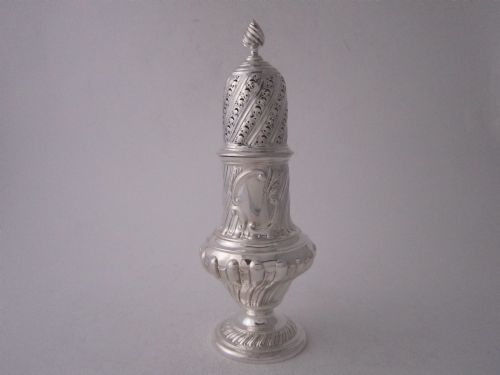
These sterling silver muffineer examples are traditional tabletop shakers designed for dispensing fine sugar onto warm baked goods.

Sterling Silver Muffineer
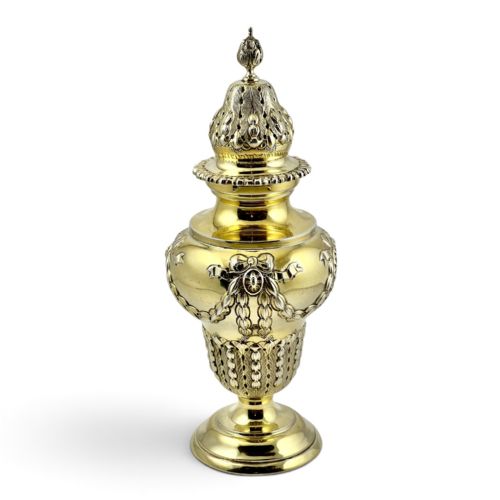
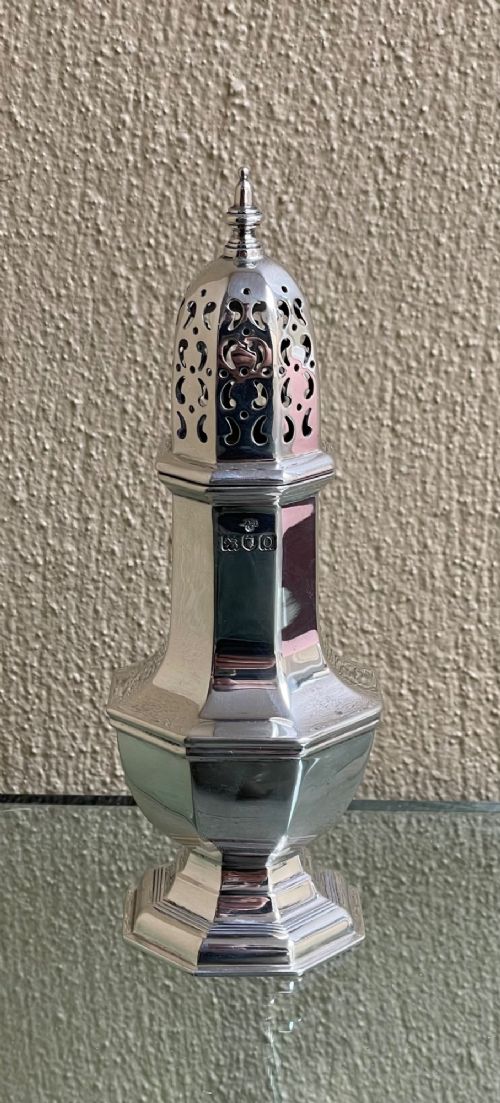
A sterling silver muffineer is a specialised shaker historically used at the table for dusting powdered sugar over hot muffins and toast. These pieces range in form from tall Georgian octagonal vessels to substantial Victorian revivals and Edwardian examples.
The pieces listed on this page span several eras including the eighteenth century, Georgian period, Victorian era, and Edwardian period. Collectors frequently encounter them described under related terms such as sugar casters, dredgers, and shakers.
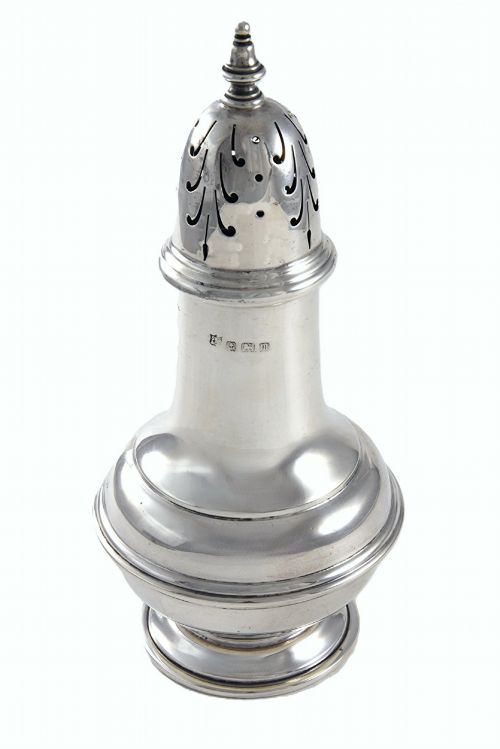
Most examples exhibit traditional British hallmarks indicating their assay office of origin, year of manufacture, and maker. They combine practical utility with the fine decorative craftsmanship typical of British silver production.
How they were made
Silversmiths constructed these vessels primarily from sterling silver, shaping the bodies through raising, casting, or spinning techniques. Certain items feature silver-gilt interiors or highlighted details that add a rich contrasting tone to the finished silver.
Pierced covers form the functional top of each shaker, featuring intricate patterns drilled or punched by hand to control the flow of sugar. These lids usually secure to the body via a threaded collar, bayonet fitting, or snug push-fit rim.
These charming little shakers spent centuries turning dry sugar into a respectable morning dusting for buttered toast.
What varies in quality
Quality in a sterling silver muffineer rests upon the crispness of the body's facets, the weight of the metal utilised in its construction, and the delicacy of the pierced work on the lid. Early eighteenth-century examples display hand-cut piercing that requires exceptional precision from the silversmith.
The clarity and completeness of the hallmarks stamped into the metal further define the piece, alongside the preservation of original maker marks and town marks. Substantial gauge silver provides a reassuring heft in the hand, separating superior domestic silver from lighter production.
Stephen Adams·Thomas Ross·Charles Alchorne
The Sterling Silver Muffineer Glossary
- Muffineer
- A small caster or shaker designed specifically for sprinkling sugar onto hot muffins at the breakfast or tea table.
- Caster
- A cylindrical or faceted container with a perforated lid used for dusting food with sugar or spices.
- Silver-Gilt
- Silver that has been coated with a thin layer of gold on its surface, often applied to the interior bowls or lids of dining silver.
- Hallmark
- An official stamp or series of marks applied to precious metals in Britain to indicate standard of purity, maker, and year of assay.
- Dredger
- An alternative historical term for a small shaker used to dredge flour, sugar, or condiments over food.
Sterling Silver Muffineer: Frequently Asked Questions
What is a sterling silver muffineer used for?
A sterling silver muffineer is a small tabletop vessel designed for sprinkling sugar onto hot muffins, crumpets, and pastries. They were standard accessories on formal dining and breakfast tables during the Georgian and Victorian periods.
Today, they serve both as decorative display items and functional tableware for modern dining. Their pierced lids allow for an even distribution of fine sugar.
How do I date a silver caster?
Dating a silver caster relies primarily on the legible hallmarks stamped into the metal by the British assay offices. These marks typically include a date letter corresponding to the exact year the item was tested and entered into trade.
Stylistic indicators such as octagonal bodies, neoclassical urn shapes, or Victorian ornamentation also help narrow down the period of manufacture when marks are partially rubbed.
What is the difference between a muffineer and a sugar caster?
A muffineer is specifically a smaller type of sugar caster intended for individual use or smaller portions of baked goods at the tea table. Larger casters were often kept on the sideboard or used for broader culinary preparations.
In historical inventories and modern listings, the terms frequently overlap as both describe pierced vessels designed to hold and dispense sugar.
How should I clean antique silver casters?
Antique silver casters require gentle maintenance using a non-abrasive silver polish and a soft cloth to protect the original patination and hallmarks. Avoid harsh chemical dips that can strip away desirable surface character and weaken fine pierced details.
Frequent handling with clean hands helps maintain the natural shine of the silver without the need for excessive polishing.