
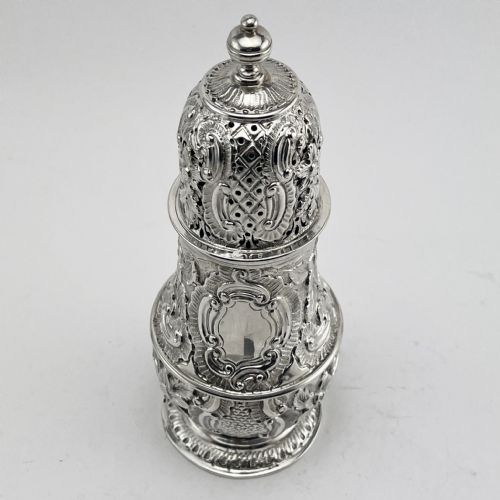


Pierced Silver Caster
These pierced silver casters are refined vessels designed to scatter sugar, pepper or pounce, offering both function and elegance on any dining or writing table.
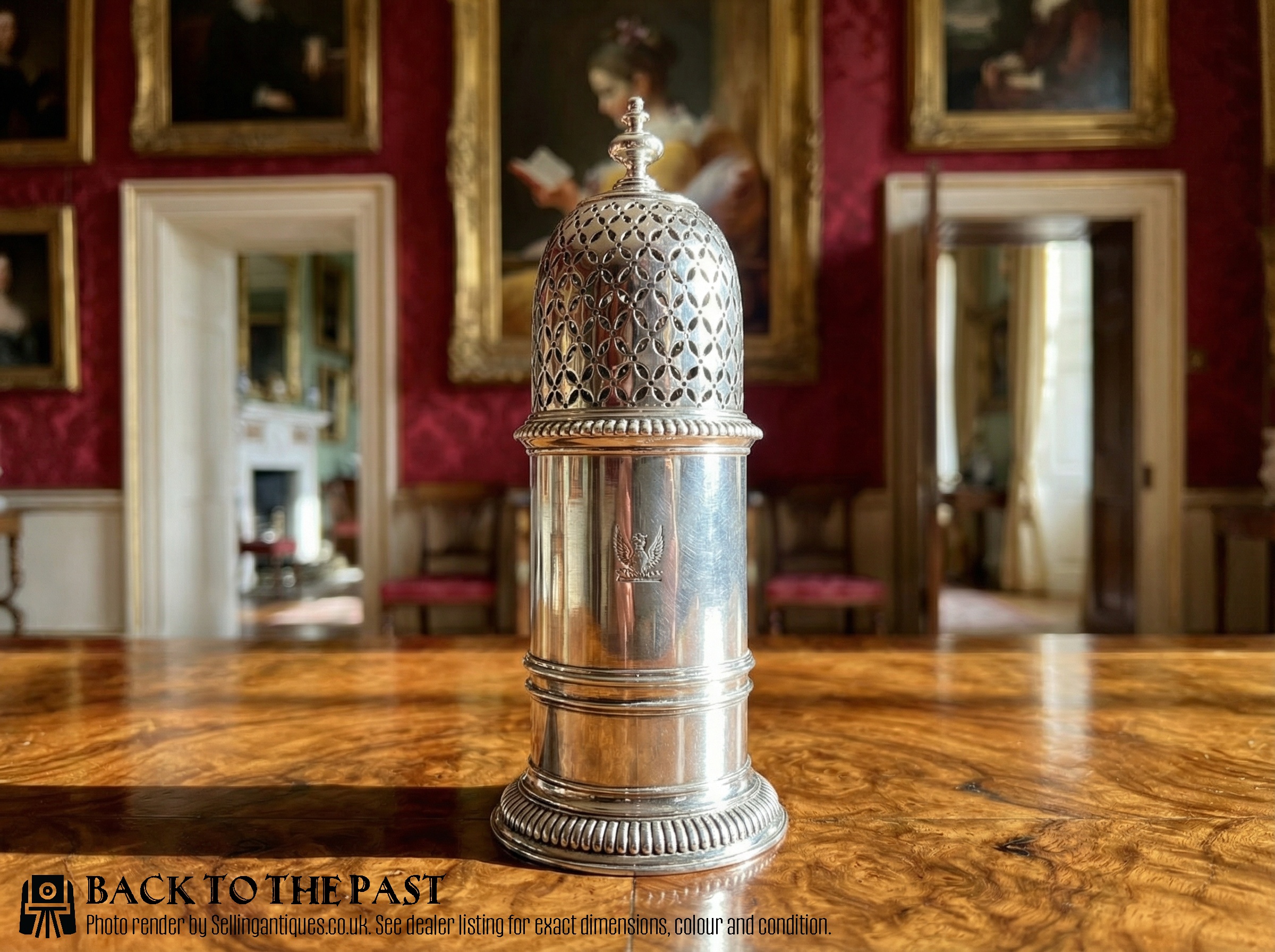
Pierced Silver Caster
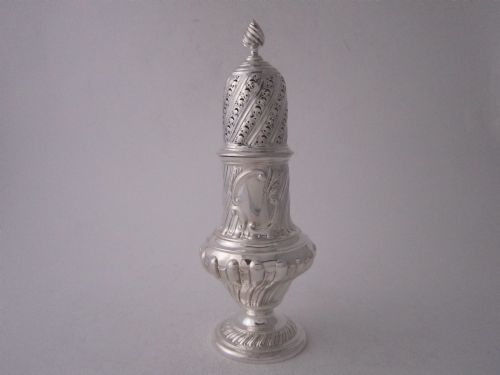
A pierced silver caster functions as a tabletop shaker for dry condiments, most commonly sugar, pepper or pounce for drying ink. The form typically stands upright on a spreading foot, rising to a body pierced with decorative patterns and capped by a removable pierced lid.
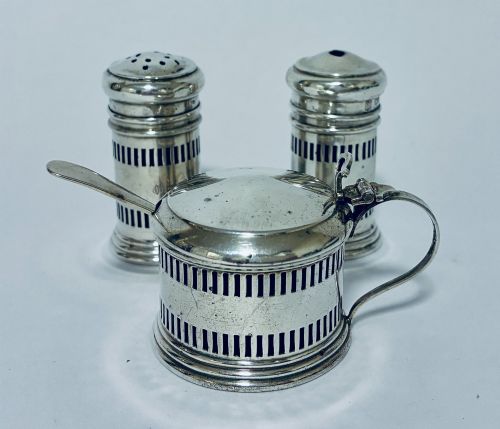
You will encounter pieces ranging from single monumental sugar casters and pepper pots to pairs, multi-piece cruet sets and smaller pounce pots. The selection spans the eighteenth century through to the Edwardian period and the early twentieth century, reflecting both Georgian origins and later revivals.
Sugar casters dominate the available forms, often seen alongside cruet sets and table salts. Makers adopted styles that varied from strict Georgian symmetry to exuberant Victorian interpretations and Edwardian refinement.

How they were made
Silversmiths constructed these vessels primarily in sterling silver or standard silver, occasionally combining the metal with clear cut glass or cobalt glass liners in cruet sets and lighthouse designs. The bodies were frequently raised from flat sheets of silver or cast in sections.
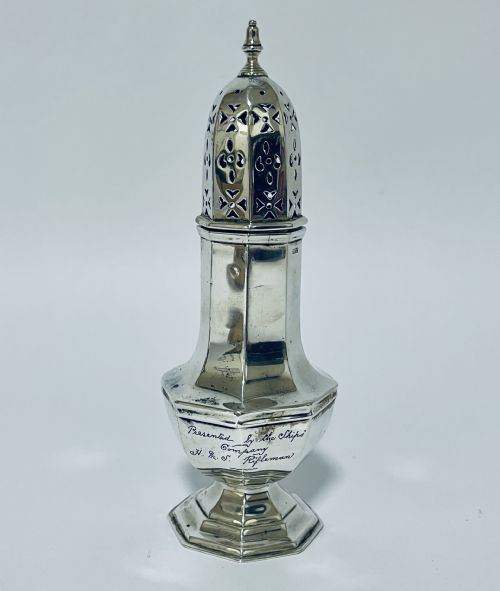
The characteristic piercing of the lids and bodies was executed by hand using tiny piercing saws or delicate punches to create intricate floral, geometric or lattice motifs. Lids were then finished with a pull-off or bayonet fitting, often topped with a cast finial.
Pierced Silver Caster Retail Price Guide 2026
Typical asking prices for pierced silver caster among the pieces listed under this phrase on Sellingantiques today, from the lower quarter to the upper quarter. They describe what is for sale here now, not the wider market.
The listings on this site encompass sterling silver, cut glass and cobalt glass materials across Georgian, Victorian and Edwardian periods.
What varies in quality
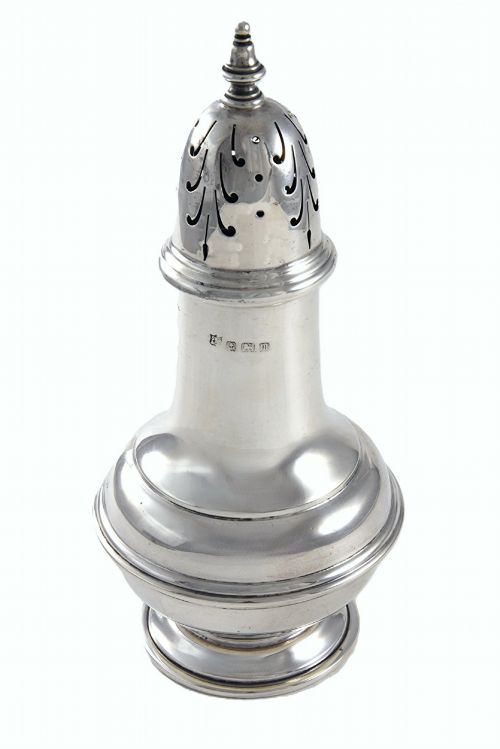
The calibre of a pierced silver caster is revealed in the crispness and precision of the pierced work on the lid and body, where clean edges indicate superior craftsmanship. Heavier gauge silver provides a more substantial weight in the hand, distinguishing finer examples from lighter production.
Proportion and decorative harmony also set the standard, with superior pieces showing balanced dimensions and finely cast finials rather than purely utilitarian assembly. Maker marks and clear hallmarks add historical weight to the better examples.
James Goodwin·Elkington and Co·Thomas Ross·Charles Alchorne·Samuel Wood
The Pierced Silver Caster Glossary
- Pierced
- Ornamented with holes or cut-out patterns allowing the contents to be shaken out. This technique defines the primary function of the caster top.
- Pounce pot
- A small container with a pierced lid used to sprinkle resin powder over freshly written ink to dry it. These desk accessories resemble miniature casters.
- Cruet set
- A matched group of bottles or casters held in a frame for condiments such as oil, vinegar, salt, pepper and sugar. They are central to formal dining arrangements.
- Finial
- A decorative knob or ornament attached to the top of the caster lid. It provides a grip for removing the pierced cover.
Pierced Silver Caster: Frequently Asked Questions
What is a pierced silver caster used for?
These vessels were principally utilised at the dining table for dusting fine sugar onto fruit, pastries or desserts, or for dispensing pepper. Certain smaller examples functioned as pounce pots on writing desks.
The perforated lids allowed the dry contents to be shaken evenly over food or manuscripts without spilling large quantities at once.
Are glass and silver casters authentic?
Yes, combinations of silver and glass are entirely authentic, particularly in lighthouse-style sugar casters and cruet sets. The glass body allowed users to see the contents inside while the silver provided the pierced top and mountings.
Such pieces date across the Victorian and Edwardian periods, combining cut or cobalt glass with sterling silver collars and lids.
How should I clean a silver caster?
Silver casters require gentle cleaning with a specialised silver polish and a soft cloth to remove tarnish without abrading the metal. Care must be taken around the delicate pierced areas of the lid so that polish does not become trapped in the apertures.
Regular, light maintenance preserves the engraved details and hallmarks far better than harsh chemical dips.