

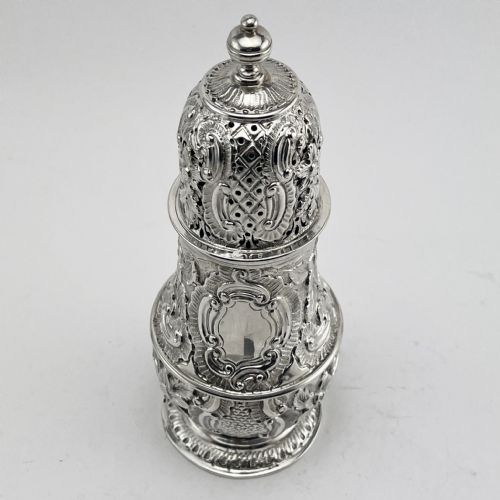


Antique Sugar Caster
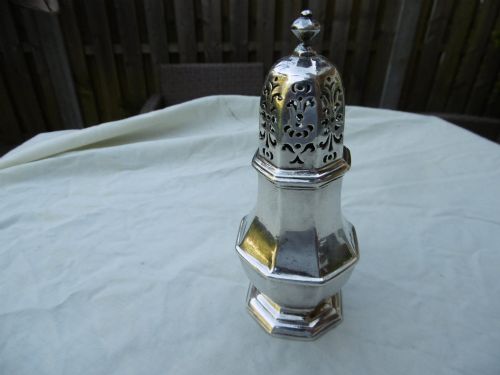
An antique sugar caster sits on the table as a small vessel for dispensing fine grains, shaped by centuries of changing dining habits.
Antique Sugar Caster
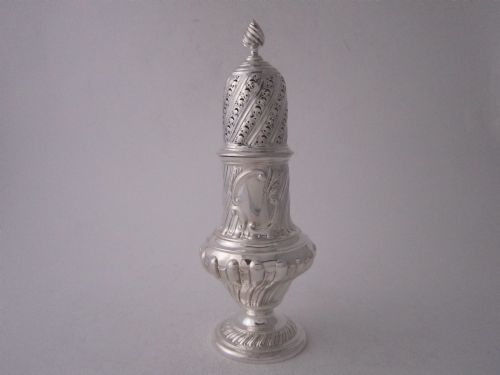
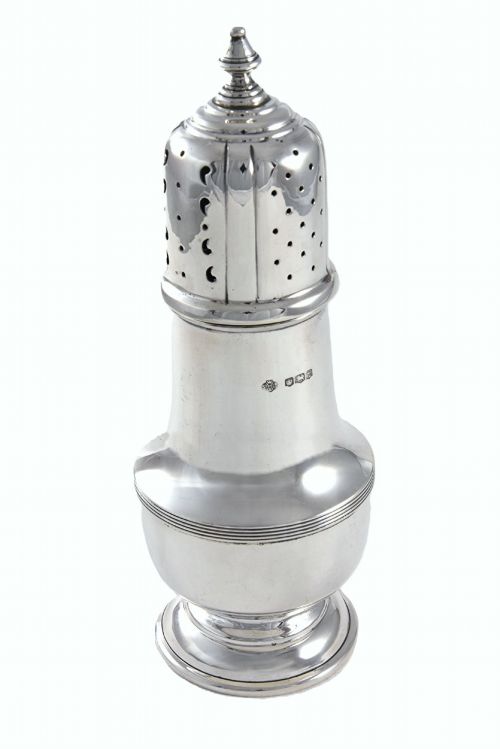
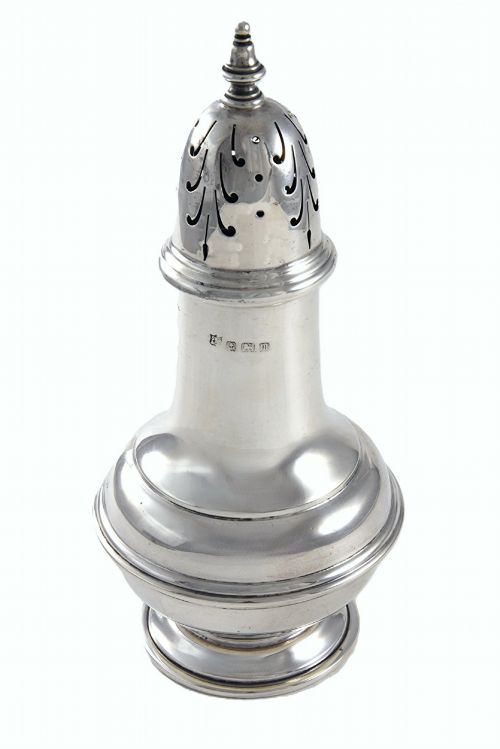
The antique sugar caster is a tabletop shaker designed to sprinkle powdered or castor sugar over food, appearing frequently in sterling silver across Georgian, Victorian and Edwardian periods.
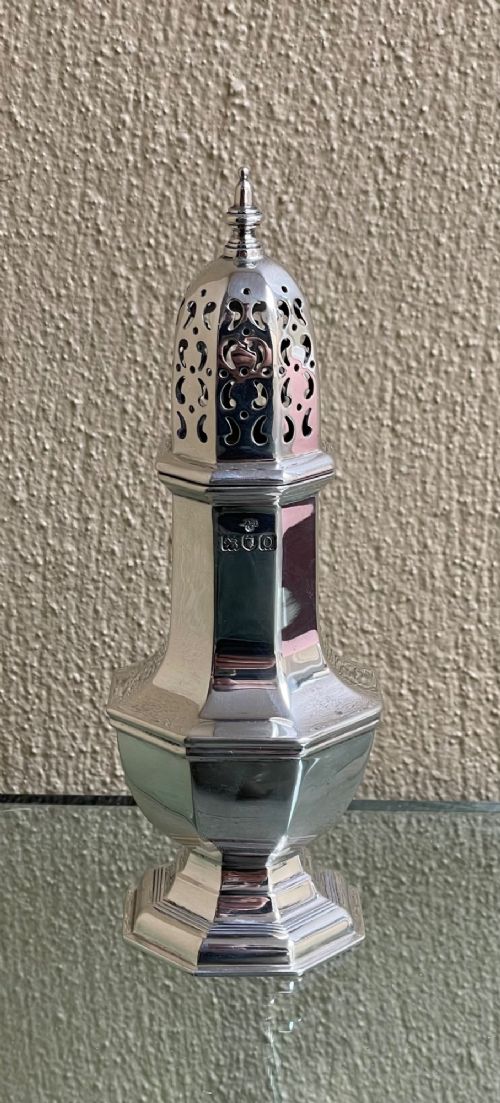
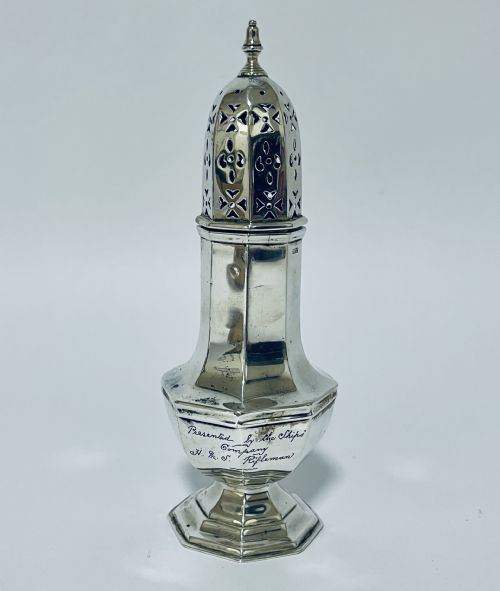
These vessels take various forms including tall baluster shapes, octagonal bodies, and cylindrical lighthouse silhouettes, often accompanied by matching condiment sets or individual cruets.
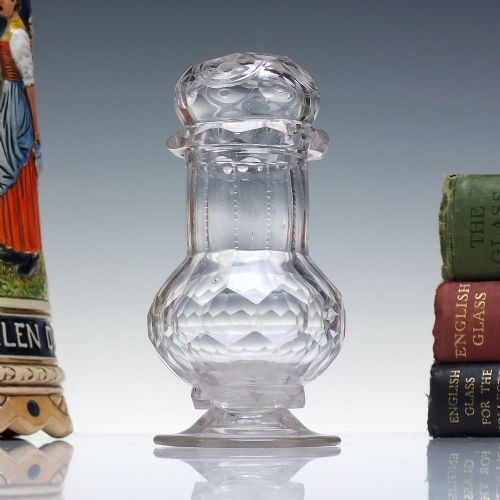
Makers also produced figural sugar boxes and glass bodies fitted with pierced silver tops, extending the functional range of kitchen metalware and desk accessories on the market.
How they were made
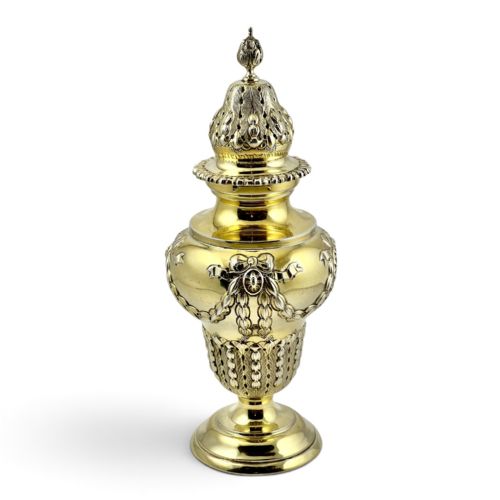
Silversmiths constructed the main body using sterling silver or silver-gilt, shaping metal through hammering, spinning, or casting, while others combined lead crystal and cut glass with metal collars.
Pierced tops were worked by hand or punched with intricate geometric and floral patterns to allow the free flow of sugar without letting grains clump.
Makers occasionally utilised brass, hard-paste porcelain, and gold leaf, applying hallmarks and maker marks directly onto the metal surface.
The archive records numerous sugar boxes and pounce pots alongside traditional baluster casters.
What varies in quality
The thickness of the metal gauge and the weight of the piece determine its structural stability, separating heavy, solid silver examples from lighter domestic wares.
Artisanal skill shows in the crispness of the pierced pattern on the dome and the precise fit of the slip-on or screw cover.
Provenance and engraving quality also elevate certain examples, particularly those featuring detailed armorials or works by notable silversmiths.
Stephen Adams·Simon Pantin·James Dixon And Sons Ltd·Evald Nielsen·Horace Woodward And Co Ltd·Roberts And Belk·Thomas Ross·Charles Alchorne·Thomas Pritchard·Samuel Wood·William Comyns·Berthold Muller·William Batt And Sons·Samuel Taylor
The Antique Sugar Caster Glossary
- Caster
- A small vessel with a perforated top used for sprinkling sugar or spices. These objects date back to the early eighteenth century and earlier.
- Muffineer
- An alternative nineteenth-century term for a sugar caster or shaker used at tea time. The name derives from its association with buttered muffins.
- Pounce pot
- A small container with a perforated lid used to sprinkle resin powder over parchment. This substance prepared rough paper for ink writing.
- Silver-gilt
- Sterling silver that has been coated with a thin layer of gold on its surface. This technique provides a rich two-tone appearance.
- Hallmark
- A series of official marks stamped on precious metals indicating the standard of purity and the assay office. These stamps verify the year of manufacture and the maker.
Antique Sugar Caster: Frequently Asked Questions
What is the difference between a caster and a shaker?
A caster traditionally refers to a tall silver or glass vessel with a pierced slip-on top used for fine sugar during formal dining. Shaker is a broader modern term applied to similar domestic condiment containers.
Older British examples heavily favour the term caster in records and hallmarks. Both perform the exact same function at the table.
How do I clean an antique silver sugar caster?
Warm water, mild soap, and a soft cloth remove dust and minor tarnish safely from silver surfaces without damaging delicate pierced lids. Avoid harsh chemical dips that strip the natural patina accumulated over decades.
Cut glass bodies require careful washing separately from metal collars to protect old mounts.
Can I still use these for modern dining?
These vessels function perfectly well for dispensing fine sugars, powdered sugar, or spices onto modern desserts and breakfast tables. Their pierced lids regulate the flow naturally.
Careful handling ensures that historic metal and glass components remain protected during everyday domestic use.
How can I date an unmarked piece?
Hallmarks stamped on silver components provide the exact year, city of assay, and maker through standardised alphabetical cycles. Comparing the silhouette style against known periods helps narrow down unmarked examples.
Cut glass patterns and screw-foot mechanisms offer additional clues to eighteenth and nineteenth-century manufacture dates.