



Silver Gilt Sugar Sifter
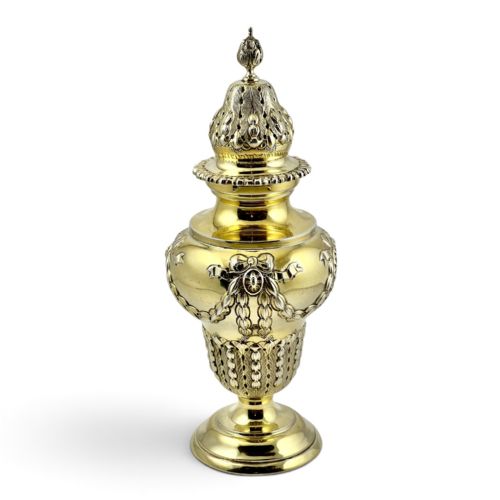
These silver gilt sugar sifter pieces bring golden warmth to the tea table, combining bright silver with rich gilt finishes.
Silver Gilt Sugar Sifter
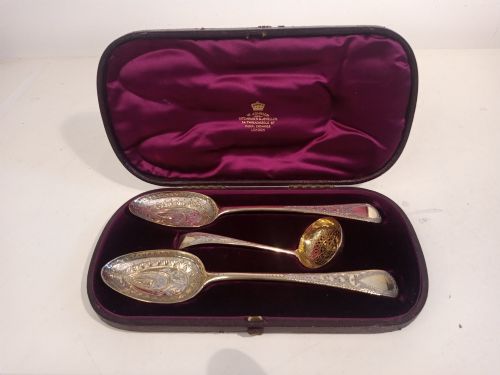
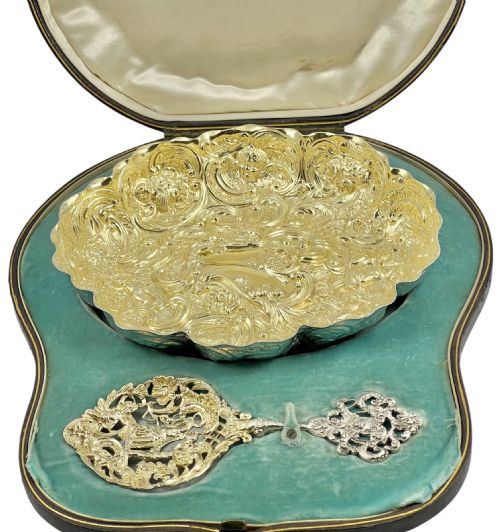
A silver gilt sugar sifter brings together decorative spoons, casters and cased sets spanning the Georgian, Victorian and Edwardian eras. Buyers searching for silver gilt sugar sifter items encounter various forms, including single spoons, casters, and matched sets housed within fitted leather or silk-lined boxes.
The selections on this page draw from the nineteenth and early twentieth centuries, featuring Arts and Crafts examples alongside traditional Rococo Revival designs. Pieces range from standalone spoons to complete sugar bowls paired with matching sifters.
How they were made
Craftsmen shaped these items from sterling silver before applying a layer of gold gilt to the surface, creating the distinctive two-tone or fully gilded appearance. Workshops utilised traditional smithing methods to form pierced bowls for sifting and heavy cast bodies for casters.
Many items incorporate fitted presentation cases lined with velvet, silk and leather, protecting the delicate gilt surfaces from daily wear and tarnishing over the decades.
What varies in quality
The preservation of the gold gilt layer across high-handling areas marks the distinction between standard examples and superior survivals. Crispness in the pierced bowl decoration and deep definition in cast figural elements indicate skilled workshop production.
Completely original cased sets with intact velvet and silk linings command greater interest than assembled groupings or items missing their protective presentation boxes.
Berthold Muller Hanau·Francis Higgins
The Silver Gilt Sugar Sifter Glossary
- Silver-gilt
- Sterling silver that has been coated with a thin layer of gold. This finish provides the bright yellow-gold appearance seen on the interior bowls and exterior surfaces of these pieces.
- Caster
- A small vessel with a pierced top used for sprinkling sugar over food. These containers often match the design of companion sifter spoons.
- Berry spoon
- A large serving spoon, often Georgian in origin, featuring fruit repoussé work added to the bowl at a later date. They frequently appear paired with sifter spoons in fitted presentation cases.
- Rococo Revival
- A nineteenth-century design style characterised by asymmetrical scrollwork, floral motifs and naturalistic curves. This aesthetic appears frequently on Victorian silver gilt items.
- Arts and Crafts
- A design movement emphasising handcraftsmanship and simple forms. Pieces from this tradition avoid mass-produced ornamentation in favour of honest construction.
Silver Gilt Sugar Sifter: Frequently Asked Questions
What is a silver gilt sugar sifter used for?
These pieces were designed for sprinkling fine sugar over fruit, desserts and tea. The pierced bowl of the spoon or the perforated top of the caster allowed the user to distribute sugar evenly while leaving larger lumps behind.
In period dining, they formed an essential part of the tea and dessert service, often presented alongside matching bowls within velvet-lined cases.
How do I date a silver gilt sugar sifter?
Dating relies heavily on the hallmarks stamped into the metal, which indicate the assay office, the specific year, and the maker's mark. Stylistic clues such as Rococo Revival scrolls or Arts and Crafts simplicity also point to specific decades.
Items accompanied by their original fitted leather and silk cases often retain clear documentation of their Victorian or Edwardian origins.
Are silver gilt and gold plate the same thing?
Silver gilt, also known as vermeil, consists of a solid sterling silver base covered with a genuine gold coating. This differs from modern base metal plating because the underlying material is precious silver throughout.
Over long periods of use, the gold layer may soften in tone, revealing the warm silver beneath.
How should I clean a silver gilt piece?
Cleaning requires extreme caution because aggressive polishing can wear away the delicate gold gilt layer sitting atop the silver. Warm water, a mild soap and a soft cloth are usually sufficient for removing dust and light tarnish.
Standard commercial silver dips should be avoided entirely, as chemical cleaners strip the gilt finish permanently.