


.JPG)
Solid Silver Sugar Caster
A solid silver sugar caster brings the refined ceremony of eighteenth-century dining tables directly into contemporary interior spaces.
Solid Silver Sugar Caster
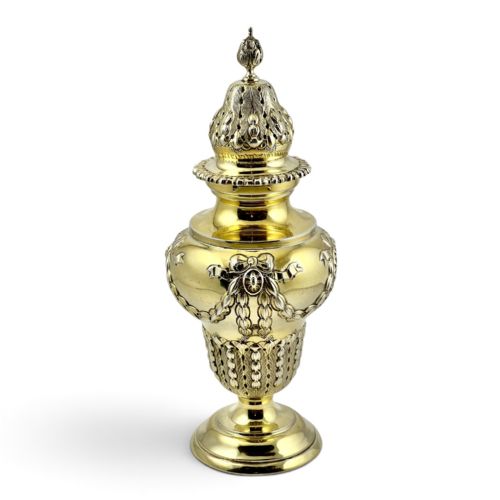
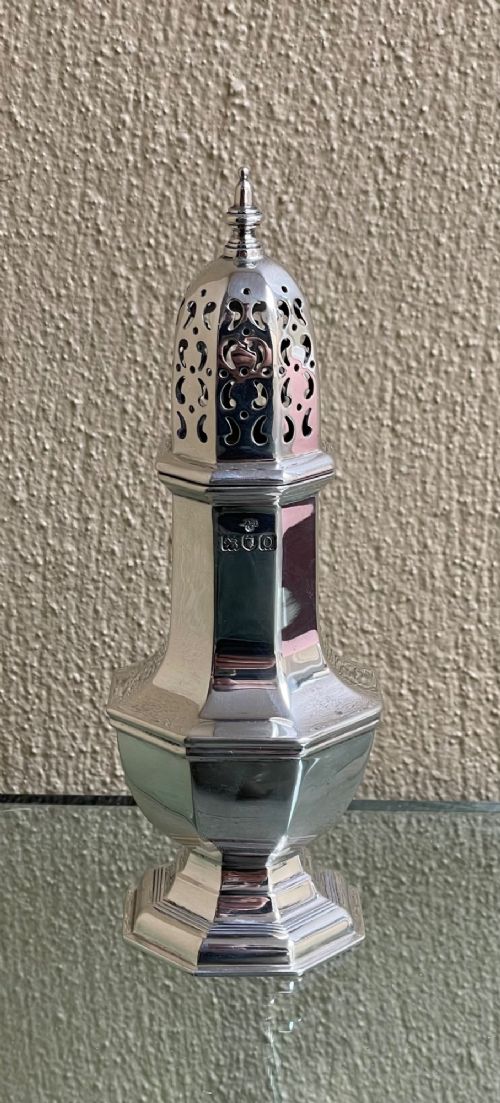
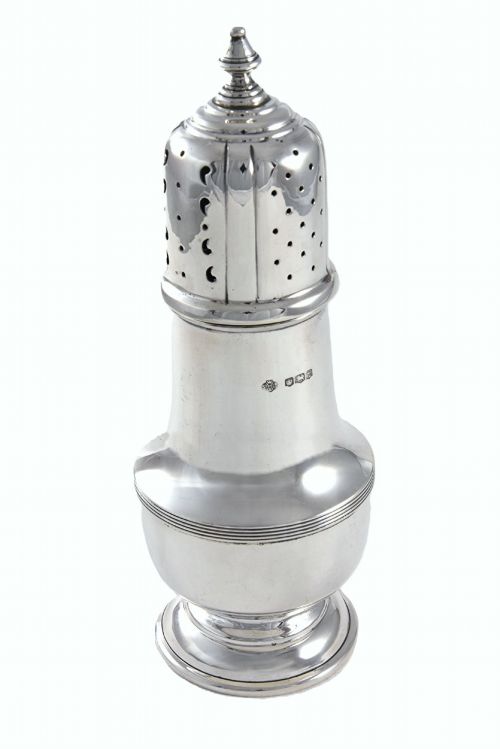
A solid silver sugar caster is a tabletop vessel designed to sprinkle sugar or spices onto food, appearing across the Georgian, Victorian, Edwardian and twentieth-century periods. These objects take various forms, from early octagonal and monumental shapes to later Art Deco polygon sides and cut glass combinations.
The version most frequently met on this page is the classic sterling silver shaker, alongside silver-gilt examples and items featuring glass liners or cut glass bodies. Makers produced these pieces to serve both functional dining needs and decorative tabletop display.
How they were made
Silversmiths constructed these vessels primarily using sterling silver, frequently incorporating silver-gilt finishes or pairing the metal with cut glass and glass liners. Pierced covers were painstakingly worked to create delicate patterns for dusting sugar evenly.
Techniques evolved from the crisp angles of early eighteenth-century octagonal forms to the smooth curves of Victorian revival styles and the geometric lines characteristic of Art Deco pieces.
Some German silver boxes take the charming shape of wide-eyed owls, ready to watch over the dining table.
What varies in quality
The distinction between standard examples and superior pieces rests upon the crispness of the pierced lid work and the overall weight of the sterling silver. Heavier gauge metal provides a more substantial feel in the hand and ensures durability of the body and pierced top.
Artisanal execution of hallmarks, maker stamps, and engraved details such as crests or coats of arms further separates master silversmith output from ordinary production.
Stephen Adams·The Barker Brothers·Roberts & Belk·Thomas Ross·Charles Alchorne·Walker & Hall·Thomas Bamford·Samuel Taylor
The Solid Silver Sugar Caster Glossary
- Sterling silver
- A silver alloy containing 92.5 percent pure silver by mass and 7.5 percent other metals, usually copper, ensuring structural strength for functional items.
- Silver-gilt
- Sterling silver that has been coated with a thin layer of gold on the interior or exterior surfaces, adding a rich warm hue.
- Muffineer
- An alternative term for a small sugar caster or shaker utilised specifically for dusting sugar over muffins and tea cakes.
- Pounce pot
- A small container with a perforated top used to sprinkle resin powder onto rough paper to prepare it for writing, sharing a similar form to early casters.
- Piercing
- The technique of cutting intricate patterns through the metal of the caster top to allow sugar to pass through smoothly.
Solid Silver Sugar Caster: Frequently Asked Questions
How were sugar casters used?
These vessels held granulated or powdered sugar, which hosts would shake over sweet dishes, pastries, and fruits during formal meals.
The pierced lid allowed for an even distribution of sugar without clumps falling onto the plate.
How do I date a silver caster?
Dating relies heavily upon the hallmarked stamps impressed into the metal, which indicate the assay office, year of production, and maker.
Stylistic shifts also help identify periods, such as octagonal shapes in early periods versus geometric polygons in Art Deco items.
How do I care for silver casters?
Maintaining these pieces involves gentle cleaning with specialised silver cloth to remove tarnish without abrading the delicate metal surface.
Keeping them away from direct moisture and harsh chemicals preserves the original polish and detail of the pierced top.