

Standing Cheval Glass
A standing cheval glass offers a full-length reflection set in a pivoting frame, designed to anchor a bedroom or dressing room with practical elegance.
Standing Cheval Glass
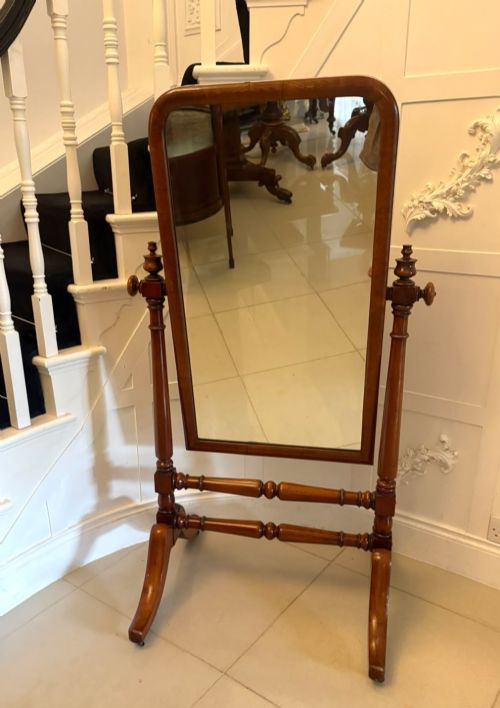
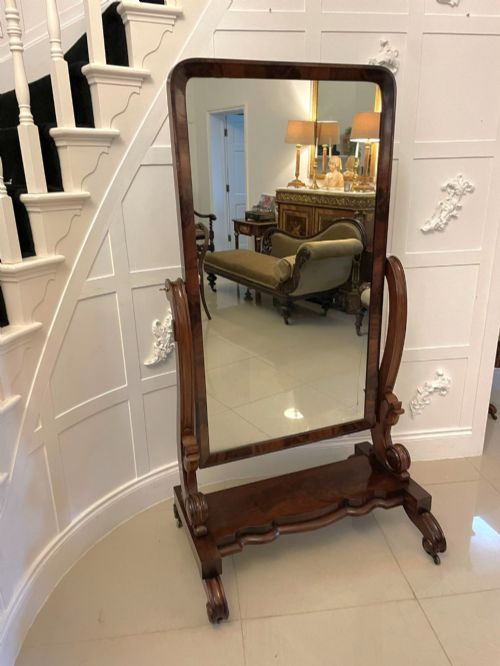
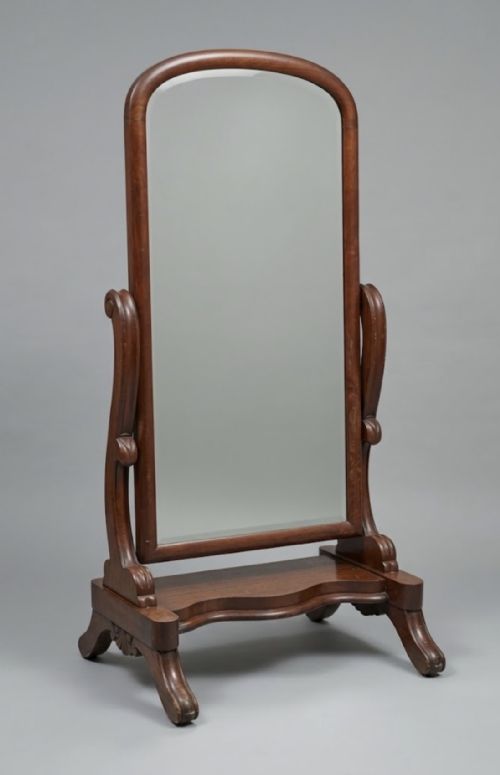
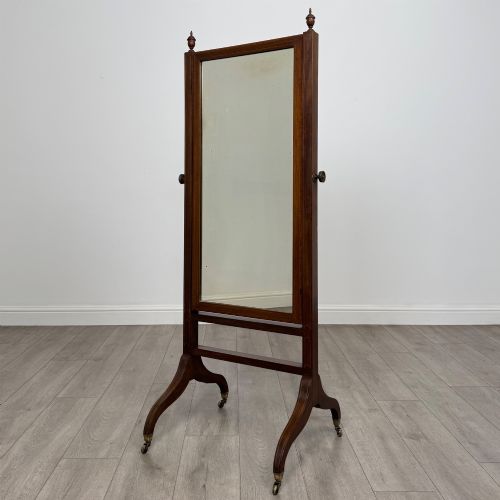
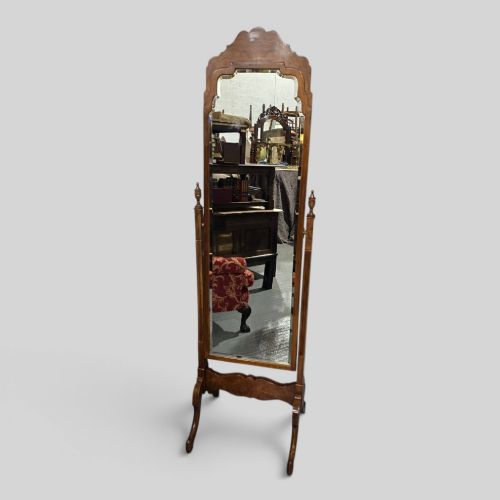
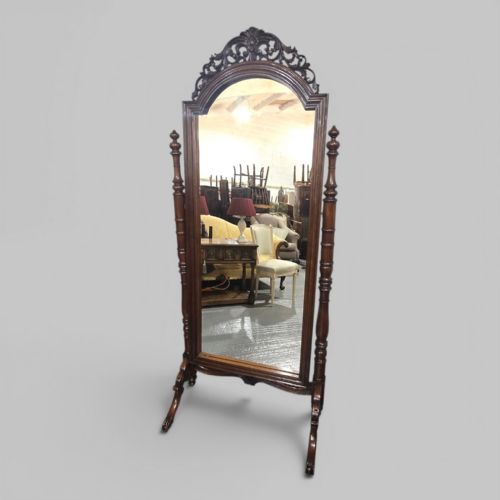
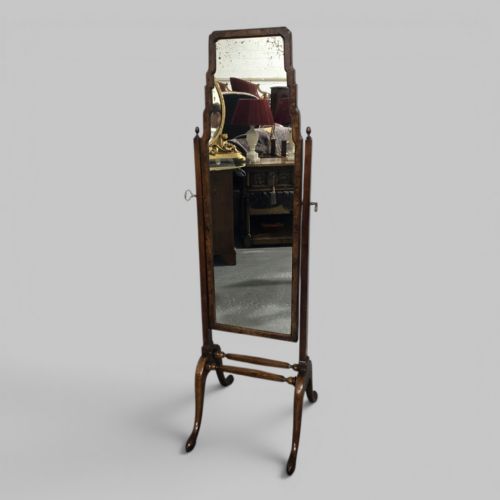
A standing cheval glass is a floor-standing floor mirror mounted on a vertical frame that tilts to adjust the angle of reflection. When you search for this phrase, you find pieces primarily from the nineteenth century, including Victorian, Regency, and Edwardian periods.
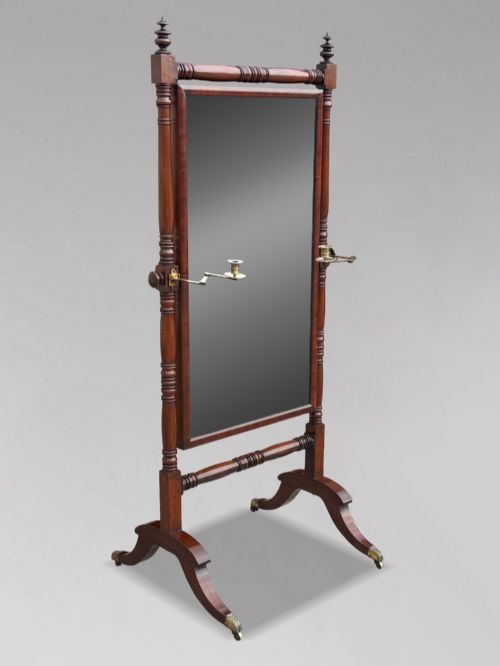
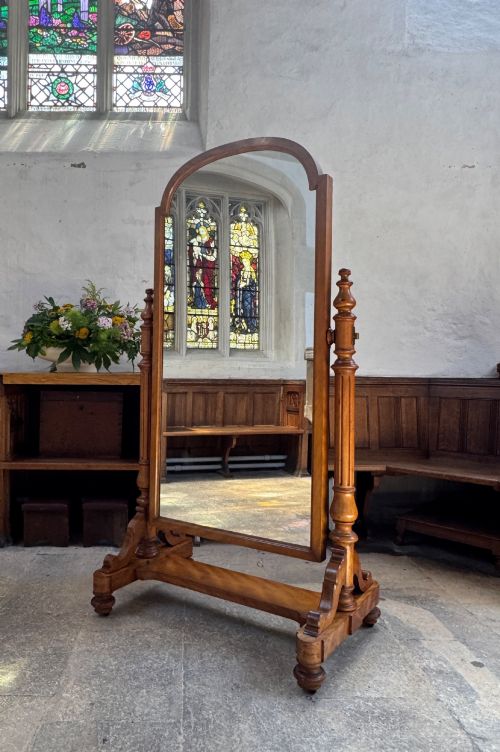
The most common version met on this page is constructed from mahogany, often featuring a swing mirror plate supported by upright pillars and sturdy feet. These freestanding pieces range from simple bedroom dressing mirrors to large country house scale furniture.
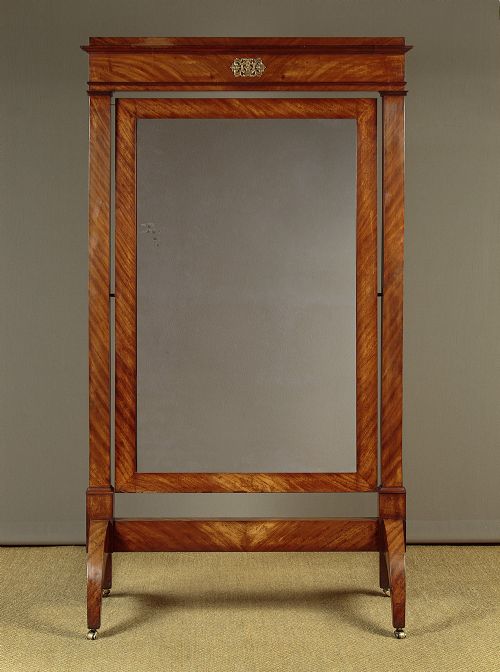
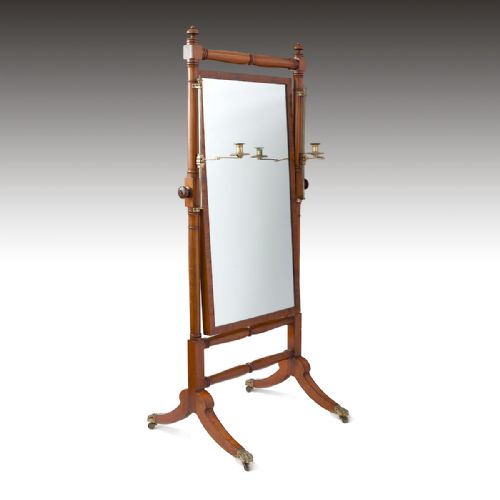
Makers and cabinet makers of the Georgian and Regency periods, such as Gillows, developed these pivoting floor mirrors to provide a complete view of attire. Surviving examples demonstrate diverse stylistic influences from French Empire to Queen Anne revival forms.
Materials and Construction
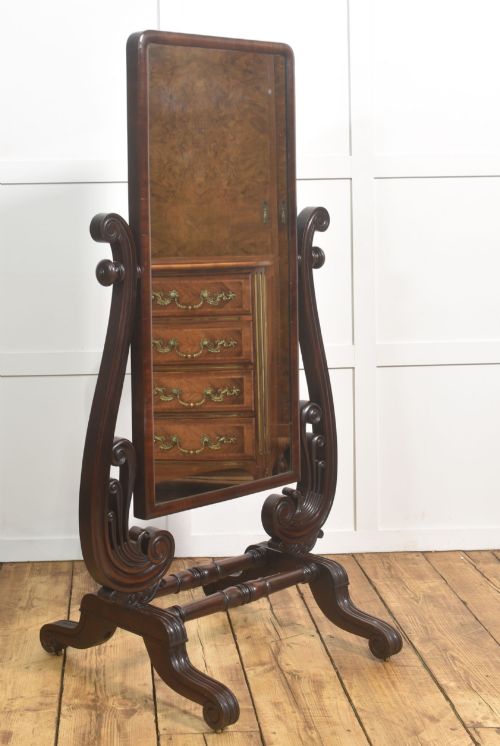
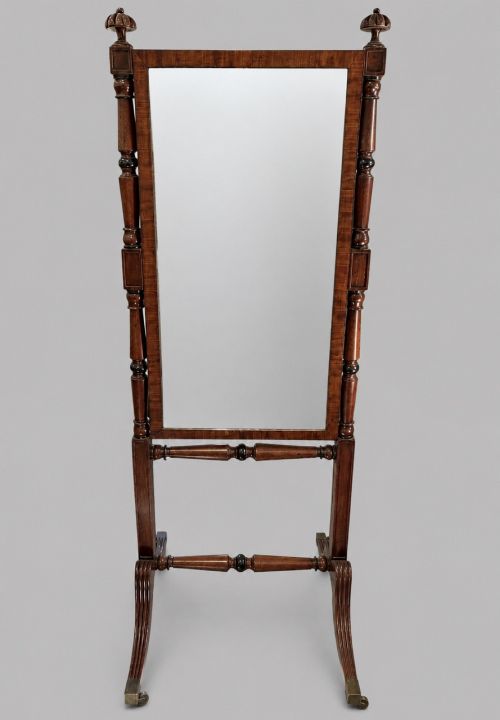
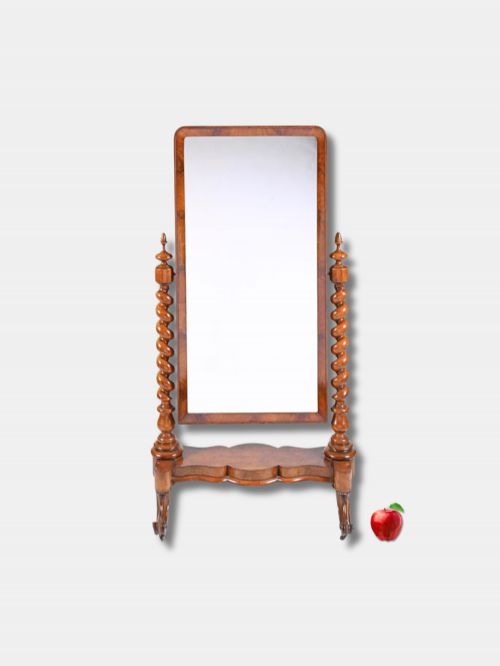
Cabinet makers built these frames predominantly using solid mahogany, walnut, oak, and satinwood, frequently selecting flame mahogany veneers for rich grain patterns. Timber sections were shaped into turned supports, barley twist columns, or sweeping scroll feet to bear the weight of the heavy glass.
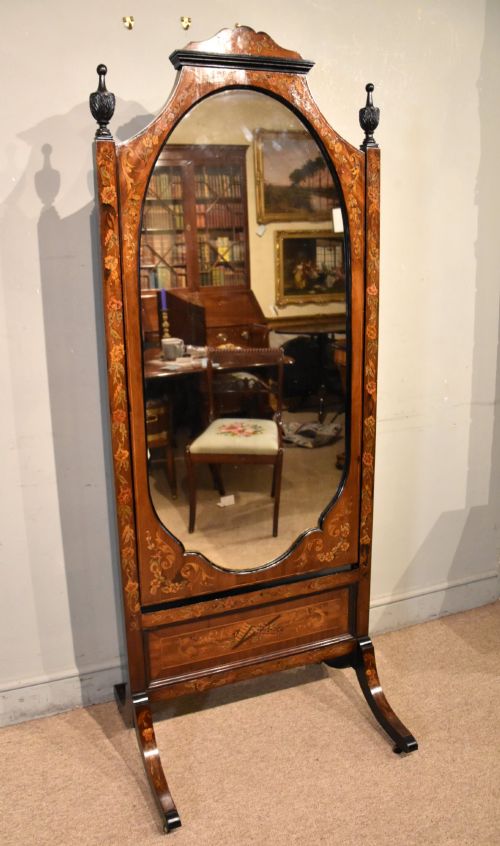
The mirror plate is held within a swinging wooden frame connected to side uprights by metal pivots or screw pins that allow manual tilting. Giltwood and inlaid brass details sometimes accent the primary wood structure, particularly in Regency and French Empire designs.
The archive and active listings span the Georgian, Regency, Victorian, Edwardian periods, and into the early twentieth century.
Assessing Quality
Quality in a standing cheval glass rests on the selection of timber and the stability of the framing joints. Superior examples exhibit finely figured mahogany, robust pivot mechanisms that hold the mirror steady at any angle, and well-balanced floor supports.
Proportion and scale distinguish finer workshop output from standard production. Pieces reflecting the manner of known cabinet makers demonstrate greater refinement in carved details, brass mounts, and overall structural harmony.
Gillows
The Standing Cheval Glass Glossary
- Cheval glass
- A full-length dressing mirror suspended on a pivoting frame between two upright posts. This form allows the glass to swing freely to adjust the viewing angle.
- Swing mirror
- A mirror plate mounted on pivots within a frame that tilts backward and forward. It is the defining mechanical feature of dressing and cheval mirrors.
- Barley twist
- A type of turned wooden column resembling a twisted rope. This decorative support is frequently found on Victorian and nineteenth-century frames.
- Flame mahogany
- A veneer cut from the fork of a mahogany tree where the branches join the trunk. It creates a distinctive, fiery flame-like pattern across the wood surface.
- Giltwood
- Wood that has been coated with a thin layer of gold leaf or gilder's paste. This finish appears on decorative nineteenth-century and French style frames.
Standing Cheval Glass: Frequently Asked Questions
Where should I place a standing cheval glass?
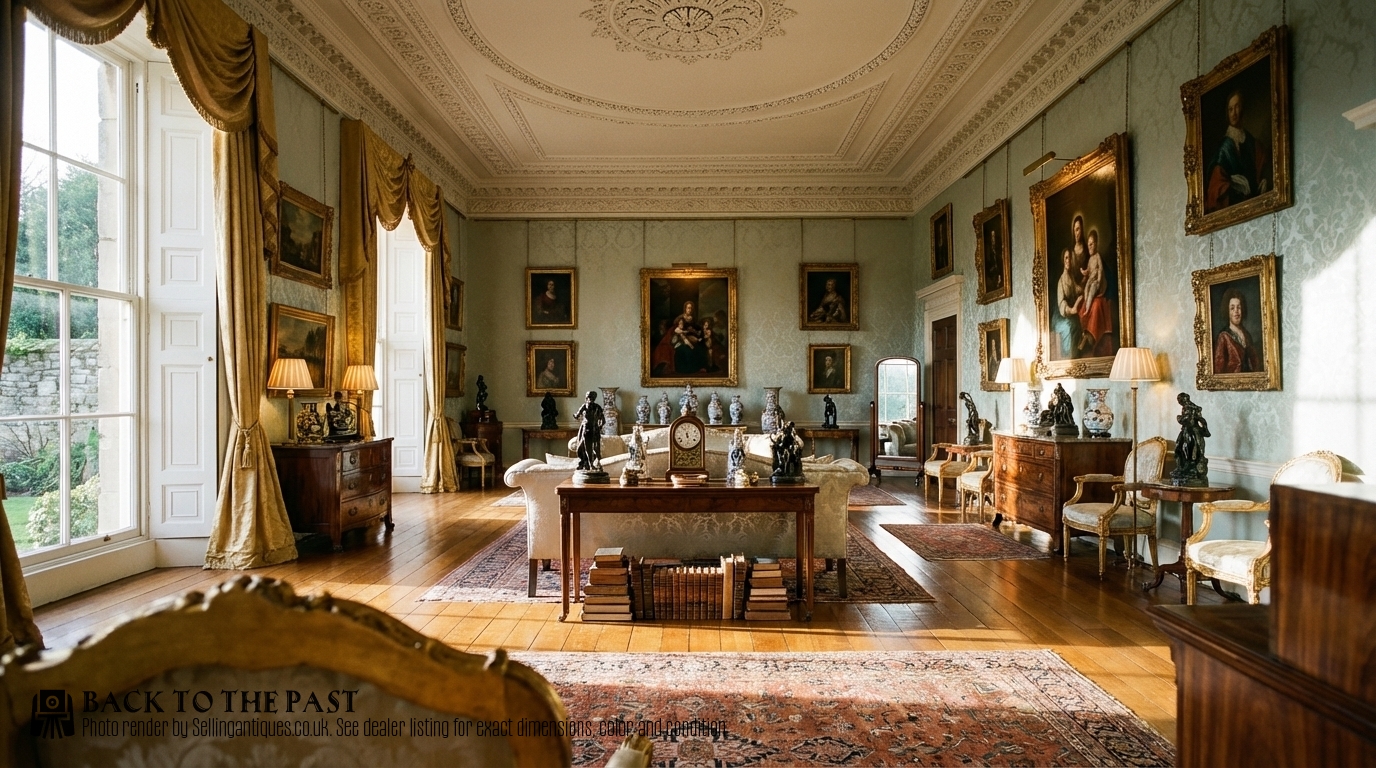
These mirrors function best in bedrooms or dressing rooms where full-length reflections are practical. Placing them near a natural light source helps illuminate the reflection.
Ensure the floor surface is level so the pivoting frame operates smoothly without leaning.
How do the tilting pivots work?
The mirror hangs on metal pins or screws set into the side upright posts. Tightening these pivots holds the glass at your preferred viewing angle.
Older mechanisms may require careful adjustment to maintain tension over time.
How do I identify a Regency period glass?
Regency pieces often display clean classical lines, darker mahogany timbers, and sometimes brass inlay or restrained carving. Look for architectural proportions influenced by the early nineteenth century.
Maker attributions, such as those in the manner of Gillows, indicate high workshop standards.
Are these mirrors heavy to move?
Solid wood frames combined with thick mirror glass create substantial weight. They require two people to relocate safely across a room.
The base design, whether trestle feet or scrolling supports, is engineered to distribute this weight steadily.