


Stained Glass Window Panel
These stained glass window panels capture daylight through rich colour and lead, bringing historic artistry straight into a modern interior.
What these pieces are
A stained glass window panel transforms interior light by using coloured and painted glass held together within robust lead framing. These works range from compact nineteenth century sashes to large two section compositions designed for architectural settings.
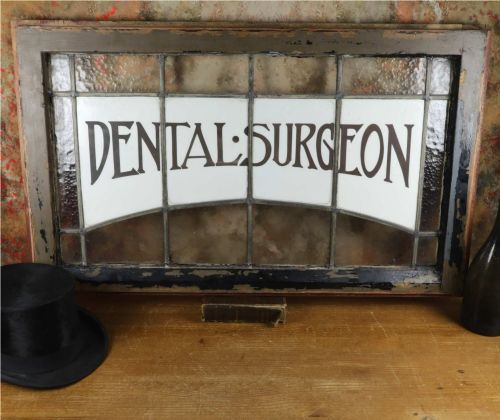
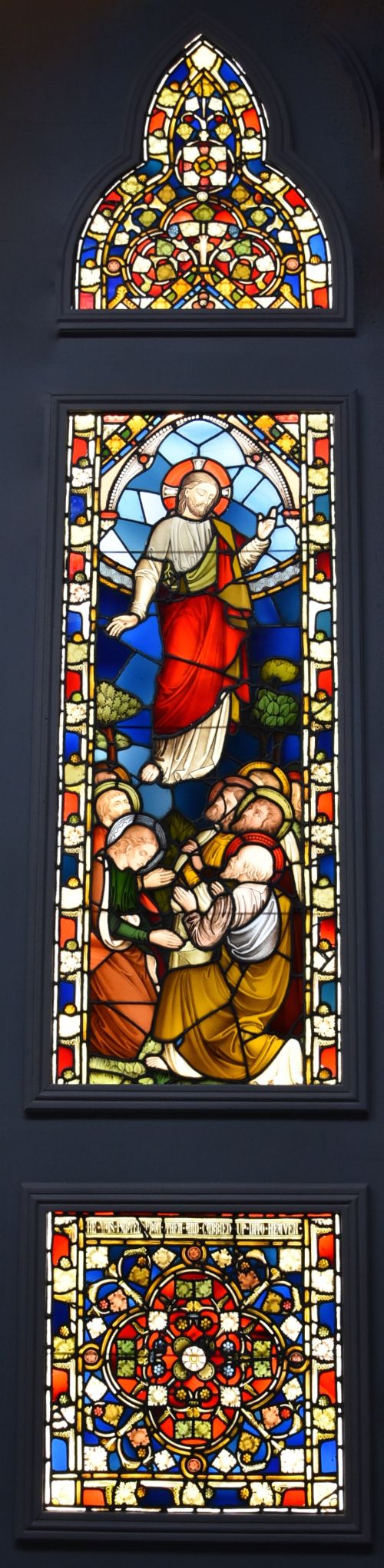
The selections encountered here span the Victorian, Edwardian, and Art Nouveau periods, alongside Gothic Revival designs and Pre-Raphaelite interpretations. Common motifs feature hand painted countryside scenes, birds on branches, religious subjects, and stylized floral patterns.
Makers utilise traditional techniques to construct panels for doors, windows, and partition screens. Many surviving examples incorporate amber bullseyes or acid etched and enamelled details to enhance texture and opacity.
How they were made
Craftsmen assemble these panels by cutting coloured and painted glass to fit intricate geometric or pictorial designs. Pieces of glass are joined using flexible lead cames, which are soldered at the joints to provide structural integrity.
Wooden elements such as pine wood and timber frames often support the glass panels, particularly in sash windows and architectural inserts. Surface treatments involve hand painting, acid etching, and enamelling directly onto the glass before firing.
Retail Price Guide 2026
Typical UK retail prices for stained glass window panel, calculated from the Sellingantiques database of over a million retail prices indexed since 2003. This retail price guide relies exclusively on Sellingantiques data; no external sources or auction records are used, so the figures do not describe the wider market.
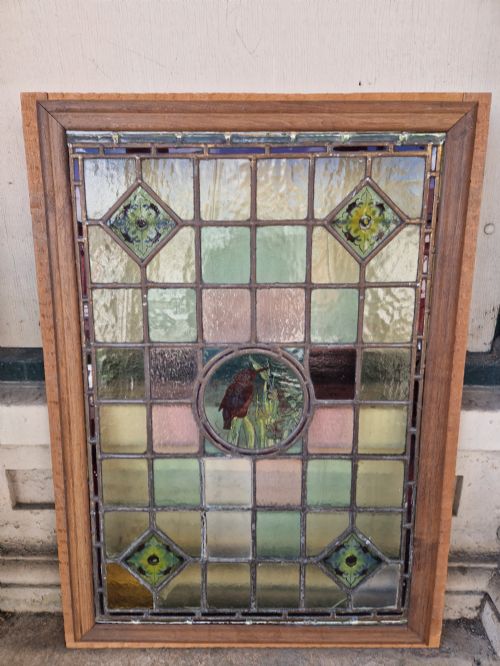
A solitary bird on a branch peers through amber bullseyes, watching the room change around it for over a century.
What varies in quality
Quality rests upon the intricacy of the hand painting and the depth of the glass colour, separating simple geometric leads from finely rendered pictorial scenes. Superior panels demonstrate precise cutting and sophisticated firing techniques that give longevity to the enamelled details.
The condition of the lead matrix and the stability of the timber or pine wood frames dictate how well a panel survives structural shifting over time. Original mounting timber and untouched leadwork indicate a higher degree of preservation.
Sir Edward Burne-Jones
The Stained Glass Window Panel Glossary
- Came
- A grooved strip of lead used to hold pieces of glass together in a window panel.
- Bullseye
- A small, circular centre piece of blown glass showing a concentric ripple pattern, often amber in hue.
- Acid etched
- A technique using acid to eat away the surface of flashed glass to create contrasting opaque designs.
- Enamelled
- Glass decorated with vitreous enamel paints that are permanently fused to the surface by firing in a kiln.
- Cameo
- A term occasionally applied to relief details within glasswork, though primarily descriptive of carved stone.
Frequently Asked Questions
How do I hang a stained glass window panel?
These panels require secure perimeter framing and dedicated hanging chains attached directly to the wooden surround rather than the lead cames. Weight distribution matters significantly to prevent the flexible lead matrix from bowing over time.
Positioning the panel in front of an existing light source or internal window lets natural daylight pass through the coloured glass while protecting the historic material from external weather.
How are Victorian and Edwardian panels different?
Victorian panels frequently incorporate heavy leadwork, acid etching, and deep religious or floral motifs. They often sit within robust pine wood sash frames.
Edwardian and Art Nouveau examples lean towards flowing organic lines, lighter colour palettes, and stylized bird or nature motifs that reflect changing aesthetic movements.
Can these panels be used as exterior windows?
Historic panels were originally built for interior or sheltered architectural placement and generally lack the thermal insulation required for modern external walls. Installing them as secondary interior glazing behind a clear exterior window protects them from wind pressure.
This placement shields the delicate lead and hand painted glass from weathering while still allowing interior illumination.
What is an amber bullseye?
An amber bullseye is the thick central portion of a blown glass disc that retains a characteristic concentric swirl and a rich yellow or brown tone. Makers used them to add tactile texture and warm colour highlights alongside flat stained glass.
These pieces break up uniform geometric patterns by introducing organic circular shapes into the lead matrix.