


Victorian Stained Glass
Victorian stained glass brings rich colour and historic narrative into a room, filtering daylight through leaded panels and hand-painted glass.
Understanding Victorian stained glass
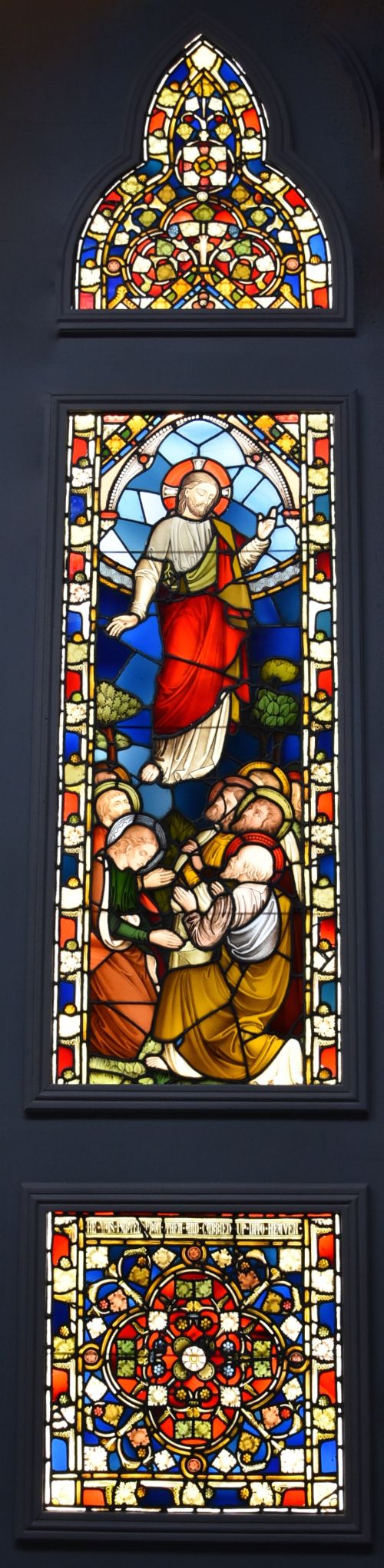
Victorian stained glass encompasses architectural salvage, windows, and decorative panels designed for domestic and ecclesiastical spaces. These pieces emerge in styles ranging from Gothic Revival and Aesthetic Period to Art Nouveau, capturing the diverse design movements of the nineteenth century.
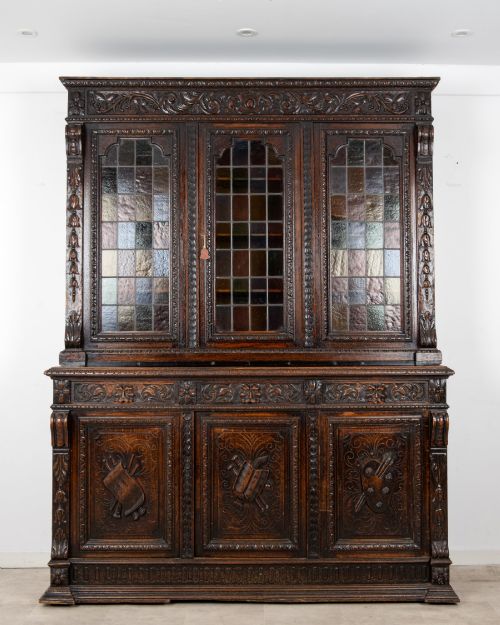
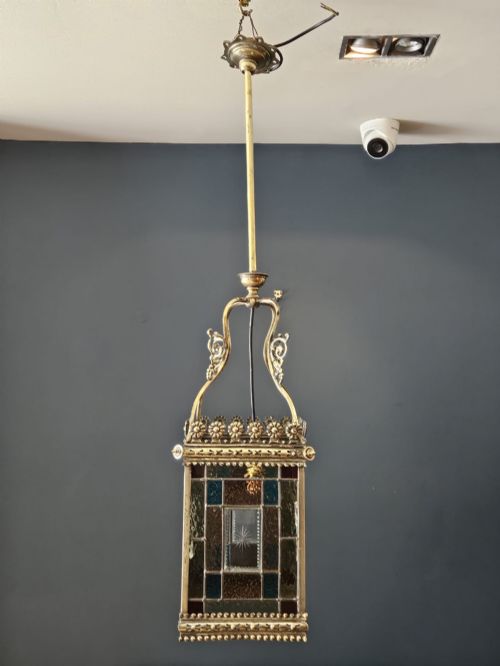
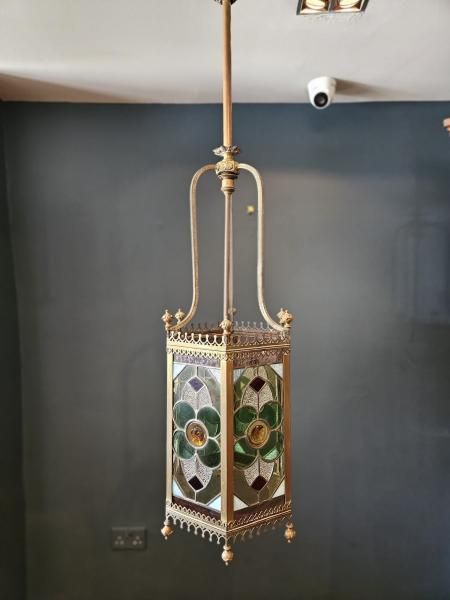
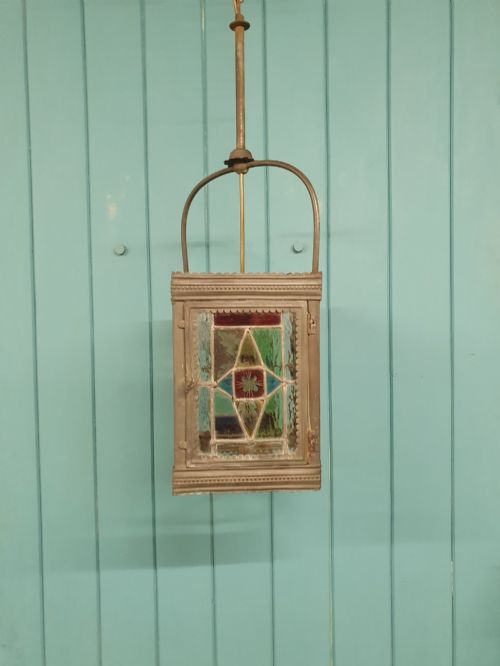
Buyers encounter architectural elements such as front door panels, hanging lanterns, and large horizontal window panes. The selection includes figural designs depicting saints and historic figures alongside floral motifs, birds, and heraldic emblems.
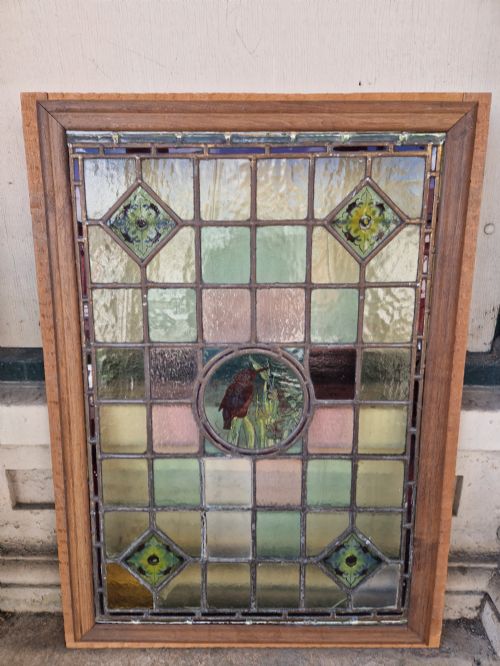
Examples date from the mid nineteenth century through to nineteen hundred, reflecting shifts from heavy religious iconography to lighter domestic compositions. Panels often integrate into wooden frames, brass lanterns, or architectural woodwork.
Materials and construction methods
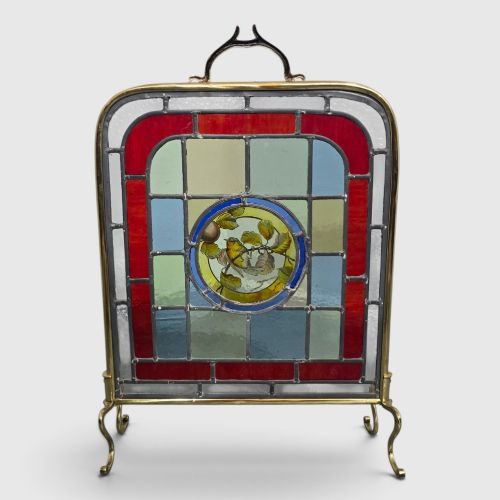
Craftsmen built these pieces using coloured and clear glass held together by pliable lead cording. Artisans added hand-painted details, enamel work, and acid etching to depict complex scenes, flowers, and portraits.
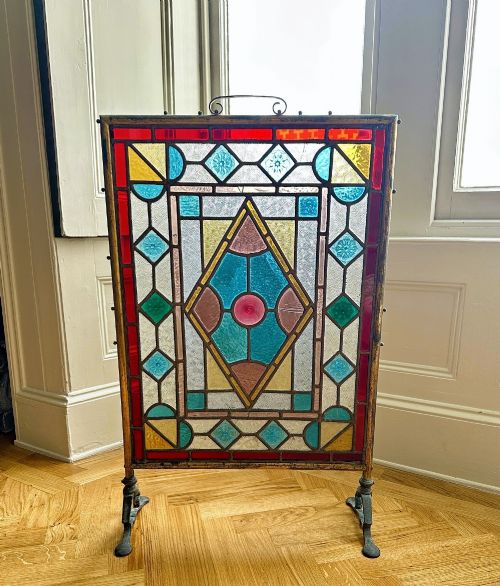
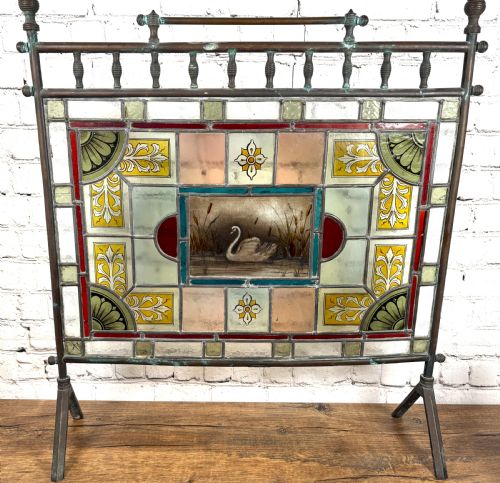
Support structures incorporated wood, brass, bronze, and wrought iron depending on whether the piece was a hanging lantern, a firescreen, or a heavy sash window panel. Architectural frames frequently utilised pine or oak to house the fragile glass securely.
Retail Price Guide 2026
Typical UK retail prices for victorian stained glass, calculated from the Sellingantiques database of over a million retail prices indexed since 2003. This retail price guide relies exclusively on Sellingantiques data; no external sources or auction records are used, so the figures do not describe the wider market.
Materials recorded in pieces include lead, wood, glass, stained glass, brass, bronze, and wrought iron.
Distinctions in quality
Quality rests on the intricacy of the hand-painted brushwork and the complexity of the subject matter, such as detailed figures or heraldry versus simpler geometric patterns. Master glass painters achieved subtle shading and depth that elevate a panel above standard decorative production.
The architectural context and housing also influence the standing of a piece, with robust brass lanterns and complete door frames showing superior original fabrication. Intact lead work and well-preserved enamel paint indicate careful handling and superior initial craftsmanship.
Swaine Bourne Birmingham
The Victorian Stained Glass Glossary
- Leaded glass
- Glass pieces joined together using narrow strips of lead soldered at the joints. This technique allows for intricate geometric and pictorial designs in windows and panels.
- Acid etching
- A decorative process using acid to remove parts of the glass surface, creating frosted designs or contrasting patterns. It provides fine detail without the need for heavy paint.
- Aesthetic Period
- A late nineteenth-century movement emphasising beauty and art for art's sake over narrative or moral themes. Pieces from this time often feature stylised natural motifs.
- Gothic Revival
- An architectural and decorative style drawing inspiration from medieval forms, pointed arches, and ecclesiastical aesthetics. It heavily influenced nineteenth-century church and domestic glazing.
- Triptych
- A panel painting or window divided into three sections, typically hinged or displayed together as a single composition. These large-scale works often depict religious or historical narratives.
Frequently Asked Questions
How were stained glass panels used in Victorian homes?
Victorian households utilised stained glass in front doors, hall lanterns, ceiling lights, and interior sash windows to provide privacy while allowing light to filter through.
They also appeared in decorative firescreens, hanging cupboards, and specialised room dividers to add colour and texture to domestic spaces.
What is the difference between ecclesiastical and domestic panels?
Ecclesiastical panels typically feature religious iconography, saints, and scriptural narratives intended for churches and chapels.
Domestic panels focus on secular subjects such as birds, flowers, musical instruments, and heraldic emblems suited for houses.
How do I hang or install a heavy glass panel?
Large windows and architectural panels require professional framing and structural support to bear the weight of the glass and lead. Metal lanterns and hanging lights need secure ceiling fixings and professional wiring checks.
Surface-mounted panels can be displayed in windows using appropriate hanging brackets attached to the surrounding woodwork.
How can I tell the period of a stained glass window?
Stylistic clues such as Gothic Revival motifs point to the mid nineteenth century, while Art Nouveau curves suggest the turn of the twentieth century. The type of lead cording, paint application, and framing wood also help date the piece.