
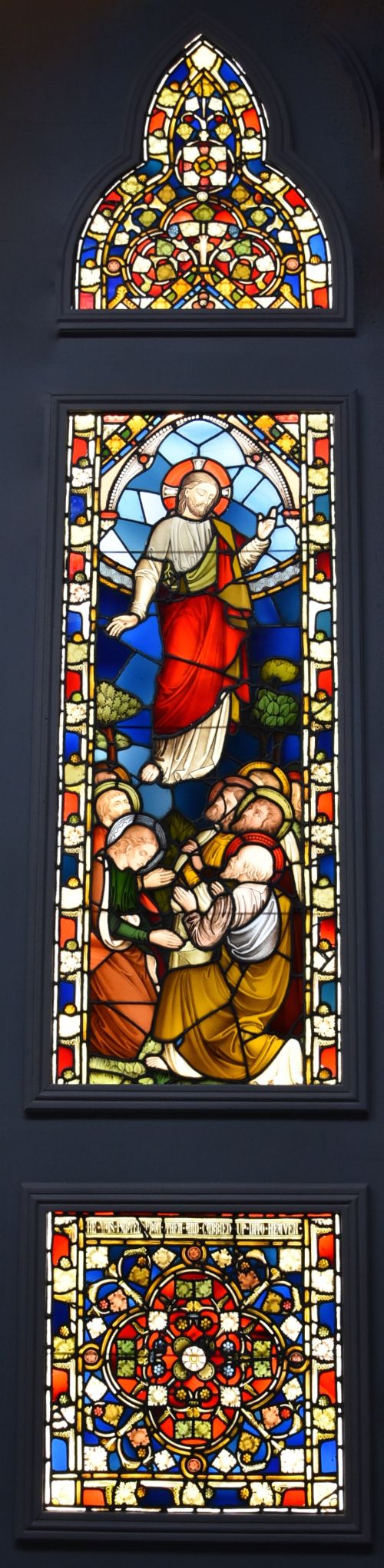


Blue Stained Glass Panel
A blue stained glass panel brings deep, resonant colour and historic light into a room, offering rich painted detail and traditional leaded craftsmanship.
What these pieces are
A blue stained glass panel takes several forms across the inventory, ranging from religious windows and figural scenes to decorative architectural panels. When searching for a blue stained glass panel, buyers generally encounter Victorian, Gothic Revival, and Arts and Crafts examples dating from the mid-nineteenth century up to the early twentieth century.
How they were made
Maker's assemble these panels using coloured glass pieces held within a flexible network of lead cames. Artisans then paint fine details directly onto the glass surface using vitreous enamel before firing the panels in a kiln to permanently bond the pigment.
Many examples incorporate supportive wooden frames or structural reinforcement bars to maintain the stability of the leaded matrix. The combination of lead, glass, and enamel allows the panels to withstand the elements while projecting vivid imagery when illuminated by daylight.
Retail Price Guide 2026
Typical UK retail prices for blue stained glass panel, calculated from the Sellingantiques database of over a million retail prices indexed since 2003. This retail price guide relies exclusively on Sellingantiques data; no external sources or auction records are used, so the figures do not describe the wider market.
The inventory spans the Victorian era, Gothic Revival style, and Arts and Crafts movement, utilising lead, wood, and vitreous enamel.
What varies in quality
The complexity of the lead cording and the integrity of the overall composition also separate standard architectural salvage from exceptional artistic works. Intricate triptychs and pieces retaining their original wooden surrounds command particular attention for their completeness.
The Blue Stained Glass Panel Glossary
- Came
- A slender strip of cast lead with a grooved channel used to hold individual pieces of glass together in a window. These pliable strips form the structural grid of the panel.
- Vitreous enamel
- A powdered glass compound fused to the surface of sheet glass through high-temperature firing. This technique allows permanent fine-line painting on historic windows.
- Triptych
- A panel painting or window composed of three sections hinged or displayed together. This format often frames central religious or narrative iconography.
- Gothic Revival
- An architectural and decorative style drawing inspiration from medieval design. It frequently employs pointed arches and ecclesiastical motifs in stained glass.
Frequently Asked Questions
How do I hang a glass panel?
These heavy panels require secure structural fixings rather than standard picture hooks. Install metal brackets or chain suspensions directly into window frame studs or masonry to bear the full weight.
Position the panel where natural daylight can pass through the glass to reveal the painted details and rich blue tones properly.
Can these windows go outside?
While originally designed for exterior architectural placement, historic leaded panels need careful weather protection. Many owners mount them internally against existing glazing to shield fragile antique glass and lead from wind pressure.
External installation requires professional releading and weatherproofing to ensure the historic structure remains stable over time.
How do I date an antique panel?
Dating relies on stylistic clues, painting techniques, and the profile of the lead cames. Victorian and Gothic Revival pieces from the mid to late nineteenth century often feature ecclesiastical subjects and dense enamel painting.
Later twentieth-century examples shift towards simplified Arts and Crafts compositions and brighter primary palettes.
How should I clean stained glass?
Clean the glass surface gently with a soft dry cloth or a slightly damp sponge. Avoid harsh chemical cleaners or abrasive pads that can damage the delicate vitreous enamel painted details.
Inspect the lead cames periodically and avoid pressing hard against the glass panes, as the flexible lead matrix can warp under undue pressure.