


Painted Stained Glass Panel
A painted stained glass panel brings rich colour and historic character to any room, catching the light through intricate leaded designs.
Painted Stained Glass Panel
A painted stained glass panel is a decorative architectural piece designed to be hung in windows, mounted on walls, or integrated into doors. When searching for a painted stained glass panel, buyers encounter architectural salvage originating from Victorian, Edwardian, and early twentieth century buildings.
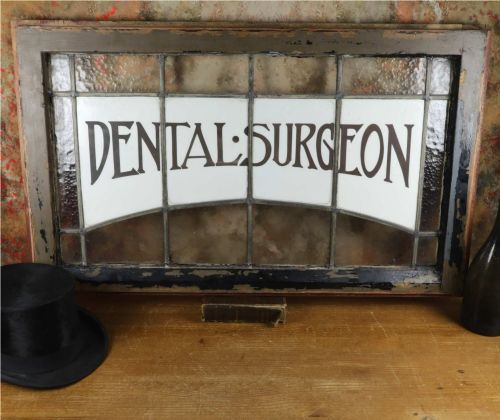
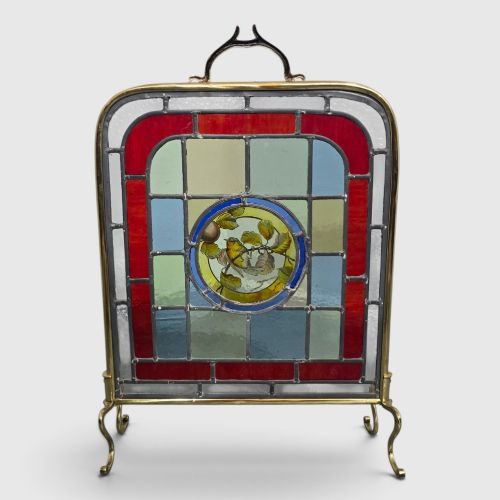
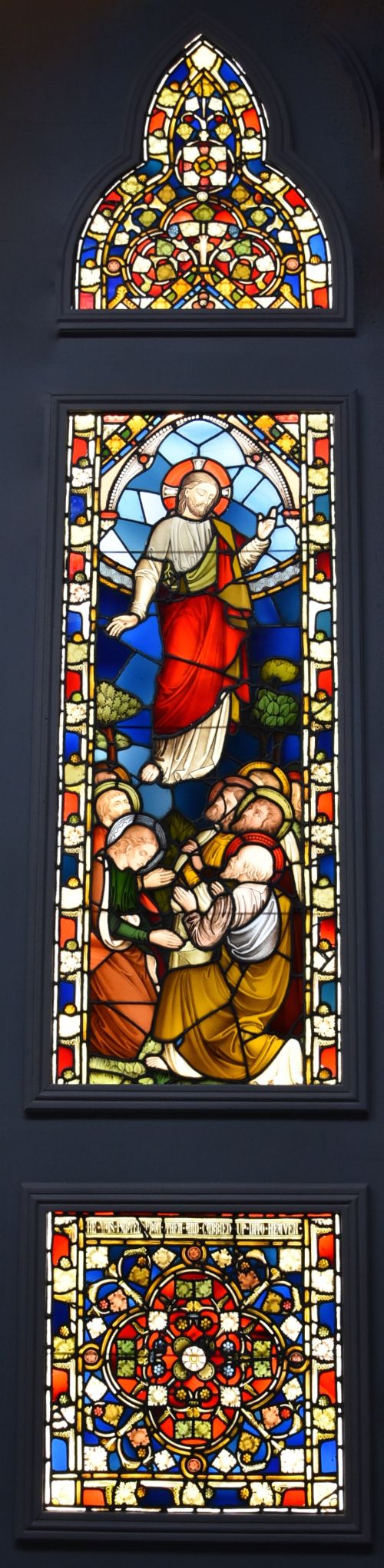
The selections span ecclesiastical and domestic settings, ranging from church windows to trade signs and residential door inserts. Common forms include rectangular panels, arched church tops, and fire screens framed in wood or brass.
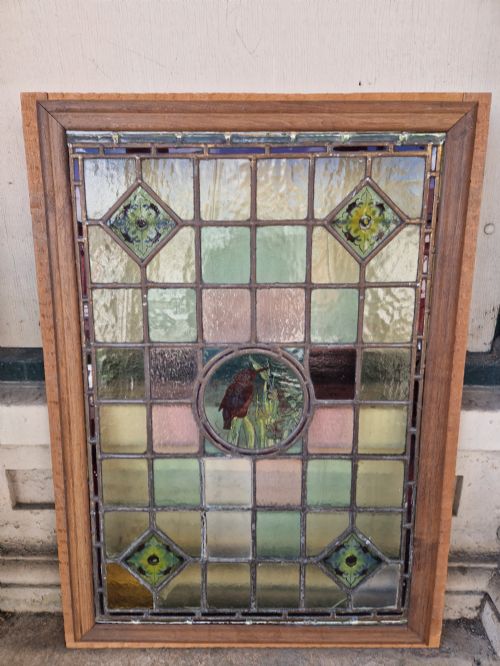
Rural landscapes, floral arrangements, birds, and religious figures form the primary visual subjects. Pieces frequently incorporate clear bullseyes or amber glass alongside the painted enamel details.
How They Were Made
Craftsmen built each painted stained glass panel by assembling individual pieces of coloured and clear glass within flexible lead cames. Artisans applied enamel paints to the glass surface, firing the pieces in a kiln to permanently fuse the pigment before soldering the lead joints.
Support frames of timber, pine, or wood provided structural integrity for larger architectural windows and salvage panels. Etching techniques were occasionally employed alongside painting to create depth and texture within the glass design.
What Varies in Quality
Quality in a painted stained glass panel rests upon the intricacy of the brushwork and the stability of the lead framework. Finer examples display meticulous detail in painted figures, birds, or castle scenes that retain their vibrancy under direct sunlight.
The architectural context also influences the character of the piece, with church panels and large-scale triptychs offering complex narratives compared to simpler domestic floral or bullseye designs.
The Painted Stained Glass Panel Glossary
- Came
- The grooved lead strip used to hold individual pieces of glass together in a window panel. These flexible channels form the grid pattern supporting the entire design.
- Bullseye
- A small, circular centre piece of blown glass showing a concentric ripple pattern. They appear frequently in domestic windows to let in light while obscuring direct views.
- Enamel
- A durable vitreous paint applied to glass surfaces and fired at high temperatures. This technique allows fine pictorial details like feathers, faces, and foliage to endure on the glass.
- Triptych
- A picture or relief carving on three panels, often hinged side by side. In architectural glass, this refers to large-scale devotional or narrative compositions spanning three distinct window sections.
- Architectural Salvage
- Building components rescued from demolition or renovation projects for reuse. This category encompasses church windows, shop signs, and glazed doors.
Painted Stained Glass Panel: Frequently Asked Questions
How do I hang a heavy glass panel?
Heavy panels require secure structural support rather than standard picture hooks. Mount them using custom metal brackets attached directly to window frames or wall studs.
Ensure the weight rests on the timber or lead framework rather than the glass itself to prevent cracking over time.
Were these panels meant for interior or exterior use?
Most painted stained glass panel examples originated as exterior architectural glazing for churches, homes, and shops. They were designed to withstand weather while filtering incoming daylight.
When installed indoors today, placing them in front of a light source or backlit box recreates their original glowing effect.
How do I distinguish Victorian from Edwardian panels?
Victorian panels often lean towards heavier Gothic Revival motifs, deep religious symbolism, or formal heraldic designs. The craftsmanship typically emphasises rich, dense colours and detailed hand-painted figures.
Edwardian and later pieces frequently introduce lighter Arts and Crafts or Art Nouveau aesthetics, favouring natural subjects like birds on branches and softer floral swags.
Can damaged lead cames be repaired?
A skilled restorer can replace aged or bent lead cames without disturbing the original painted glass segments. The lead matrix naturally softens and degrades over decades, requiring occasional reinforcement.
Checking the rigidity of the panel helps determine if re-leading is necessary to keep the glass secure.