

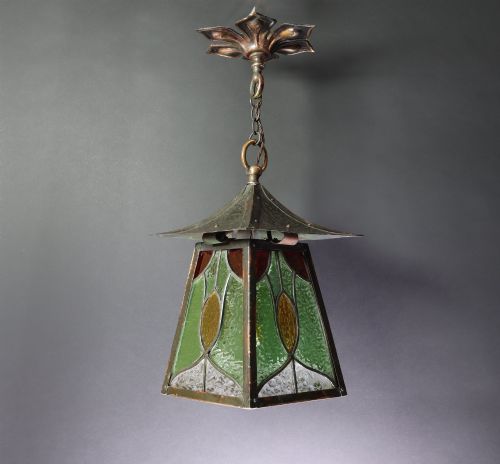


Stained Glass Hanging Panel
These stained glass hanging panel pieces bring rich colour and historic light into a room, offering genuine architectural character.
Stained Glass Hanging Panel
When you search for a stained glass hanging panel, you are looking at architectural salvage and decorative windows salvaged from period properties and ecclesiastical buildings. These pieces span the Victorian era, the 19th century, 1890, 1910, and 1920, capturing the shift from ornate religious subjects to domestic nature motifs.
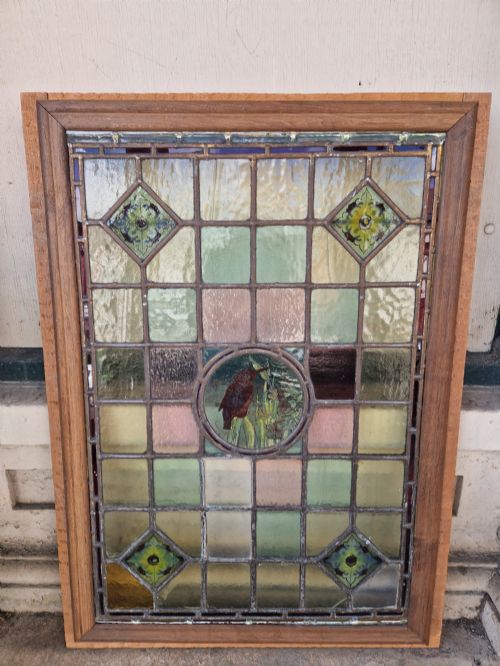
The examples most commonly met on this page include leaded glass windows featuring bird on a branch designs with amber bullseyes, alongside painted religious windows. You will also encounter Gothic Revival English church windows and hand-painted Victorian panels suitable for hanging.
The forms range from rectangular architectural panels to shaped windows, constructed primarily to be hung against a light source or integrated into interior spaces. Each item carries the distinct aesthetic of its period, whether that is Victorian formality or Edwardian Arts and Crafts simplicity.
How they were made
The construction of these pieces relies on traditional glazing techniques using lead cames to join individual pieces of coloured and painted glass. Artisans painted details onto the glass surface before firing, sealing the pigment permanently into the material.
Many panels incorporate structural framing made from pine wood, providing sturdy support for the heavy leaded and vitreous enamel components. The inclusion of amber bullseyes and hand-painted elements demonstrates the varied artisanal skills employed across the Victorian and 20th-century periods.
Stained Glass Hanging Panel Retail Price Guide 2026
Typical asking prices for stained glass hanging panel among the pieces listed under this phrase on Sellingantiques today, from the lower quarter to the upper quarter. They describe what is for sale here now, not the wider market.
Listings span the nineteenth century to 1920, featuring materials such as lead, glass, pine wood, and vitreous enamel across Gothic Revival and Arts and Crafts styles.
What varies in quality
The condition of the lead matrix and the stability of the wood or metal framework dictate the structural integrity of the panel. Superior examples maintain crisp painted details on the vitreous enamel and intact glass panes that catch the light evenly.
The Stained Glass Hanging Panel Glossary
- Lead came
- The channel of lead used to hold individual pieces of glass together in a stained glass panel. These flexible strips form the structural grid of the window.
- Bullseye
- A circular patch of glass with a raised centre, formed in the middle of a spun glass disc. They add rich texture and amber tones to period windows.
- Vitreous enamel
- A material made by fusing powdered glass to a substrate by firing, used for durable painted details on antique glass. This technique ensures the imagery resists fading over time.
- Architectural salvage
- Building materials rescued from demolition or renovation for reuse in interior design. This encompasses the church windows and domestic panels found in this collection.
- Gothic Revival
- An architectural and decorative style drawing inspiration from medieval design forms. It appears frequently in the ecclesiastical windows of the nineteenth century.
Stained Glass Hanging Panel: Frequently Asked Questions
How do I hang a heavy panel safely?
These windows require secure fixings attached directly to structural wall studs or window frames to support their considerable weight. Use robust metal chains or brackets rated for architectural salvage.
Ensure the hanging point takes the load of both the glass and any surrounding wood frame evenly. Professional installation is recommended for larger ecclesiastical or Victorian pieces.
Can these panels be used in exterior windows?
Most hanging panels are intended for interior display where they are protected from harsh weather and modern wind loads. Placing them inside lets you appreciate the painted details and leadwork up close.
If fitted into an exterior opening, secondary glazing is often required to provide weatherproofing and security. Consult a specialist glazier before exposing antique leadwork to the elements.
What is the difference between religious and domestic panels?
Religious panels typically feature painted iconography, ecclesiastical symbolism, and solemn palettes commissioned for churches and chapels. They reflect the Gothic Revival and nineteenth-century devotion to narrative church art.
Domestic panels, such as those from 1910 or the Edwardian period, often favour naturalistic subjects like birds on branches and amber bullseyes. These were designed to bring charm and privacy into Edwardian and Victorian homes.