




Staffordshire Pottery Animals
Staffordshire pottery animals bring the character of the Victorian parlour into your home through charming earthenware figures of lions, dogs, and sheep.
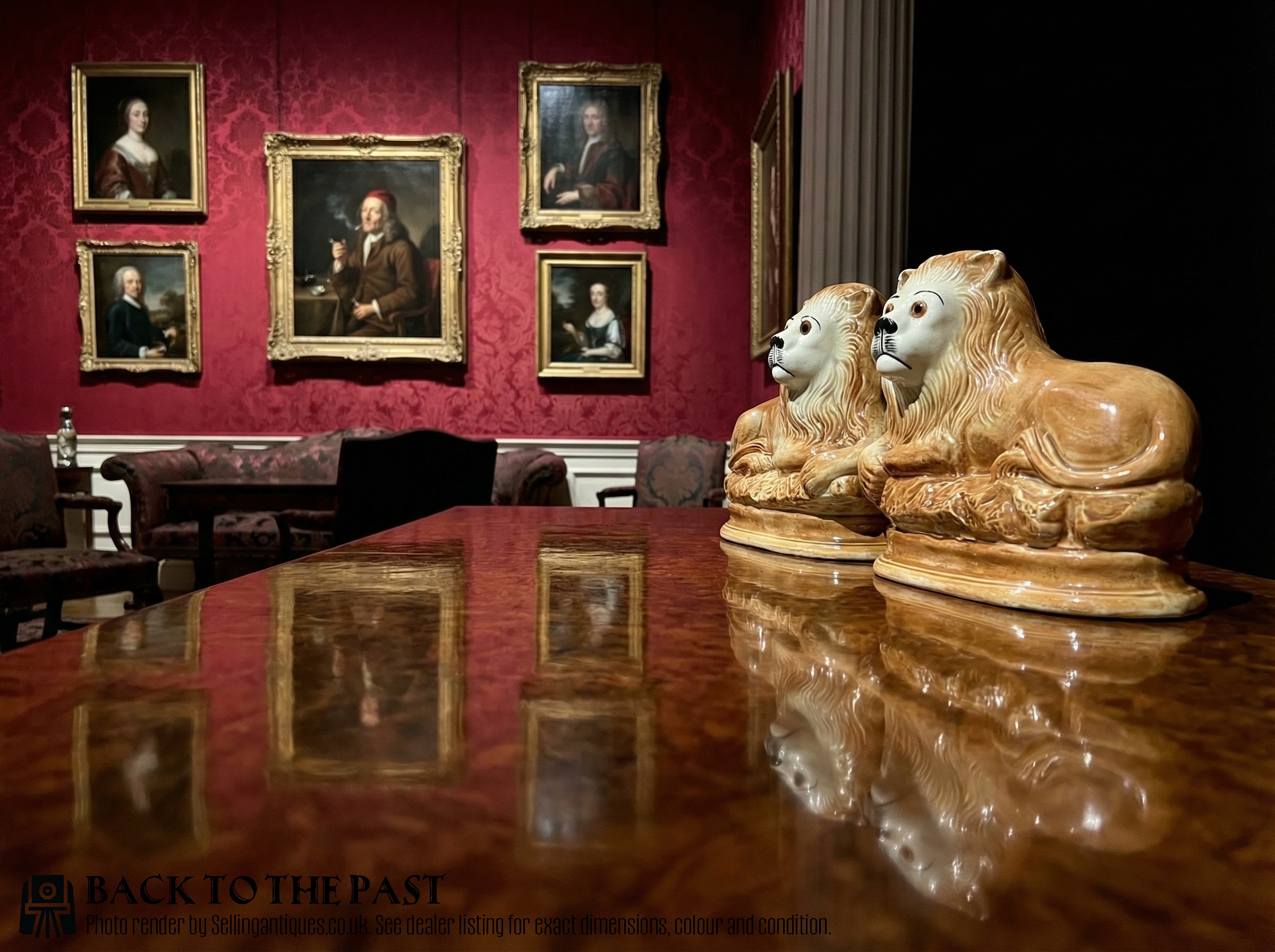
Staffordshire Pottery Animals
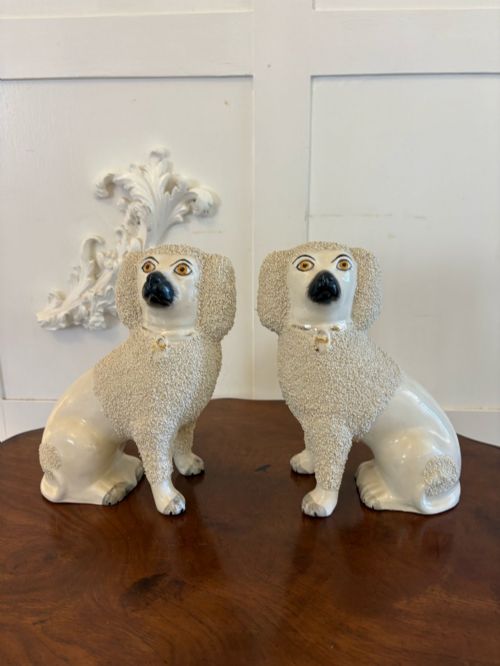
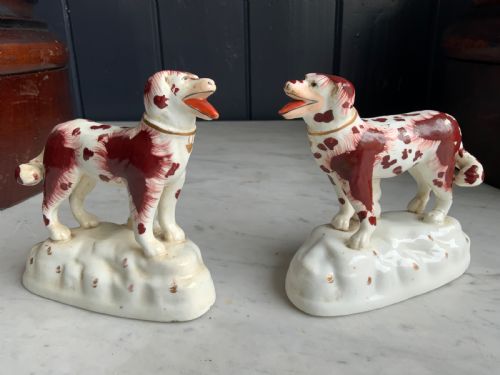
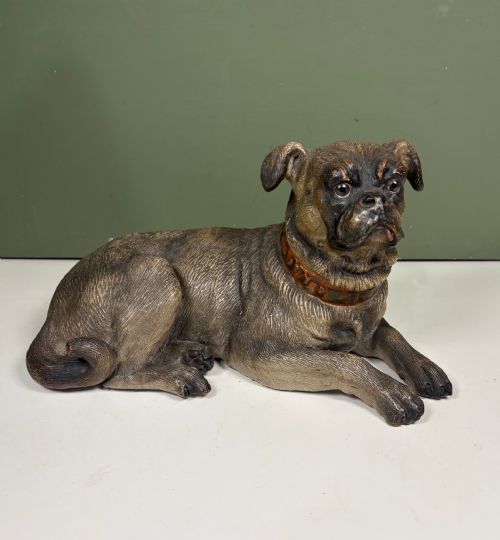
Staffordshire pottery animals are nineteenth-century ceramic figures designed to decorate the mantelpiece and sideboard. They include domestic dogs such as poodles, pugs, and greyhounds alongside exotic beasts like lions, zebras, and leopards.
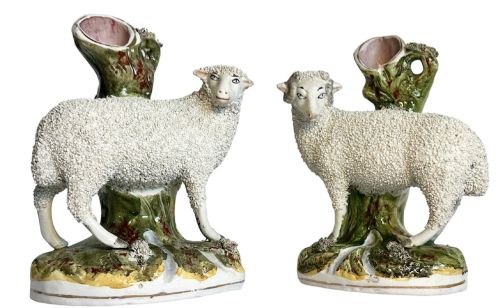
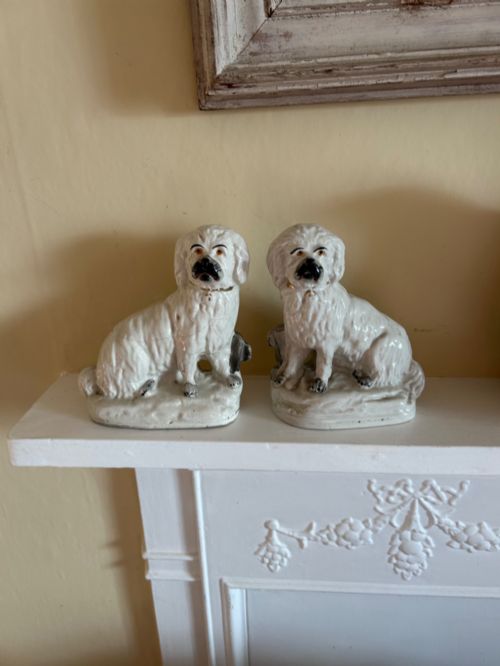
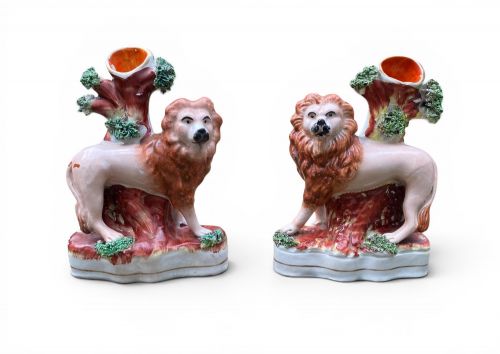
You will most commonly meet pairs of spaniels or poodles modelled to face one another, as well as spill vases depicting sheep and lions. Figures range from pearlware examples of the early nineteenth century to later Victorian earthenware productions.
The form spans straightforward decorative figurines, bookends, and inkwells, reflecting the varied domestic demands of the nineteenth-century household. Most pieces originate from the Staffordshire potteries during the Victorian and Regency periods.
Materials and methods
Potters shaped these figures from earthenware and pearlware bodies, using press moulding techniques to form the basic animal shapes. Hollow construction was standard for larger pieces to ensure even drying and firing in the kiln.
Surface decoration relies on lead glaze and vibrant enamel colours painted over or under the glaze. Treacle glaze appears on specific pieces, providing a rich brown finish characteristic of nineteenth-century production.
Staffordshire Pottery Animals Retail Price Guide 2026
Typical asking prices for staffordshire pottery animals among the pieces listed under this phrase on Sellingantiques today, from the lower quarter to the upper quarter. They describe what is for sale here now, not the wider market.
Listings feature earthenware and pearlware bodies decorated with lead glaze, enamel, and treacle glaze across the nineteenth century.
Judging quality
The application and richness of the enamel colours also distinguish better examples. Deep, even glazes and neatly controlled brushwork show a higher standard of studio output.
Walton·Wooley·Rockingham Pottery
The Staffordshire Pottery Animals Glossary
- Pearlware
- A refined earthenware developed in the late eighteenth century featuring a bluish glaze that pooled slightly in crevices. It provides a paler ground than standard creamware.
- Spill vase
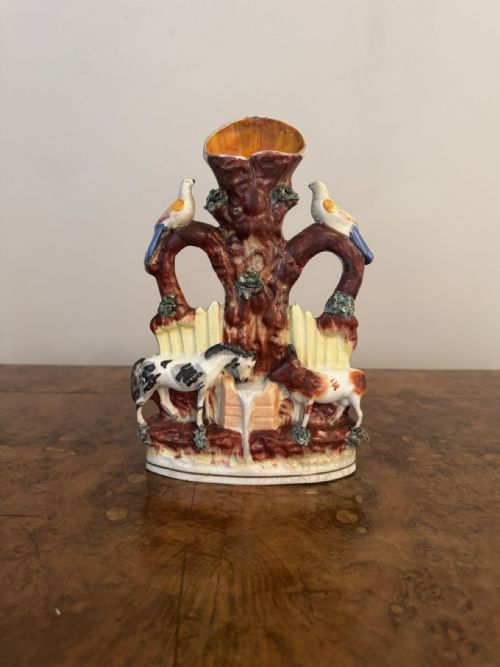
- A hollow figure incorporating a cylindrical holder designed to contain wooden spills for lighting candles or fires. These vessels combine practical function with animal modelling.
- Treacle glaze
- A dark brown, translucent lead glaze yielding a glossy appearance resembling molasses. It is frequently found on nineteenth-century lions and dogs.
- Lead glaze
- A vitreous coating containing lead oxide applied to ceramics before firing to produce a waterproof surface. It gives these earthenware figures their characteristic shine.
- Figure group
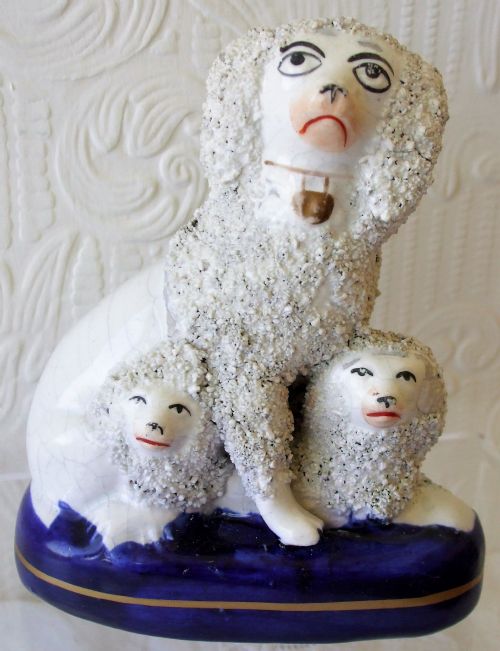
- A composition featuring more than one animal or human figure modelled as a single piece. Common examples include dogs with their pups or hunting scenes.
Staffordshire Pottery Animals: Frequently Asked Questions
How were these figures displayed?
Pairs of dogs traditionally stood at either end of a mantelpiece, facing inward toward the clock or centrepiece. This symmetrical arrangement suited Victorian interior decoration.
Larger lions and zebras occupied prominent positions on sideboards or console tables, serving purely decorative functions in the nineteenth-century parlour.
What is a spill vase?
A spill vase is a hollow ceramic tube attached to the back or side of an animal figure. The tube held thin wooden splints used to transfer flame from the hearth fire to candles.
This practical addition allowed the figure to double as a functional accessory on the mantelpiece.
Were these animals made as pairs?
Potters frequently produced these figures in left and right facing pairs designed to sit symmetrically. This convention applied particularly to poodles, spaniels, and lions.
Single pieces also exist, including inkwells, bookends, and zebra figures intended as standalone decorative objects.