



English Earthenware Figures
English earthenware figures bring domestic shelf display to life with painted animals, portraits, and theatrical characters modelled in clay.
English Earthenware Figures
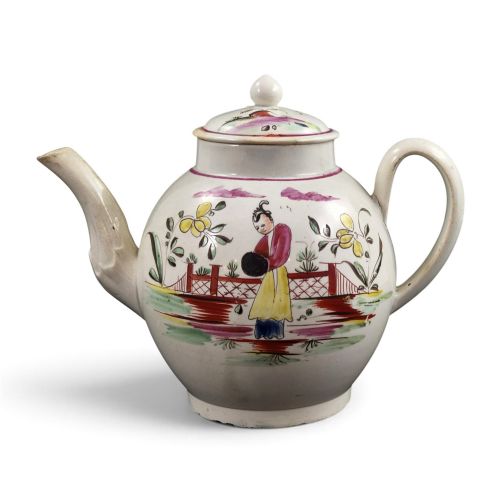
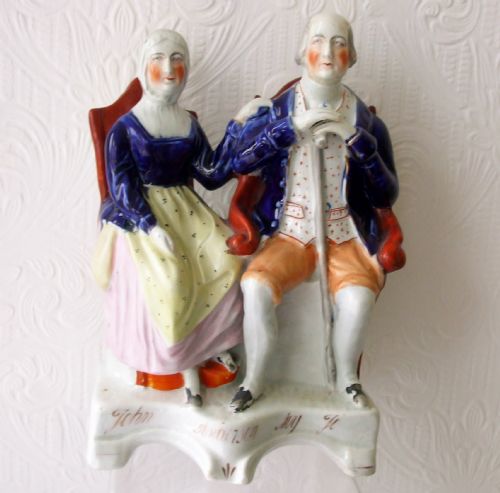
English earthenware figures encompass decorative figurines, spill vases, and tobacco jars produced across the Georgian and Victorian periods. Collectors encounter earthenware, pearlware, and creamware bodies shaped into portrait groups, animal pairs, and literary subjects.
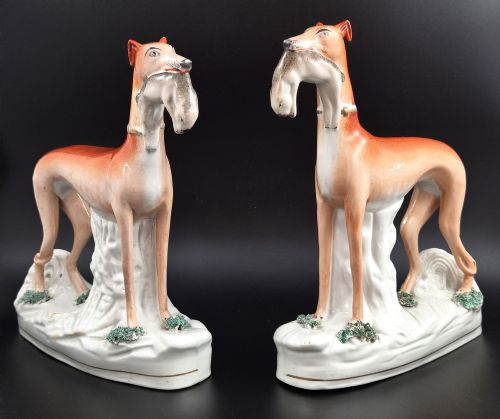
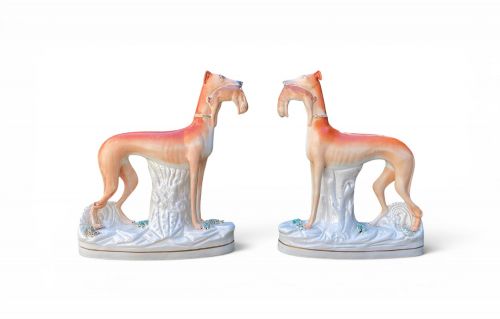
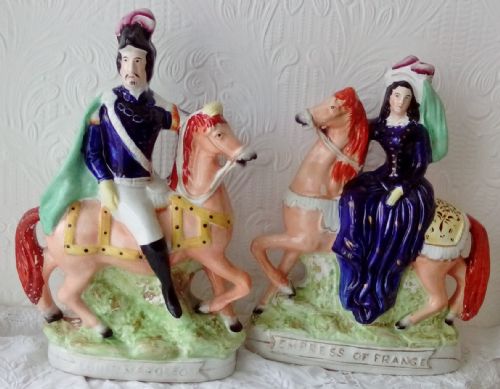
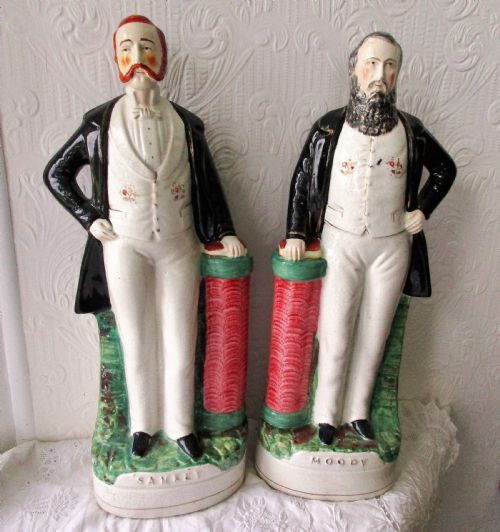
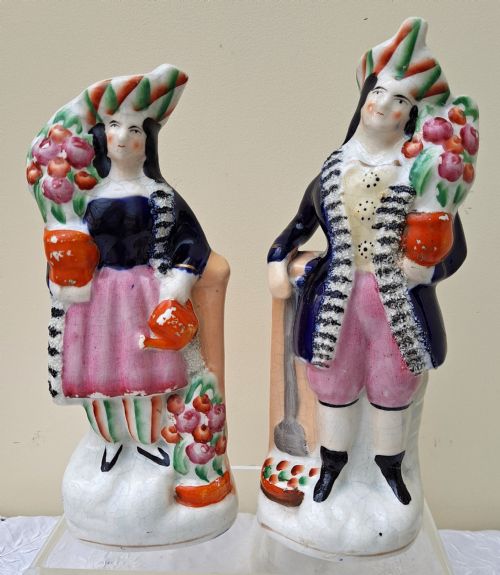
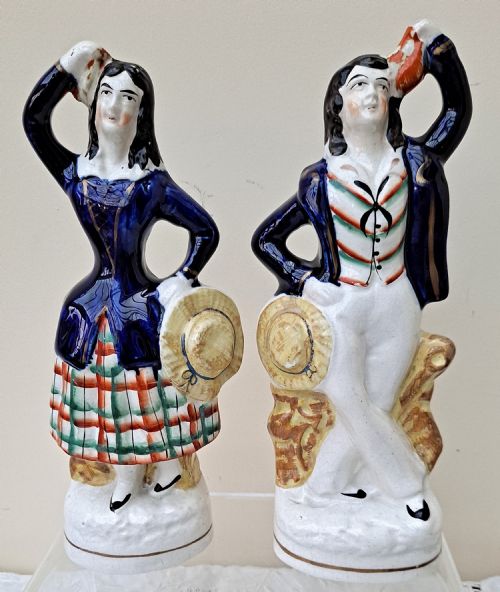
The Victorian Staffordshire tradition dominates the available forms, ranging from greyhounds and lions to theatrical pairs and political portraits. These earthenware figures served as chimney ornaments and mantelpiece decoration in nineteenth-century homes.
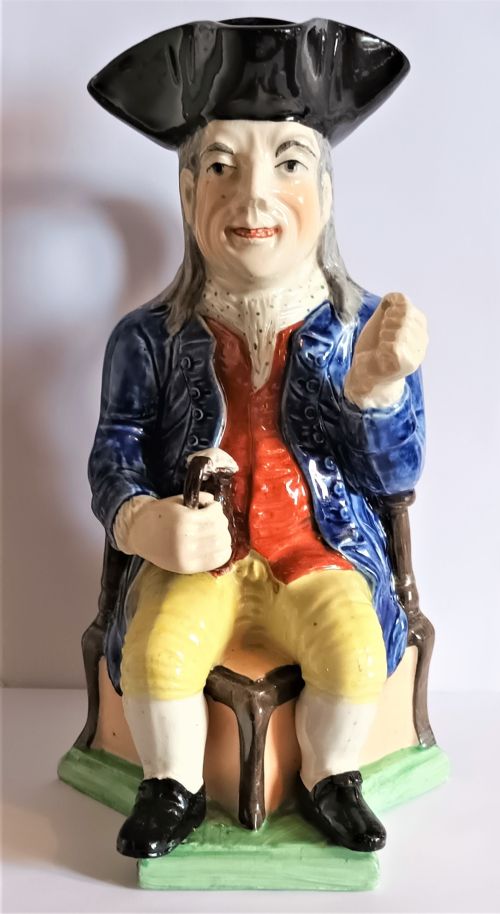
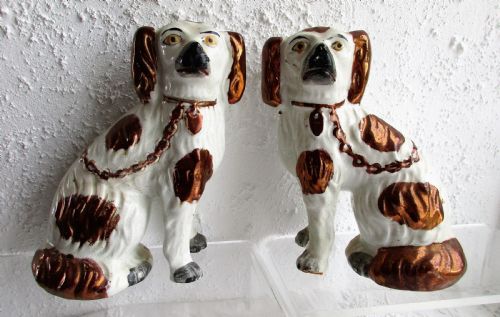
Makers also produced utilitarian and novelty pieces such as Toby jugs, cottages, and comforter spaniels. Studio pottery examples from later decades provide a transition into twentieth-century figural ceramics.
How they were made
Potters shaped these earthenware objects using press moulds or slip-casting techniques, building up hollow bodies from local or refined clays. Artisans then applied lead glazes, enamel paint, or treacle glaze to seal the porous ceramic surface before firing.
Materials recorded across the inventory include earthenware, pearlware, creamware, enamel, and lead glaze.
What varies in quality
The visual appeal of the glaze and the weight of the ceramic body distinguish finer works from standard production. Softer modelling and hurried decoration indicate mass-market output designed for domestic mantelpieces.
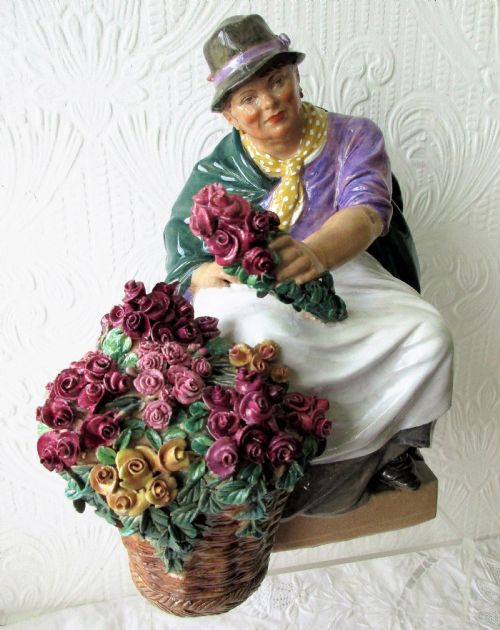
Charles Vyse·Rockingham Pottery
The English Earthenware Figures Glossary
- Pearlware
- A refined earthenware body developed in the late eighteenth century featuring a subtle bluish glaze that pooled in recesses. It provided a paler ground for enamel painting than standard creamware.
- Spill vase
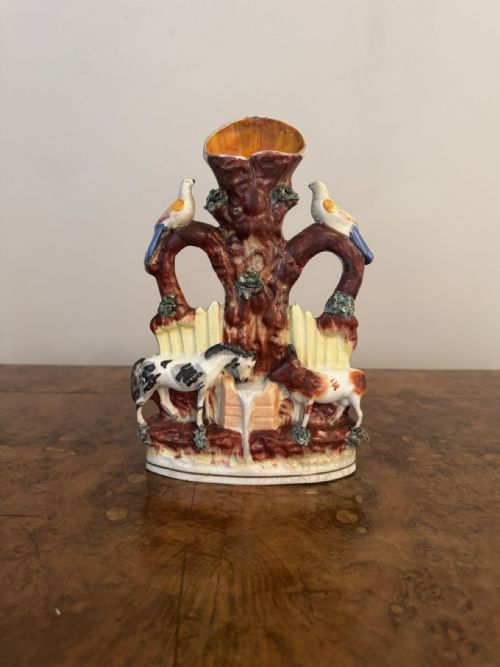
- A hollow ceramic tube attached to a figure, designed to hold wooden spills for lighting candles or fires. These vessels combined domestic utility with figural display.
- Creamware
- A fine earthenware developed in Staffordshire with a warm, pale yellow or cream-coloured lead glaze. It formed the body for early Staffordshire and export ceramics.
- Treacle glaze
- A dark, translucent brown lead glaze used extensively on nineteenth-century lions and animal figures. It gave earthenware surfaces a rich, glossy finish.
- Flat back
- A style of Staffordshire figure moulded with an unpainted, flat reverse designed to stand against a wall. This technique saved materials and production time for mantelpiece ornaments.
English Earthenware Figures: Frequently Asked Questions
How do I date an antique earthenware figure?
Dating relies on the ceramic body type, glaze characteristics, and the subject matter depicted. Pearlware bodies and certain painting styles point towards the early nineteenth century, while flat-back construction often suggests the Victorian era.
Changes in costume and historical subject matter, such as Crimean War portraits, provide narrower chronological windows for specific pieces.
Where were these figures displayed originally?
These ceramic figures stood predominantly on mantelpieces in nineteenth-century parlours and domestic living spaces. Pairs of animals, such as greyhounds or spaniels, flanked clocks and ornaments at either end of the hearth.
Spill vases sat ready for practical use near fireplaces while simultaneously serving a decorative function in the room.
What is the difference between pearlware and creamware?
Creamware possesses a warm, pale yellow glaze applied over a light-coloured earthenware body. It was widely used for utilitarian vessels and early figures.
Pearlware incorporates a small amount of cobalt in the glaze to create a bluish tint that resembles Chinese porcelain. This glaze pooled distinctively around moulded details and bases.
Why do many figures have flat backs?
Makers constructed figures with flat, unpainted backs because they were intended to stand directly against a cottage or parlour wall. This method reduced the amount of clay and glaze required for each piece.
Flat-back construction also allowed potters to fit more items into the kiln during firing.