



White Ceramic Flatback
White ceramic flatback figures bring Victorian parlour portraiture and narrative pottery directly to the mantelpiece.
White Ceramic Flatback
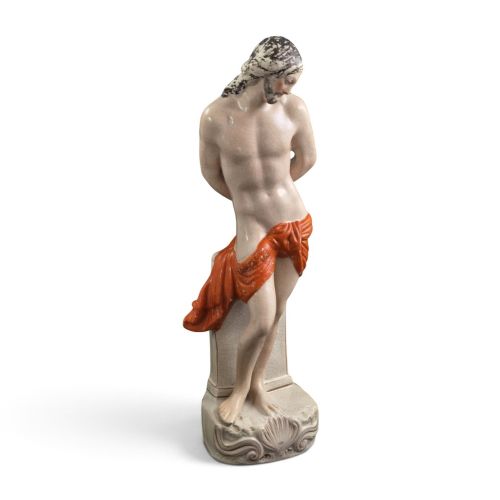
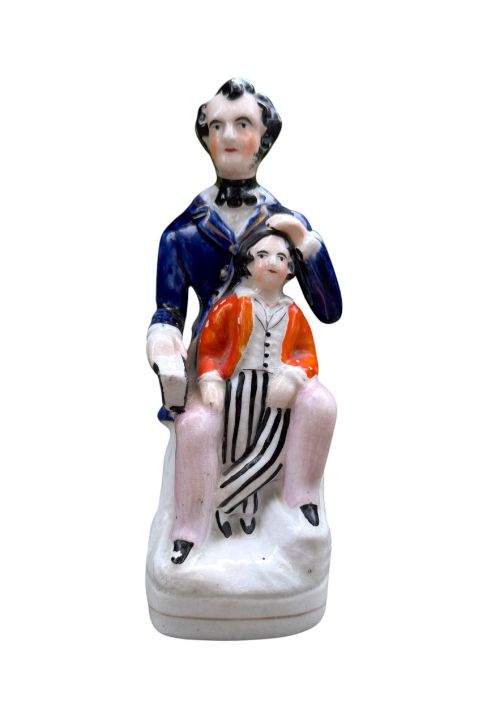
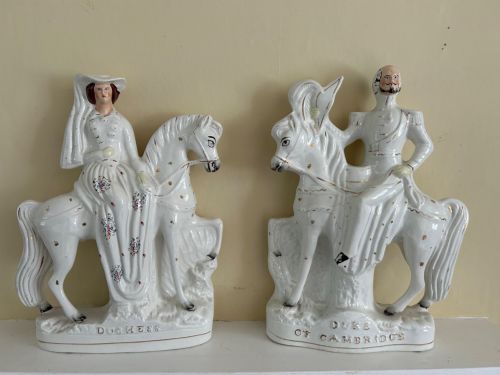
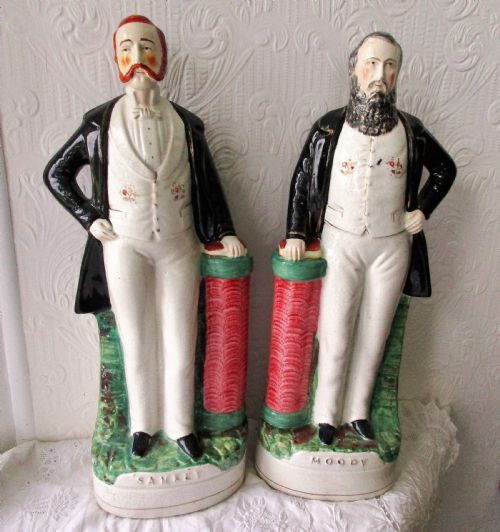
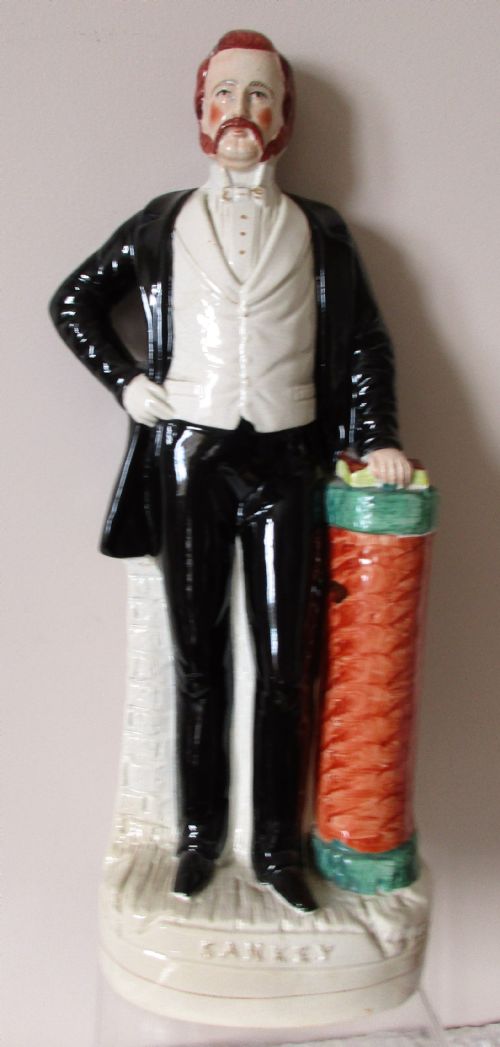
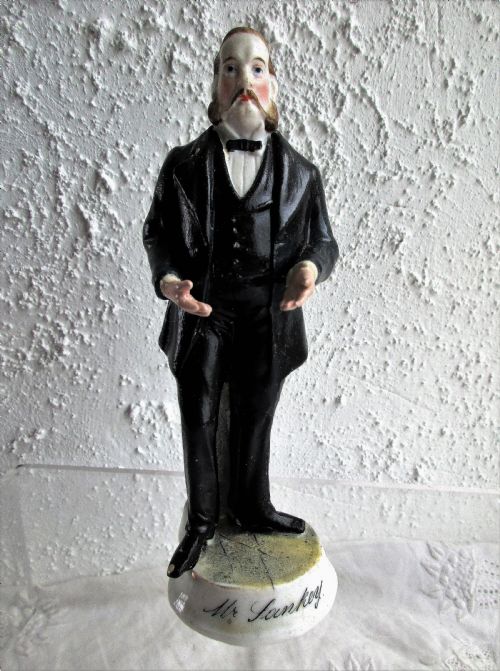
White ceramic flatback figures are nineteenth-century Staffordshire pottery pieces shaped to be viewed from the front, designed to stand flat against a wall or mantelpiece. Buyers encounter Victorian portrayals of royalty, military leaders, literary characters, animals, and architectural watch-holders.
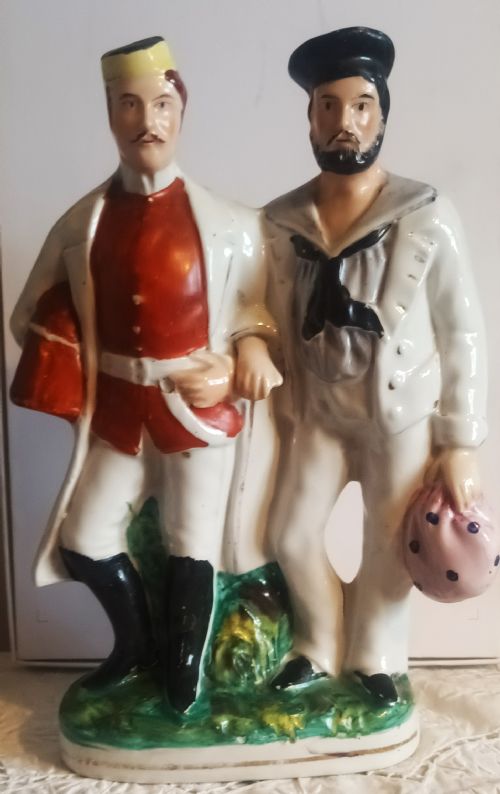
The form developed primarily during the Victorian period, spanning decades from the mid-nineteenth century through the 1880s. Figures range from single portrait subjects to large pairs and complex groups depicting historical alliances, domestic scenes, and pastoral life.
Most examples originate from Staffordshire potteries, capturing contemporary news, public figures, and popular culture in clay. The back remains unglazed or simply finished because the object stood against a surface.
How they were made
Potters utilised earthenware bodies shaped in multi-part press moulds to achieve the characteristic flatback silhouette. The hollow construction kept the heavy clay stable during firing.
What varies in quality
Scale and ambition separate standard figures from exceptional groups, such as large royal portrait pieces, multi-figure compositions, and elaborate spill vases or watch-holders. The complexity of the subject matter dictates the skill required in the kiln.
Staffordshire Pottery
The White Ceramic Flatback Glossary
- Flatback
- A pottery figure with a finished front and a plain, unglazed, or flat rear designed to stand against a wall. This construction method saved materials and kept the piece stable on narrow mantels.
- Earthenware
- A porous, opaque ceramic body fired at lower temperatures than porcelain. It forms the standard foundation for Victorian Staffordshire figures.
- Lead glaze
- A glossy coating containing lead oxide applied to pottery before firing. It provides a smooth, reflective surface over the earthenware body.
- Spill vase
- A hollow cylindrical holder integrated into a figure group designed to hold wooden spills for lighting fires. These functional vessels combined utility with decorative portraiture.
White Ceramic Flatback: Frequently Asked Questions
What is a flatback figure?
A flatback figure is a ceramic ornament moulded with a detailed front and a flat, often unglazed reverse. They were made specifically to sit flush against the walls of nineteenth-century parlours.
Because the back was hidden from view, potters focused their artistry on the front-facing details, uniforms, and facial expressions.
How were these figures displayed?
These figures sat upon mantelpieces, sideboards, and brackets in Victorian homes. Their flat backs allowed them to stand securely on narrow ledges.
Pairs of figures were often arranged symmetrically, while larger royal groups or watch-holders served as centrepieces on the parlour mantel.
How do I date a piece?
Dating relies on historical subjects, clothing styles, and the characteristics of nineteenth-century earthenware. Figures depicting events like the Crimean War or specific royal weddings provide clear chronological markers.
Stylistic shifts between the 1840s and 1880s help narrow down the period of manufacture.
What subjects are most common?
Subjects range widely from royalty and military heroes to literary figures, animals, and domestic scenes. Portrait groups of contemporary monarchs and generals frequently appear in the listings.
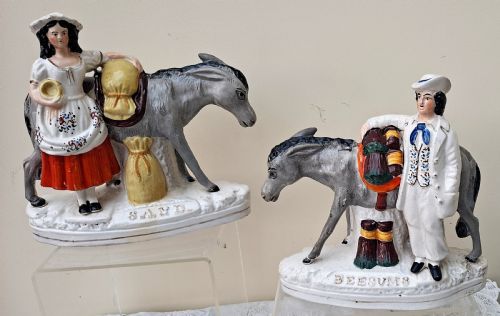
Animals, including zebras, dogs, and goats, alongside pastoral couples, also form a major part of the Victorian repertoire.