






Earthenware Cow Figurines
These earthenware cow figurines are charming ceramic animals from the nineteenth century, offering both decorative charm and traditional utility for the collector.
Earthenware Cow Figurines
When you search for earthenware cow figurines, you encounter a delightful selection of nineteenth-century ceramic animals intended for both display and everyday use.
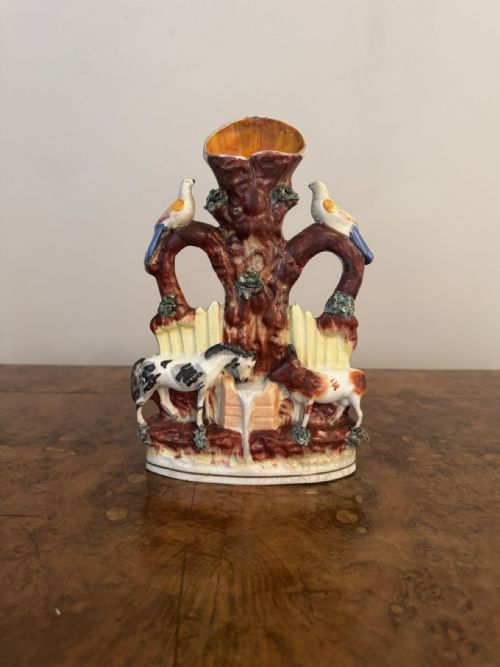
The pieces appearing on this page span several distinct forms, including spill vases, creamers, and decorative flatback figures from English, Welsh, and Dutch origins.
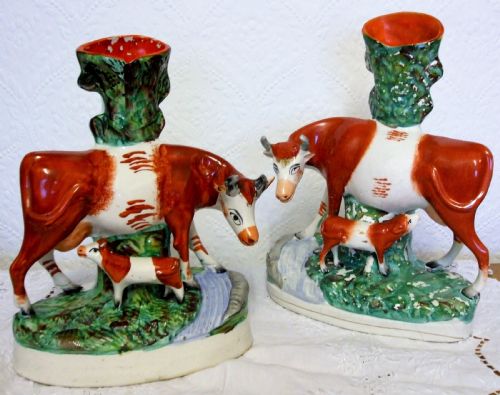
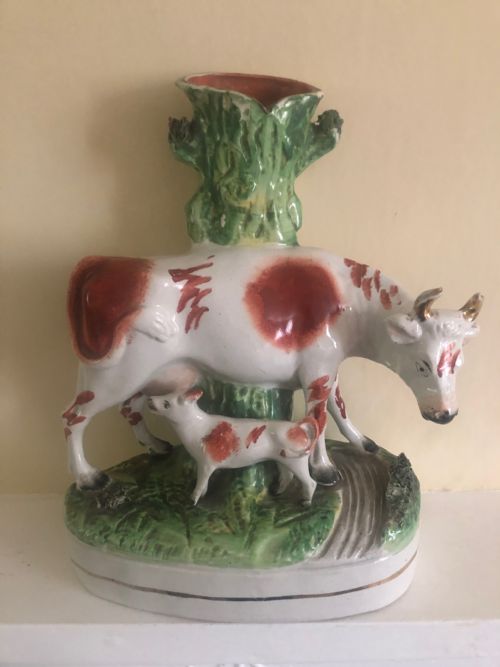
Victorian Staffordshire examples dominate the selection, often featuring cows with calves or acting as spill holders for the mantelpiece.
How they were made
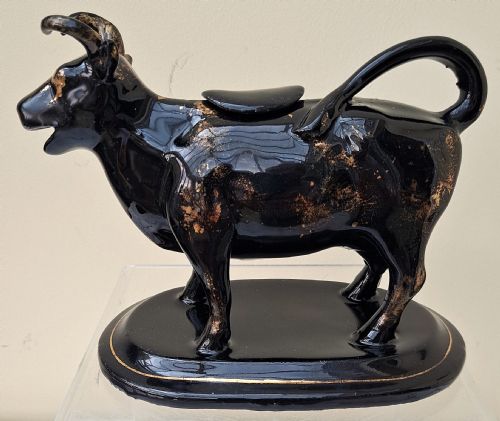
Potters shaped these earthenware bodies using traditional clay techniques before applying tin glaze, enamel paint, or lustrous Jackfield black finishes.
Many items incorporate delicate hand-painting alongside gilt highlights, while Dutch Delftware pieces utilise classic blue and white tin-glazed ceramic methods.
Earthenware Cow Figurines Retail Price Guide 2026
Typical asking prices for earthenware cow figurines among the pieces listed under this phrase on Sellingantiques today, from the lower quarter to the upper quarter. They describe what is for sale here now, not the wider market.
Current listings feature nineteenth-century items exclusively, spanning Dutch Delftware, Victorian Staffordshire, and Georgian pottery traditions.
What varies in quality
The standard of modelling largely determines the distinction between ordinary production pieces and superior examples, particularly in the rendering of the animal forms and calves.
The crispness of the enamel paintwork, the richness of the glaze, and the preservation of any gilt details also mark the higher tiers of these nineteenth-century ceramics.
The Earthenware Cow Figurines Glossary
- Earthenware
- Porous pottery fired at lower temperatures, commonly utilised for nineteenth-century figures and jugs before being glazed.
- Spill Vase
- A hollow ceramic figure incorporating a vertical holder designed to contain wooden matches or taper spills for lighting fires.
- Jackfield
- A glossy black-glazed pottery style popular in Victorian times, frequently employed for cow creamers with metallic lustre highlights.
- Flatback
- A ceramic figure modelled fully in the round at the front while left unadorned and flat at the rear for resting against a wall.
- Tin-glazed
- Earthenware coated with an opaque white glaze containing tin oxide, providing a smooth canvas for blue and white painted decoration.
Earthenware Cow Figurines: Frequently Asked Questions
What is an earthenware cow creamer?
These functional ceramic jugs take the shape of a cow, with milk poured through an opening on the back and dispensed via the animal's mouth.
Such pieces combined whimsical folk art design with practical service on the dining table during the Georgian and Victorian eras.
How do I date these figures?
Examination of the clay body, glaze characteristics, and painting style helps distinguish nineteenth-century examples from later reproductions.
Staffordshire and Dutch Delft pieces often carry stylistic markers typical of the 1860 to 1880 decades represented in the listings.
Where were these ceramic animals made?
Production centred primarily around the Staffordshire potteries in England, alongside Welsh kilns and Dutch Delftware workshops.
Regional traditions influenced whether a piece emerged as a utilitarian creamer or a purely decorative mantelpiece ornament.
How should I display spill vases?
These hollow figures look best positioned on mantelpieces or shelves where their painted details and dual purpose remain visible.
Historically placed near hearths to hold wooden spill sticks, they add traditional character to any room today.