


Antique Country Pottery Figures
Antique country pottery figures bring direct, rustic charm into a room, capturing rural life and domestic animals through simple clay forms.
Antique Country Pottery Figures
When you search for antique country pottery figures, you encounter a selection of hand-moulded and slip-cast characters originating primarily from nineteenth-century British and French kilns. These objects range from Staffordshire flatbacks depicting country couples and royalty to French faience pin trays and naive animal sculptures.
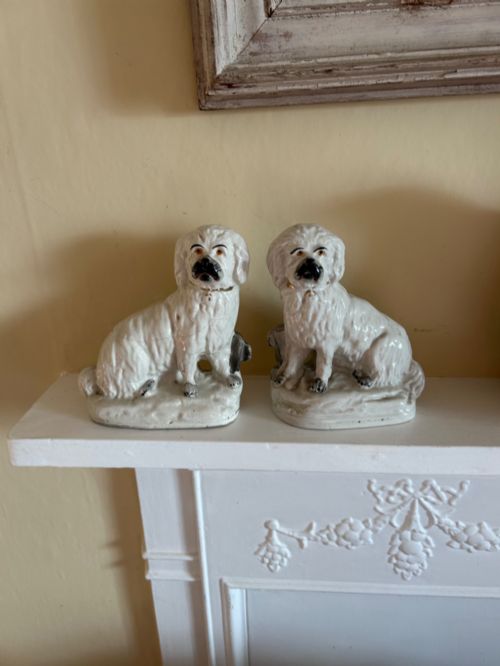
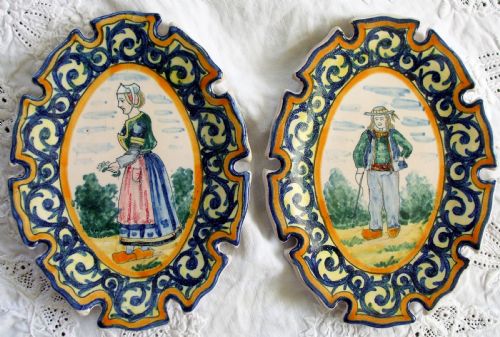
The most common examples on this page are Staffordshire figures, including pairs of spaniels, sheep with lambs, cows with calves, and theatrical duos. Alongside these sit Scottish Portobello figures, French ceramic pig sculptures, and Quimper faience pieces that reflect regional European domestic traditions.
Makers produced these decorative figurines and spill vases for mantelpieces and shelves in modest homes, capturing contemporary tastes with accessible materials. Their enduring appeal lies in their unpretentious modelling and the straightforward narrative they present to the modern collector.
How they were made
Potters shaped these figures using earthenware, ceramic, pearlware, and stoneware, relying on local clays that were fired in traditional kilns. Many pieces received a lead glaze or enamel paint finish to add colour and protect the porous body beneath.
Moulds allowed workshops to produce matching pairs of animals, such as Maltese terriers or hunting dogs, with consistent underlying shapes before workers applied hand-painted details. Enamel colours were brushed directly onto the fired glaze or ceramic surface, leaving subtle variations unique to each object.
The listings on this site feature earthenware, pearlware, and stoneware from the nineteenth century, including works from English and French makers.
What varies in quality
The sophistication of the modelling separates standard decorative wares from superior artistic interpretations, even among humble folk art. Pieces with well-preserved glaze surfaces and minimal kiln distortion retain stronger visual clarity and historical presence.
HR Quimper·Walton
The Antique Country Pottery Figures Glossary
- Flatback
- A figure moulded with a finished front and a flat, unpainted or simply glazed back designed to sit flush against a wall or mantelpiece. This method saved time and materials during production.
- Pearlware
- A refined earthenware developed in the late eighteenth century featuring a clear glaze with a faint bluish tinge that pooled in crevices. It aimed to mimic the appearance of Chinese porcelain.
- Faience
- European tin-glazed earthenware produced in regions such as France, known for its opaque white background and hand-painted decorative motifs. Quimper is a notable centre for this tradition.
- Spill vase
- A hollow figurine incorporating a small cylindrical holder designed to store wooden spills used for lighting candles and fires. These combined practical utility with domestic ornament.
Antique Country Pottery Figures: Frequently Asked Questions
What are Staffordshire flatback figures?
Staffordshire flatbacks are earthenware ornaments designed to stand on mantelpieces, featuring detailed fronts and flat backs.
Potters made them in large quantities during the Victorian era, depicting royalty, literary characters, and rural scenes.
How were antique pottery animals used?
These figures served as purely decorative ornaments, often displayed in pairs on cottage mantelpieces or side tables.
They brought images of farm animals and pets into homes that could not keep live specimens or valued rustic interior decoration.
How do I care for antique earthenware figures?
Keep these ceramic pieces away from direct sunlight and damp environments to protect the fragile enamel paint and glaze.
Dust them gently with a dry, soft brush and avoid using water or chemical cleaners that might damage the surface.
How can I tell the age of these figures?
Dating relies on identifying material types like pearlware or early stoneware, alongside stylistic clues from clothing and subject matter.
Comparing the potting style and glaze characteristics helps distinguish nineteenth-century production from later reproductions.