






Staffordshire Enamel Box
These eighteenth-century staffordshire enamel box items are miniature Georgian objects of utility and sentiment, prized for their vibrant painted surfaces.
What a Staffordshire Enamel Box Is
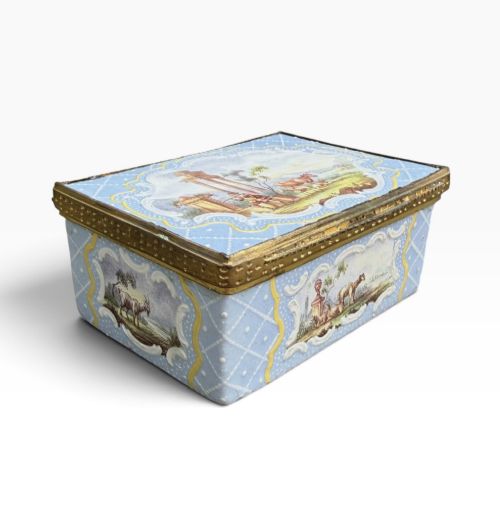
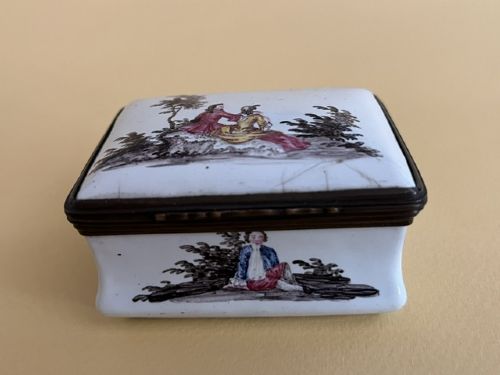
A staffordshire enamel box is a small eighteenth-century container made for personal use, such as snuff, patches, or pills. The pieces on this page span the Georgian period, often reflecting the Rococo style of the era. Buyers encounter forms ranging from simple rectangular patch boxes to novelty shapes, bird containers, and etui sewing cases.
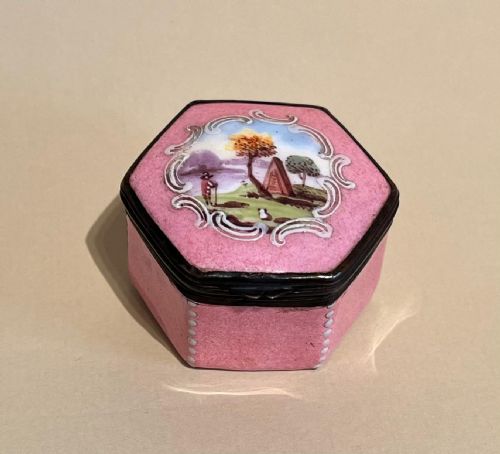
Many examples carry specific inscriptions or painted decoration like tokens of esteem, spa views such as Cheltenham Wells, floral motifs, or figural subjects including King Charles Cavalier Spaniels and fishing scenes. They functioned as fashionable pocket accessories and gifts among the Georgian gentry. Most surviving examples belong to the Bilston and broader South Staffordshire traditions.
Materials and Technique
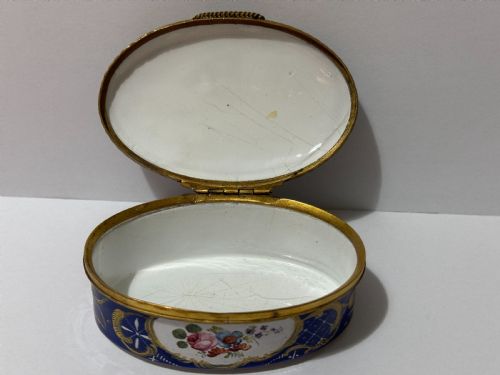
These boxes are constructed from copper or copper alloy bases shaped to form the body and lid. The metal foundation receives a coating of opaque white or coloured enamel, fused by firing in a kiln. Enamellers then applied detailed hand-painted designs directly onto the glazed surface.
Mounts, hinges, and bezels are fabricated from brass or gilt metal to secure the lid and base. The interior metalwork often retains traces of gilding, while the exterior enamel incorporates varied ground colours like powder pink, yellow, or gingham patterns.
Retail Price Guide 2026
Typical UK retail prices for staffordshire enamel box, calculated from the Sellingantiques database of over a million retail prices indexed since 2003. This retail price guide relies exclusively on Sellingantiques data; no external sources or auction records are used, so the figures do not describe the wider market.
Listings feature eighteenth-century pieces utilising enamel, copper, brass, and gilt metal within Georgian styles.
Markers of Quality
Quality rests on the crispness of the enamel firing, the delicacy of the hand-painted detail, and the preservation of the ground colour. Superior pieces display finely rendered figurative scenes, legible inscriptions, and intact polychrome palettes without excessive surface cracking or restoration.
The precision of the brass or gilt metal mounts and the snugness of the hinge closure also distinguish finer items. Novelty forms and specialised subjects like birds or specific topographical views represent distinct tiers of craftsmanship within the Georgian output.
The Staffordshire Enamel Box Glossary
- Bilston enamel
- Enamelware produced in the town of Bilston in Staffordshire, a major centre for eighteenth-century box manufacturing. These pieces typically feature copper bodies with detailed painted decoration.
- Patch box
- A small pocket container used by Georgian ladies and gentlemen to hold cosmetic beauty patches made of silk or velvet. They frequently incorporated a mirror inside the lid.
- Snuff box
- A small hinged container designed to hold powdered tobacco for nasal ingestion. They are among the most common forms found in eighteenth-century enamelware.
- Etui
- A slender pocket case fitted to hold small sewing implements like scissors, bodkins, and tweezers. Examples in enamel are scarce by comparison to standard patch or snuff boxes.
- Bezel
- The metal rim or collar fitted around the opening of the box to hold the hinge and ensure the lid closes flush. It is usually fabricated from brass or gilt metal.
Frequently Asked Questions
What were patch boxes used for?
Georgian patch boxes held small silk or velvet patches that fashionable individuals applied to the face to conceal blemishes or display political allegiances.
They were carried in pockets and often included an interior mirror to assist with placement.
How do I date an eighteenth-century box?
Dating relies on stylistic markers, shape conventions, and mounting techniques associated with the Georgian period. Most pieces date between the seventeen-sixties and seventeen-eighties based on surviving comparative examples.
Inscriptions and named views also help anchor the production window to specific decades.
What is the difference between Bilston and South Staffordshire?
Bilston was a specific manufacturing town within the wider South Staffordshire region known for enamel production. The terms often overlap in trade descriptions for eighteenth-century boxes.
Attribution generally points to the broader regional industry unless specific local workshop traits are present.
Are the metal mounts original?
The brass and gilt metal mounts are contemporary to the manufacture of the enamel bodies. They were fabricated to hinge the lid securely to the base.
Wear on the gilding and patination on the brass are standard characteristics of authentic eighteenth-century examples.