
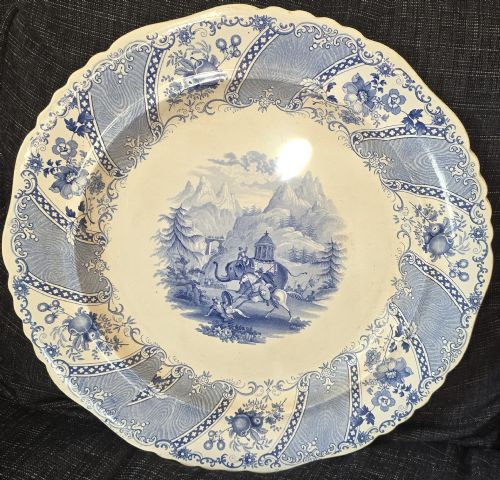
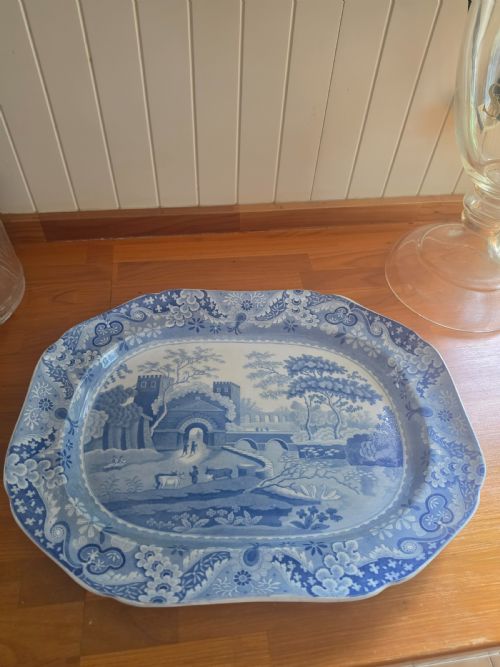
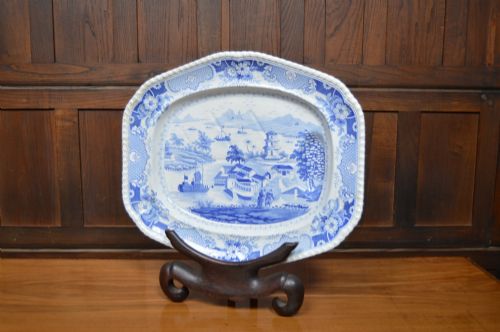
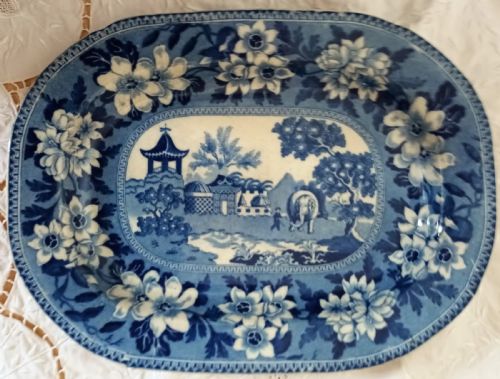
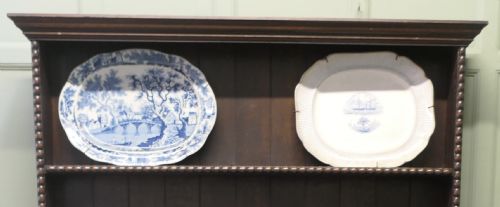
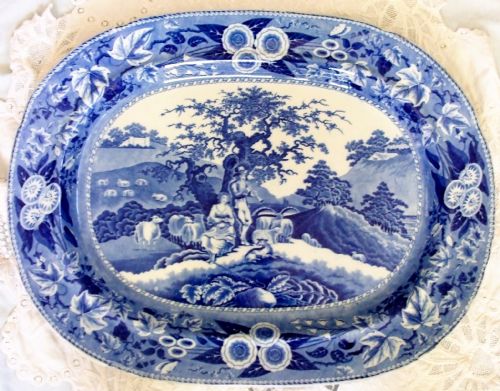


Staffordshire Blue White Platter
A Staffordshire blue white platter brings nineteenth-century transfer-printed scenes to the table, offering durable ceramic utility alongside rich cobalt imagery.
Staffordshire Blue White Platter
A Staffordshire blue white platter represents a large serving dish produced across the nineteenth century in various English potteries. These pieces take the form of heavy meat plates, chargers, and serving platters designed for domestic dining tables.
The objects span Georgian, Regency, and Victorian periods, often displaying topographical views, romantic ruins, or oriental scenes such as Chinoiserie. Buyers encounter formats incorporating drainage wells and reservoirs intended for collecting meat juices during carving.
The material composition ranges from early pearlware and earthenware to dense ironstone. Surviving examples demonstrate how functional kitchenware evolved into highly decorative display items for nineteenth-century households.
Materials and transfer printing techniques
Potters formed these items using earthenware, pearlware, or ironstone bodies shaped into large serving platters and dishes. Cobalt pigment provided the deep blue colour applied beneath the glaze before final kiln firing.
Makers utilised copperplate transfer printing to apply detailed pictorial scenes onto the ceramic surface. This technique allowed intricate patterns like landscapes, architecture, and narrative subjects to be reproduced consistently across multiple plates.
Staffordshire Blue White Platter Retail Price Guide 2026
Typical asking prices for staffordshire blue white platter among the pieces listed under this phrase on Sellingantiques today, from the lower quarter to the upper quarter. They describe what is for sale here now, not the wider market.
Several platters record specific travel sights like the mausoleum of Sultan Purveiz Allahad.
Factors separating basic utility from superior output
The clarity of the cobalt transfer print determines visual success, where sharp outlines and deep colour saturation distinguish superior pieces from blurred or smudged impressions. The complexity of the pictorial design, ranging from simple borders to multi-layered topographical scenes, also marks the grade of the item.
Spode·John Rogers & Son·John Ridgway·Stubbs·Brameld & Co·Minton·Mason·Elkin Knight & Bridgwood·Davenport
The Staffordshire Blue White Platter Glossary
- Transferware
- A ceramic decorated by printing a design from an engraved copper plate onto tissue paper and then transferring it onto the unglazed or bisque ceramic body. This method revolutionised pottery production in the nineteenth century.
- Pearlware
- A refined earthenware developed by Josiah Wedgwood that featured a bluish glaze designed to counteract the natural yellowish tint of the clay body.
- Ironstone
- A heavy, durable type of ceramic patented in the early nineteenth century designed to imitate Chinese porcelain while offering greater strength for daily dining.
- Meat drainer
- A perforated ceramic insert placed inside a platter to lift meat above accumulated juices during carving.
- Flow blue
- A style of Staffordshire pottery where the cobalt blue pigment intentionally blurred or bled into the surrounding white glaze during the firing process.
Staffordshire Blue White Platter: Frequently Asked Questions
What were meat platters used for?
These large ceramic dishes served joints of meat at the dining table during large family meals and formal dinners. Some versions included built-in wells and drainers to catch carving juices.
Over time, homeowners transitioned these functional serving vessels into decorative display pieces hung on walls or arranged on dressers.
How do I date a Staffordshire platter?
Dating relies on examining the ceramic body, such as identifying early pearlware or later ironstone, alongside the style of the printed transfer. Period markers like Georgian architectural views or Victorian Chinoiserie motifs help narrow the manufacturing era.
Maker marks impressed or printed on the reverse provide definitive clues to the active years of specific pottery firms.
Are these platters safe for food?
Most nineteenth-century earthenware and ironstone pieces exhibit crazing in the glaze, which can absorb liquids and harbour bacteria over extended use. Modern food safety standards often advise treating antique ceramics as decorative items rather than daily tableware.
Gentle hand washing protects the historic glaze and cobalt pigment from further wear.
What is Flow blue pottery?
Flow blue describes a distinct aesthetic where the cobalt pigment bled outward into the white background glaze during kiln firing. Potters achieved this effect by introducing lime or ammonia chloride vapours into the kiln atmosphere.
This technique created a soft, hazy appearance highly characteristic of mid-nineteenth-century Staffordshire production.