
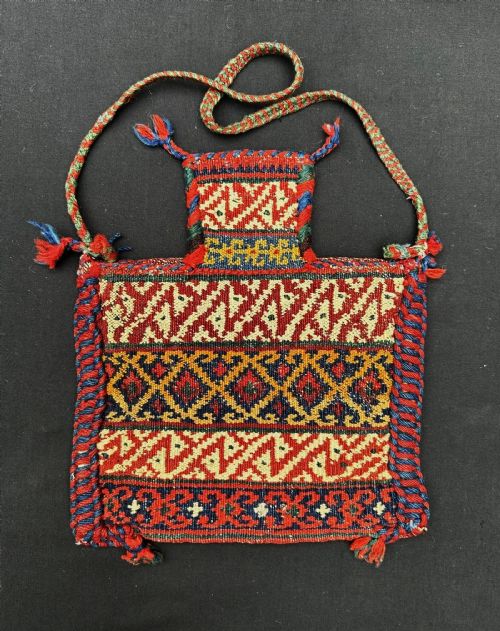
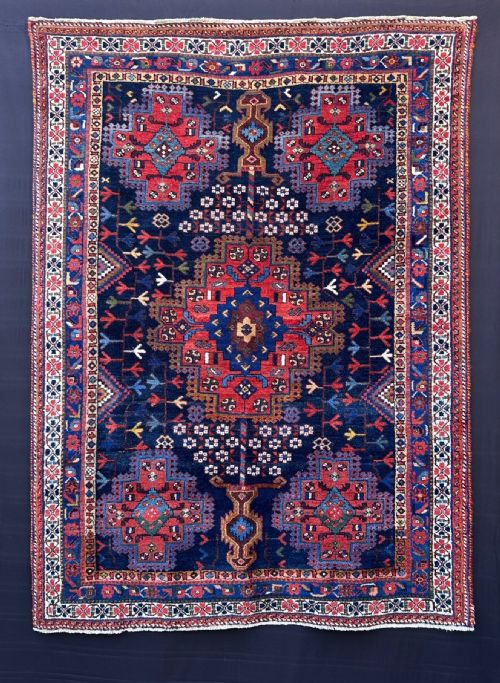
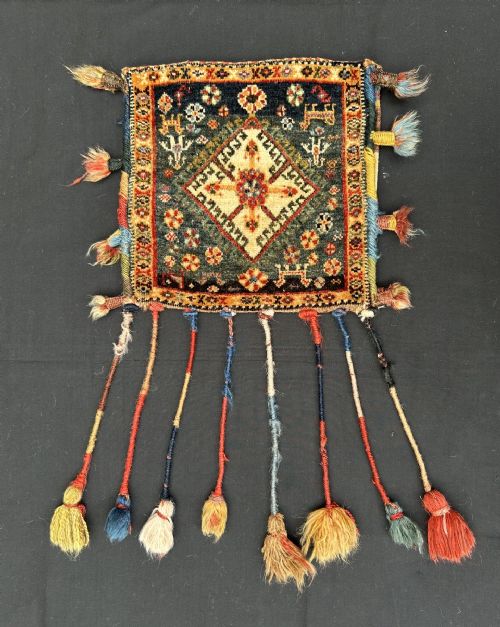
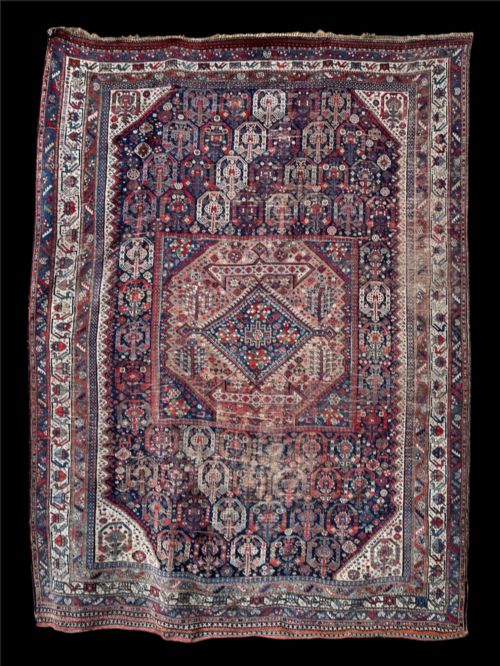




South Persia Wool Rug
A south persia wool rug brings woven history into a room, spanning tribal carpets, flatweaves, and utilitarian bags made by nomadic confederacies.
South Persia Wool Rug
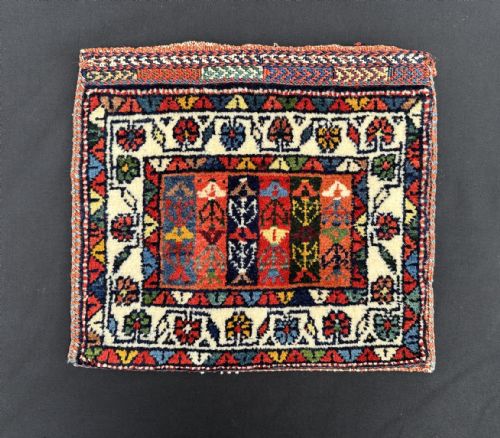
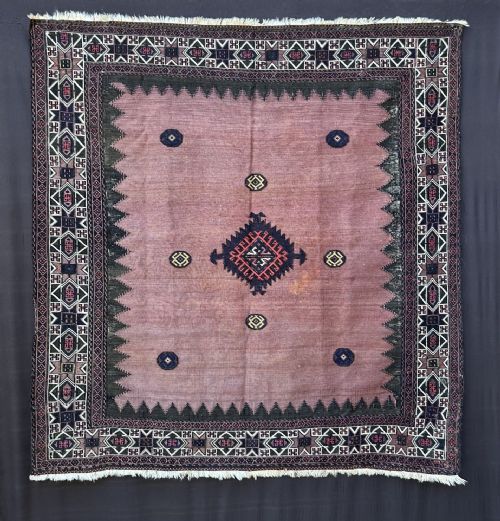
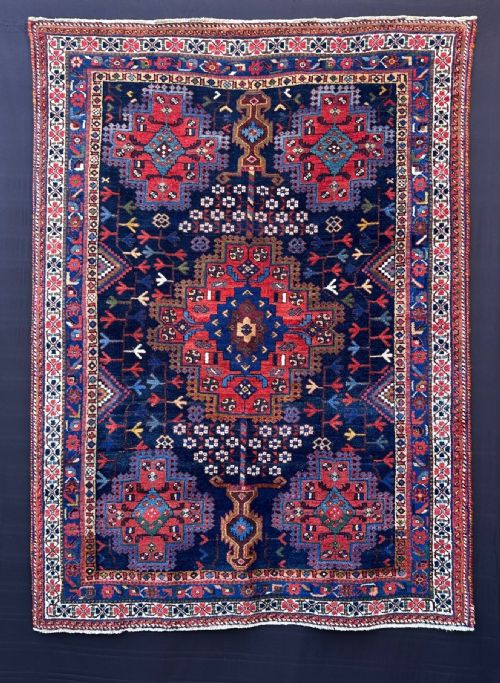
A south persia wool rug encompasses floor coverings, flatweaves, and nomadic textiles created across regions like Fars and Kerman provinces. These pieces emerge from tribal groups including the Qashqa'i, Afshar, Khamseh, and Baluch.
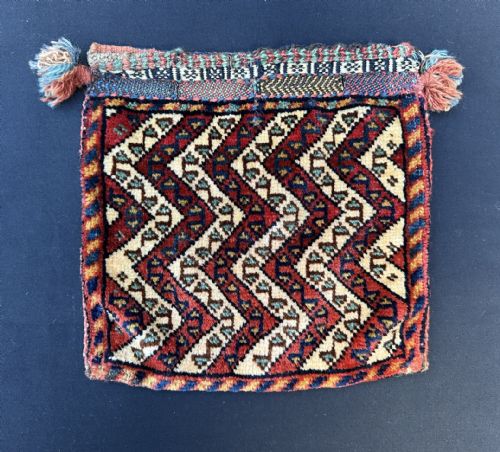
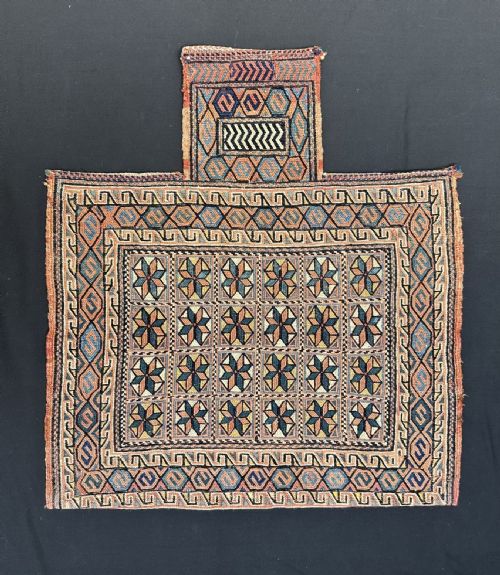
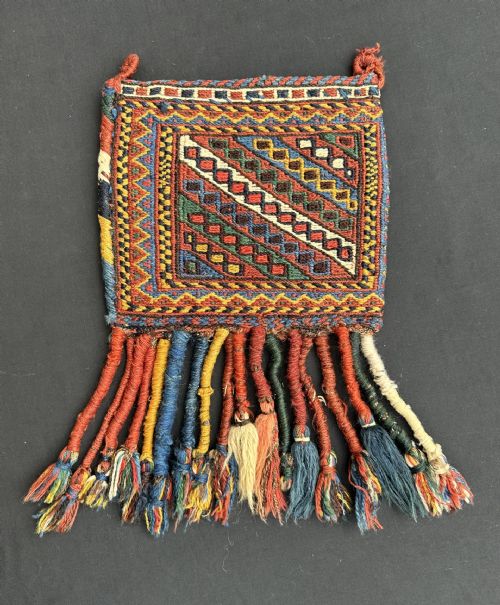
The selections on this page range from main carpets and area rugs to utilitarian tribal bags, vanity bags, bread sofreh, and salt bags. Dating largely from the late nineteenth century into the early twentieth century, these works reflect the nomadic life of southern Persian tribes.
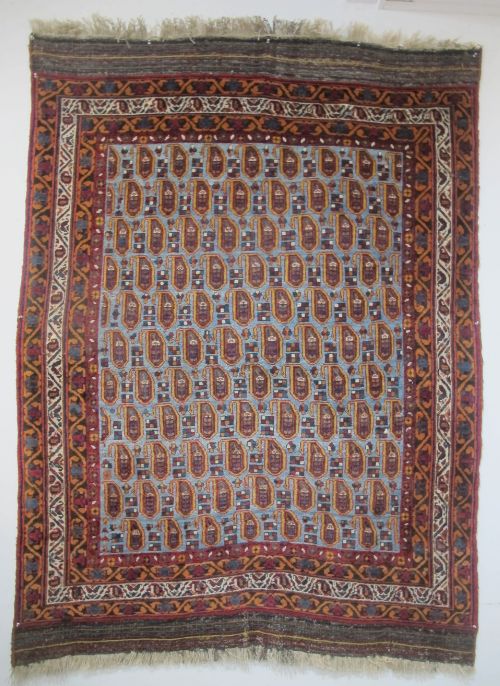
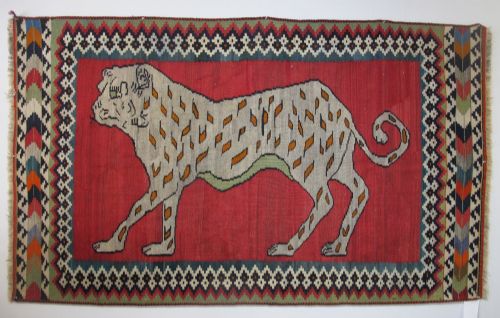
Buyers encounter distinct regional aesthetics, such as the boteh motifs and geometric medallions typical of Neiriz Afshar work, or the striking animal forms found in Qashqa'i kilims.
How They Were Made
Weavers utilised hand-spun wool for pile and structure, often paired with a sturdy cotton foundation to ensure durability. Natural dyes provide the palette, yielding deep tones that soften gracefully over decades of use.
Nomadic makers integrated supplementary materials like leather, wood, and cowrie shells into functional items such as saddlebags and tobacco pouches. Flatweaving techniques, Soumak work, and pile knotting define the structural methods seen across these tribal textiles.
Listings span the nineteenth and early twentieth centuries, featuring wool, cotton, natural dyes, leather, and cowrie shells across rugs, kilims, and tribal bags.
What Varies in Quality
The standard of a south persia wool rug rests upon the fineness of the spin, the quality of the wool fleece, and the precision of the tribal design execution. Superior pieces exhibit deeply saturated natural dyes and tightly packed knots that secure the structural integrity.
Artistic expression distinguishes finer examples, visible in the balance of tribal motifs, the complexity of field patterns, and the originality of regional iconography such as lion figures or intricate boteh arrangements.
The South Persia Wool Rug Glossary
- Boteh
- A stylised almond or pear-shaped motif representing a floral spray, cypress tree, or flame. This design appears frequently across Afshar and Qashqa'i woven works.
- Sofreh
- A flatwoven textile used historically for dining, bread preparation, or serving food within nomadic households. These cloths display striking geometric compositions.
- Soumak
- A wrap-around flatweaving technique that produces a durable structure with a braided appearance on the face. It adds texture and strength to tribal bags and rugs.
- Kilim
- A tapestry-woven, pileless textile created by interlocking weft threads over warp threads. They serve utility and decorative purposes across southern Persian tribal groups.
- Confederacy
- A political and social alliance of nomadic tribes, such as the Qashqa'i or Khamseh. These groups shared distinct weaving traditions and regional pasturelands.
South Persia Wool Rug: Frequently Asked Questions
How do I care for a tribal rug?
Vacuum gently without using a rotating brush roll to protect the wool pile and historical foundations. Professional cleaning by a specialist in antique textiles is recommended every few years.
Keep the piece out of direct sunlight to prevent natural dye fading, and rotate the rug periodically to ensure even wear patterns over time.
What is a tribal salt bag?
Salt bags served as practical household items woven by nomads for storing rock salt used by livestock or humans. They feature narrow necks and reinforced openings to prevent contents from spilling during transit.
Collectors prize them today as concentrated examples of tribal weaving, featuring miniature versions of main carpet designs and expressive iconography.
How do I distinguish Qashqai from Afshar work?
Qashqa'i textiles often originate from the Fars province and frequently incorporate multi-medallion layouts, human figures, and animals such as lions. Their colour palettes tend towards rich madders and deep blues.
Afshar rugs typically hail from the Kerman province, showcasing repeating boteh motifs, hooked polygons, and distinct Neiriz regional aesthetics with dense, precise geometric arrangements.
Can I use these rugs on modern floors?
These historical textiles add warmth and grounded character to contemporary living spaces, studies, and hallways. Using a breathable, high-quality underlay keeps the rug secure and prevents slipping.
Consider placement relative to heavy foot traffic, reserving fragile flatweaves or smaller utility bags for walls, low-impact corners, or display spaces.