








Blue Red Tribal Carpet
A blue red tribal carpet brings enduring geometric patterns and rich natural dyes directly onto the floor from Persian, Caucasian, and Anatolian traditions.
Blue Red Tribal Carpet
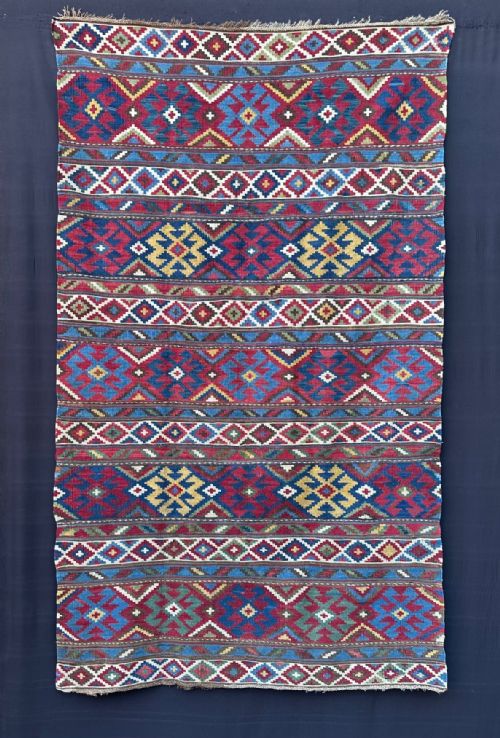
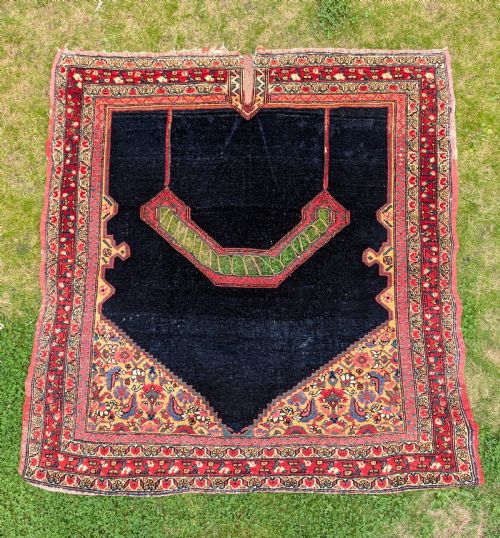
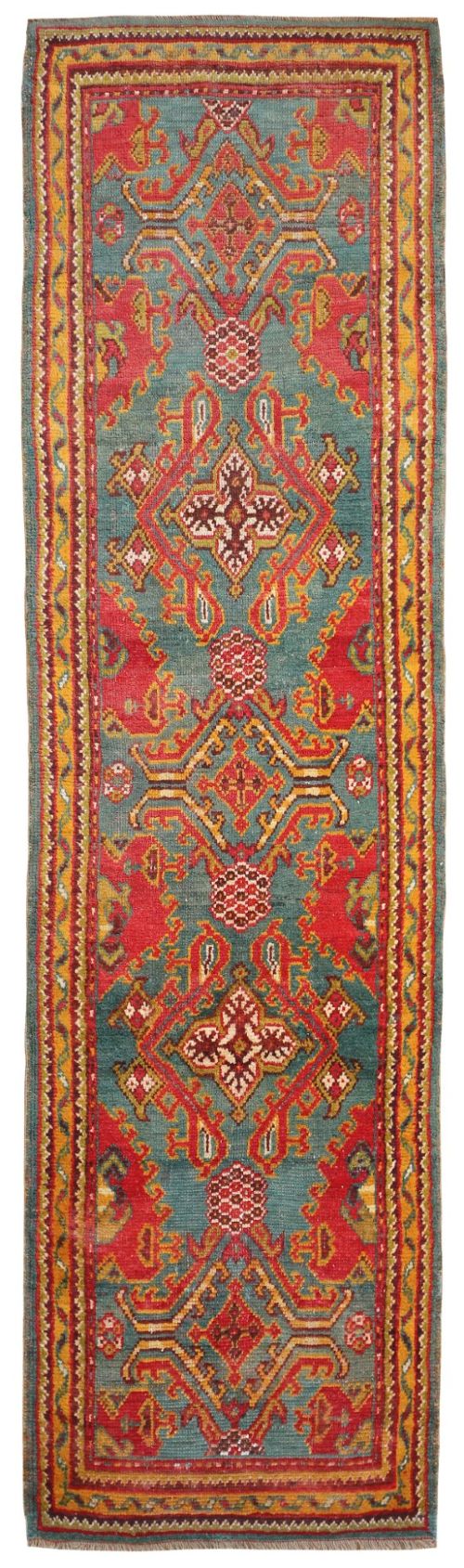
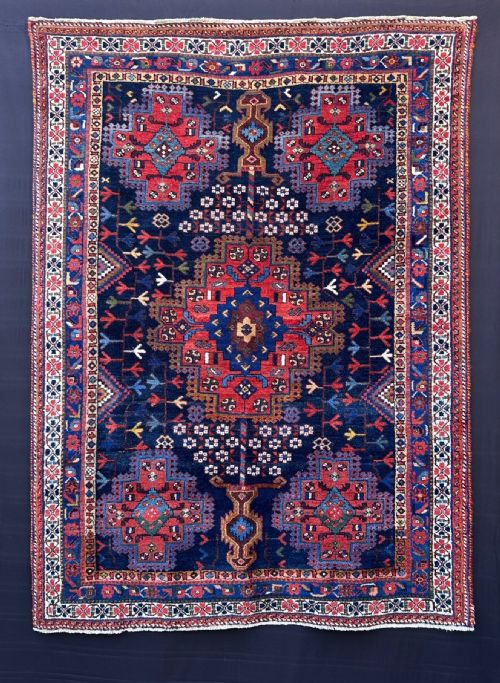
When searching for a blue red tribal carpet, a buyer encounters hand-knotted floor coverings originating from nomadic and village weaving traditions across Persia, the Caucasus, and Anatolia. These textiles range from small prayer rugs and square formats to long hallway runners and room-sized carpets.
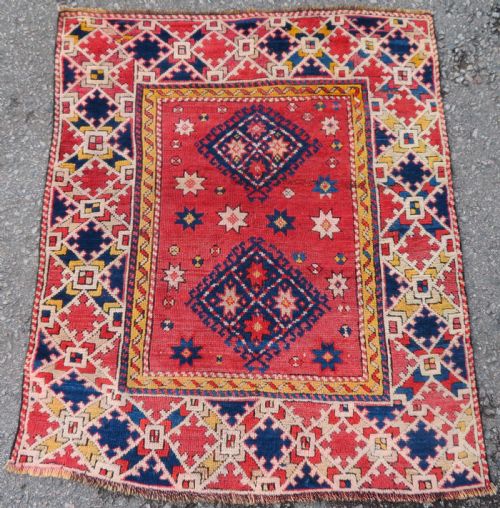
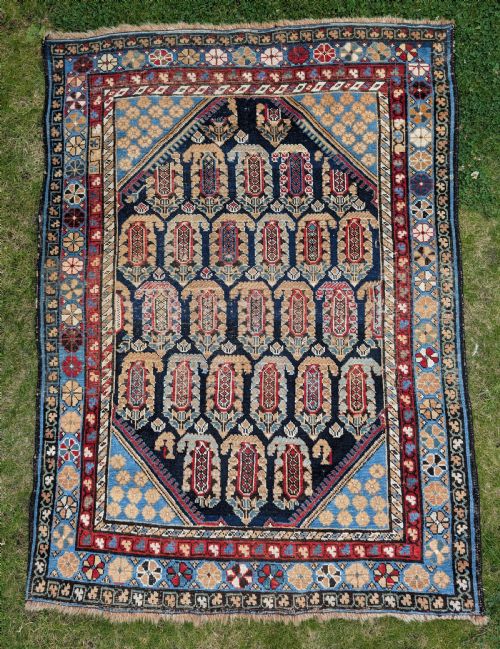
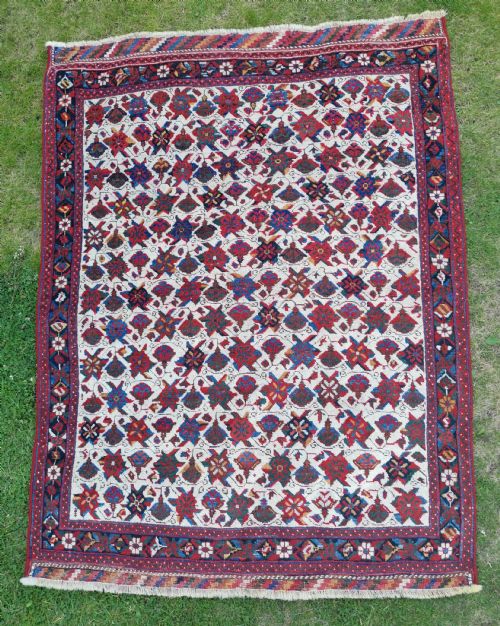
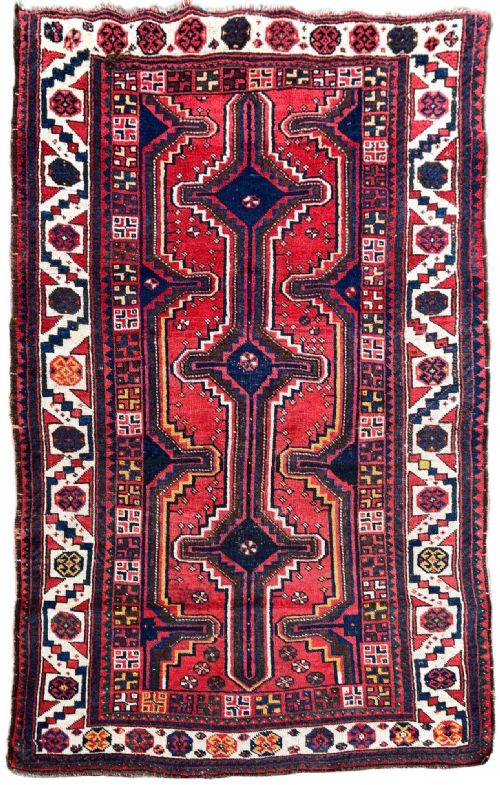
The selections on this page span the late nineteenth century into the early twentieth century, showing distinct regional patterns such as Kazak, Khamseh, Afshar, and Bakhtiar designs. Each piece reflects the specific tribal heritage and local iconography of the weavers who produced them.
Most examples deploy a palette dominated by indigo blues and madder reds, often accented with ivory and secondary tones. These floor coverings served practical insulating purposes in village homes and tents while expressing cultural identity through geometric and stylised floral motifs.
Materials and construction methods
The construction of these floor coverings relies on wool, cotton, and hand-spun wool, utilised for both the foundational warp and weft threads and the dense surface pile. Hand-spun wool provides resilience and texture, absorbing natural dye stuffs with subtle variations in tone.
Weavers knotted the wool pile by hand onto supportive foundations, creating durable structures designed to withstand decades of heavy use. Regional variations dictate whether the foundation incorporates cotton or all-wool assemblies, influencing the handle and weight of the finished textile.
Design styles represented across the inventory include Persian Tribal, Caucasian, Anatolian Tribal, and Kurdish Tribal traditions.
Factors determining quality
The quality of these textiles depends heavily on the density of the knotting and the precision of the geometric layout. Tightly knotted piles preserve crisp lines in medallions and borders over generations of foot traffic.
The depth and brilliance of the dye work also separate standard examples from finer ones. Rich, saturated indigo and red tones derived from natural sources develop a desirable patina with age, whereas inferior dye lots can appear flat or muddy.
The Blue Red Tribal Carpet Glossary
- Pile
- The upright yarn loops that form the usable surface of the carpet. It gives the textile its plush texture and absorbs wear.
- Warp
- The vertical foundation threads running lengthwise through the carpet. Weavers tie individual knots around these stationary cords.
- Weft
- The horizontal threads interlaced across the warp after rows of knots. This binds the structure together firmly.
- Medallion
- A central ornamental motif positioned in the middle of the field. It often anchors the geometric symmetry of the entire design.
- Prayer rug
- A small format textile featuring a distinct mihrab or arch shape at one end. Historically, it designated a clean space for daily devotion.
- Runner
- A long, narrow carpet format designed for corridors and hallways. They guide movement through domestic spaces.
Blue Red Tribal Carpet: Frequently Asked Questions
How do I clean a tribal rug?
Professional specialist cleaning remains the safest method for antique wool carpets. Household washing machines and harsh chemical detergents damage natural fibres and destabilise traditional dyes.
Regular gentle vacuuming without a rotating power brush helps remove embedded dust from the wool pile. Promptly blotting liquid spills prevents stains from setting into the hand-spun threads.
Where were these carpets made?
These floor coverings were produced by nomadic tribes and settled village communities across regions of Persia, the Caucasus, and Anatolia. Each weaving group utilised distinct local motifs and colour combinations passed down through generations.
Production took place domestically on portable or stationary vertical looms. The resulting textiles reflect the specific geography and cultural exchanges of their native districts.
How do I identify a Kazak rug?
Kazak rugs originate from the Caucasus region and are recognised by their bold geometric medallions, rectilinear patterns, and vibrant primary colours. The wool is typically thick, and the knotting is robust.
They frequently feature hooked polygons, stars, and animal or human figures rendered in a graphic style. The palette relies heavily on saturated reds, blues, and ivory highlights.
Can I place these carpets in high traffic areas?
Traditional hand-knotted wool carpets possess immense durability and withstand everyday movement in hallways and living rooms. The natural resilience of wool fibre handles moderate foot traffic well.
Placing a quality underlay beneath the carpet prevents slipping and reduces friction against hard flooring. This simple addition extends the working life of the textile.