


Snow Landscape Painting
A snow landscape painting captures the quiet of winter, recording frost, ice and frozen fields through the direct touch of oil and watercolour.
Snow Landscape Painting
A snow landscape painting brings together rural scenes, coaching journeys, and frozen villages from the nineteenth and twentieth centuries. Works span from nineteenth-century coaching scenes and rugged mountain views to twentieth-century regional watercolours and oils.
British and European artists form the core of these works, with regional views of Yorkshire, Wales, and the Alps appearing frequently. Artists render winter light across canvas, board, and paper using both delicate washes and heavier impasto.
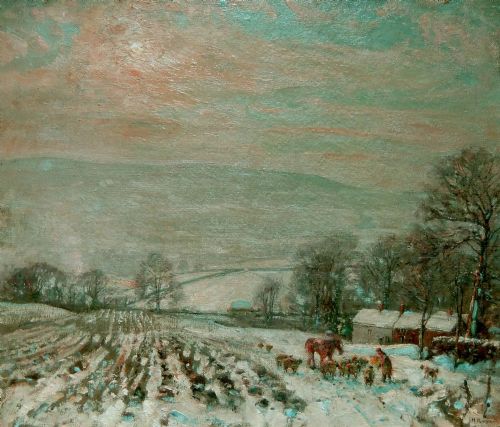
Domestic subjects such as cottages in the snow, farm buildings, and figures gathering fuel sit alongside wider vistas of mountains and frozen lakes. Works range from intimate watercolours to large oil paintings on canvas.
What varies in quality
Handling of light and atmospheric depth distinguishes accomplished winter scenes from simpler regional records, particularly in the rendering of low sunlight on snow. Brushwork reveals the confidence of the hand, from the precise draftsmanship of coaching watercolours to the expressive mark-making of impressionistic oils.
Condition and preservation play a role, involving the stability of the canvas or board and the clarity of watercolour pigments against fading. The integration of the subject within its original or period frame contributes to the visual integrity of the piece.
Listings feature works spanning the nineteenth and twentieth centuries, executed in oil, watercolour, and gouache on canvas, paper, wood, and board.
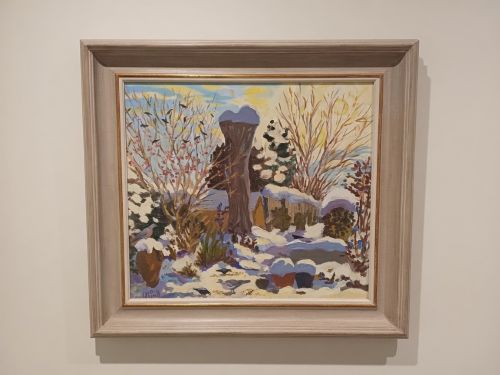
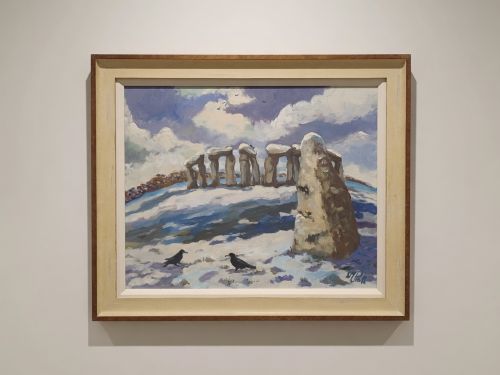
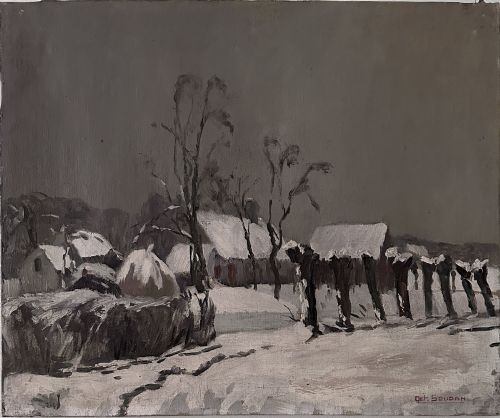
Herbert Royle·John Charles Maggs·Ernest Higgins Rigg·William James Boddy
The Snow Landscape Painting Glossary
- Impasto
- Paint applied thickly to a canvas or board, leaving visible brush or palette knife marks that stand out from the surface. This technique often accentuates the drifted texture of snow.
- Giltwood
- Wood carved and coated with gold leaf or gold paint, commonly found on nineteenth-century and early twentieth-century frames. It provides a reflective border that contrasts with cool winter tones.
- Gouache
- An opaque watercolour paint mixed with a white pigment to create heavier, solid areas of colour. Artists used it alongside traditional watercolour for highlights of fresh snow.
- Board
- A rigid flat support made of wood or compressed pulp used as a substitute for stretched canvas. Many twentieth-century oil paintings utilise this sturdy foundation.
Snow Landscape Painting: Frequently Asked Questions
What subjects appear most often in snow landscape painting?
Rural cottages, frozen rivers, and figures gathering wood form the backbone of these winter scenes. Coaching inns and mail coaches caught in winter storms also recur frequently across nineteenth-century works.
Mountain ranges, highland cattle, and Yorkshire dales provide broader topographical views. Artists focused heavily on familiar local countryside rather than imagined vistas.
How do I distinguish between an oil painting and a watercolour?
Oil paintings feature heavier textured paint layers on canvas, board, or wood panel with a varied surface sheen. They often display visible impasto where the white of the snow stands slightly proud of the ground.
Watercolours appear flat and smooth, protected beneath glass on paper with transparent washes showing the texture of the sheet beneath. Gouache additions sometimes add opaque highlights to these works.
Which periods produced the greatest number of winter scenes?
The nineteenth century generated many coaching scenes and romantic mountain landscapes of Wales and Scotland. Artists during this era focused on narrative detail and dramatic weather conditions.
The early to mid-twentieth century saw a shift toward impressionistic regional views, particularly across Yorkshire and northern England. Painters during this period explored changing light on snow-covered fields with looser brushwork.
How should I care for a vintage watercolour on paper?
Watercolours require placement away from direct sunlight to prevent the fading of delicate pigments and paper discolouration. Stable indoor humidity levels protect both the paper support and any gouache highlights.
Framing with acid-free mounts ensures the paper does not degrade over time. Keeping the work behind glass shields the surface from airborne dust and moisture.